Table of Contents
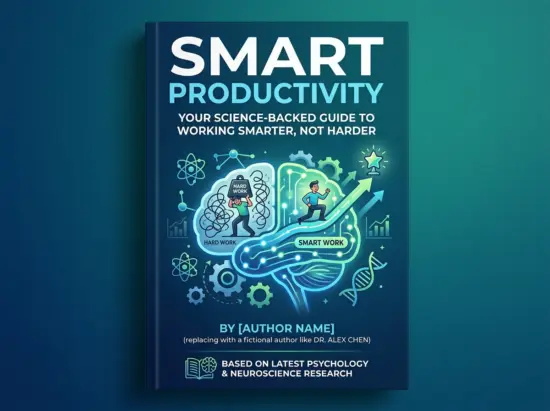
Welcome to HabitHack, your trusted resource for building habits that unlock your full potential. In today’s fast-paced world, the difference between those who thrive and those who simply survive often comes down to one thing: smart productivity . It is not about working more hours; it is about achieving better results with less wasted effort, less stress, and more strategic impact . This guide explores proven frameworks, essential tools, and actionable habits to help you work smarter, not harder.
What is Smart Productivity?
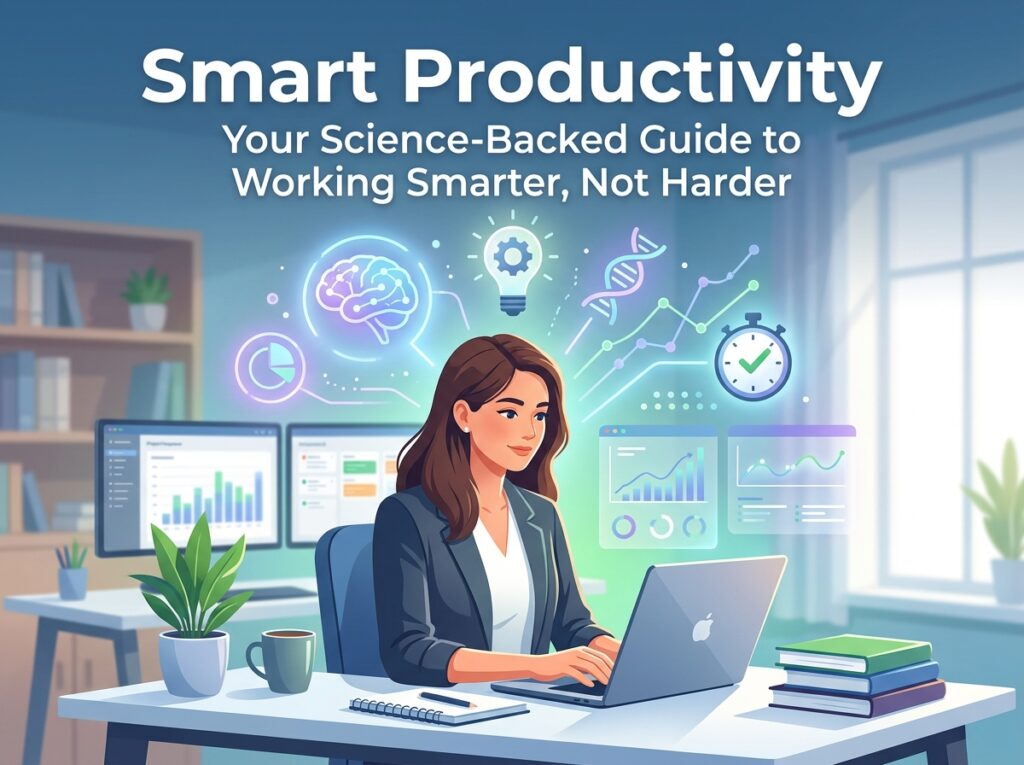
Smart productivity is an output-focused approach that measures success by results, goals met, and the value created . It is characterized by strategic planning, leveraging tools and systems to automate effort, and a proactive approach to prioritizing what truly matters . The goal is not to eliminate hard work but to direct it intelligently, ensuring your effort is applied to the right things at the right time . It is a fundamental shift from being “busy” to being effective.
Core Strategies for Working Smarter
Prioritize Ruthlessly
At the heart of smart productivity lies the ability to distinguish between what is urgent and what is important. Tools like the Eisenhower Matrix help you categorize tasks into four quadrants, allowing you to do, schedule, delegate, or delete tasks based on their urgency and importance . The goal is to spend most of your time on the “Important but Not Urgent” quadrant (planning, relationship building, strategy), as this work prevents crises and drives long-term success . Related strategies include the Pareto Principle (80/20 Rule), which suggests that 80% of outcomes stem from 20% of tasks, prompting you to identify and focus on high-impact work .
Design Your Environment for Focus
Deep work—the state of focused concentration on a demanding task—is where your most valuable output is generated. A smart worker designs their environment to minimize distractions and foster this state .
- Tame Digital Distractions: Turn off all non-essential notifications and schedule specific times to check email and messaging apps .
- Optimize Your Physical Space: Use noise-canceling headphones as a “do not disturb” signal. Maintain a clutter-free workspace to reduce cognitive load .
- Protect Focus Time: Use techniques like time blocking to schedule specific blocks of time for high-focus work, treating them as unbreakable appointments . Similarly, the Pomodoro Technique (working in 25-minute intervals with 5-minute breaks) can help maintain concentration and prevent mental fatigue .
Leverage Technology as a Force Multiplier

Technology should work for you, not the other way around. A smart worker uses tools to automate the mundane and streamline processes .
- Automation: Identify repetitive, low-cognitive tasks and automate them using tools like Zapier or IFTTT .
- AI-Powered Assistants: Tools like Microsoft Copilot or Google Gemini are being integrated directly into workflows to draft documents, summarise meetings, and retrieve company knowledge, effectively acting as a “co-pilot” for knowledge work .
- Project Management Software: Platforms like Asana, Trello, and Monday.com help manage tasks, centralize communication, and provide a single source of truth for every initiative .
Build Smart Work Habits
Long-term productivity is built on consistent habits .
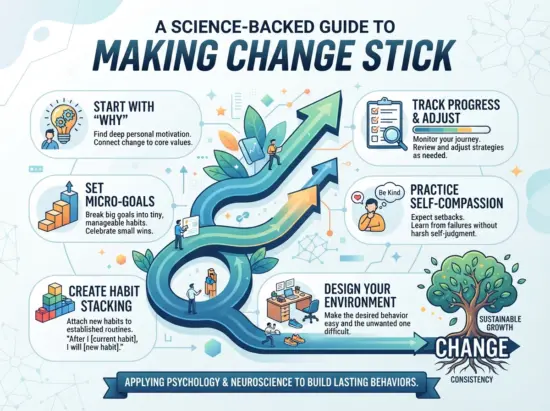
- Set Clear Goals: Use the SMART framework (Specific, Measurable, Achievable, Relevant, Time-bound) to give every task purpose and direction .
- Break Down Big Goals: Avoid overwhelm by breaking large tasks into smaller, manageable steps .
- Use Habit Stacking: Add a new, small behavior to an established workplace routine. The formula is: After [current work habit], I will [new work habit] .
- Track Your Progress Visually: Seeing your progress is a powerful motivator. Use a checklist or habit tracker to mark successful days .
Master the Human Element
Smart work is also about psychology and interpersonal dynamics. This includes effective meeting management (e.g., having a clear agenda), managing your energy by working with your natural rhythms, and cultivating a smart mindset by learning to say “no” to tasks that do not align with your priorities .