Table of Contents
Understanding the Science of Habit Building
Before you can successfully build new habits, you need to understand what a habit actually is. A habit is a behavior or action that you perform repeatedly. Over time, your brain has learned that when you perform this action, you receive some sort of reward or positive feeling, so you continue to do it . This creates what psychologists call a “feedback loop” where you’ve conditioned yourself to repeat the activity.
The Habit Loop
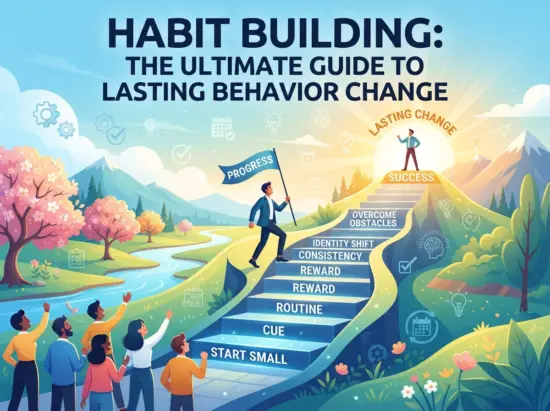
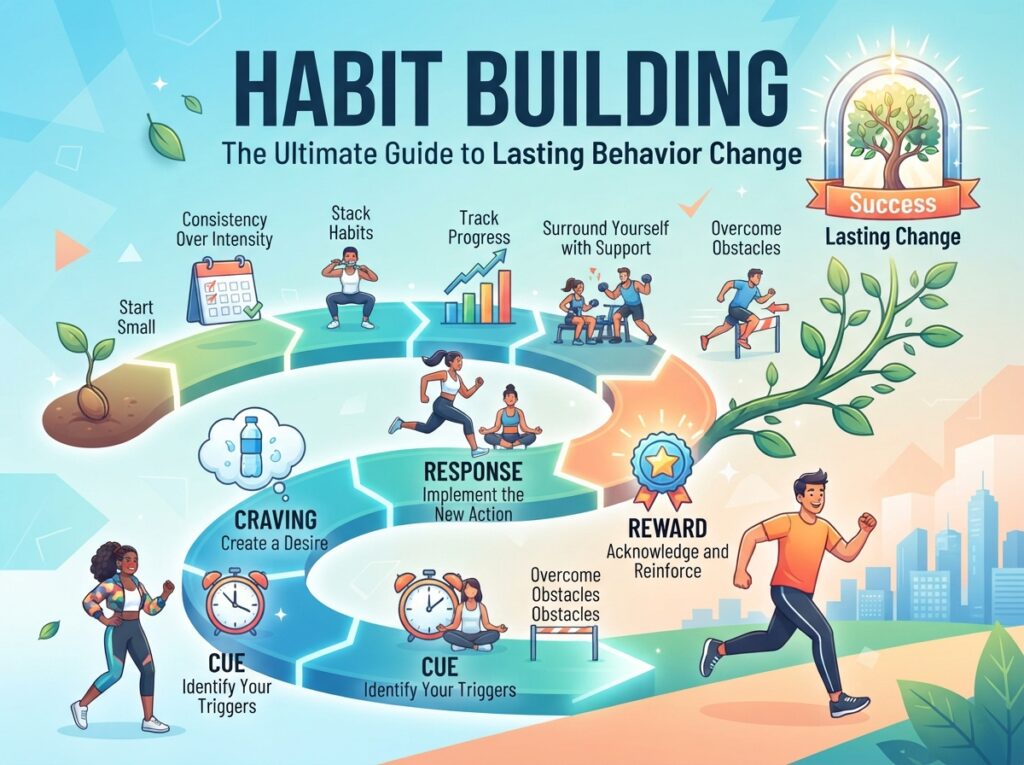
The foundational framework for understanding habits is the habit loop, which consists of three key components:
- Cue (Trigger): The signal that initiates the habit. This can be a specific time, location, emotional state, or preceding action.
- Routine (Behavior): The actual action you perform in response to the cue.
- Reward: The positive feeling or outcome you get from performing the routine, which reinforces the habit loop.
To build a new habit, you need to create a clear cue, establish a routine, and ensure there’s a satisfying reward. This is why successful habit building requires both understanding the psychology behind our behaviors and developing practical strategies to make new routines stick.
The Time Factor: How Long Does Habit Building Really Take?
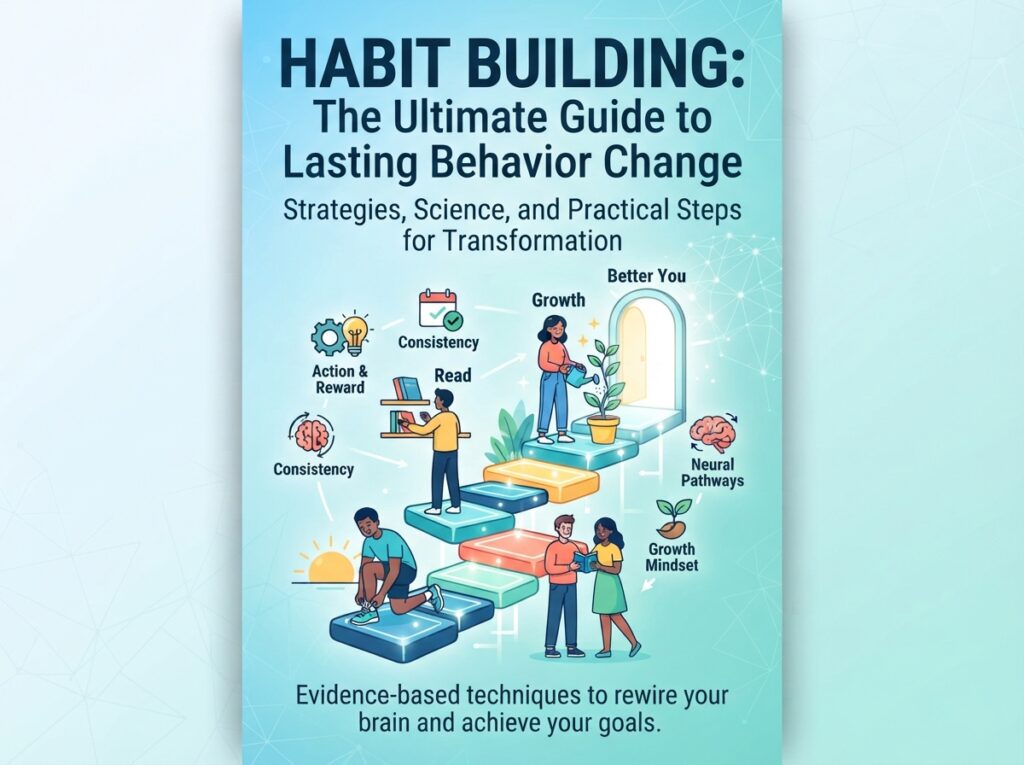
One of the most common questions in habit building is: “How long does it take to form a new habit?” The answer varies significantly. A systematic review and meta-analysis of habit formation studies found that habit formation takes an average of 55 to 66 days . However, this can vary widely based on the individual and the complexity of the behavior.
For example, one study reported that forming a daily stretching habit took a mean of 106 days for morning stretching and 154 days for evening stretching . This variation suggests that some habits are inherently more challenging to build than others, and you need patience and persistence in your habit building journey.
Proven Strategies for Effective Habit Building
Now that we understand the science, let’s explore the most effective strategies for building habits that last.
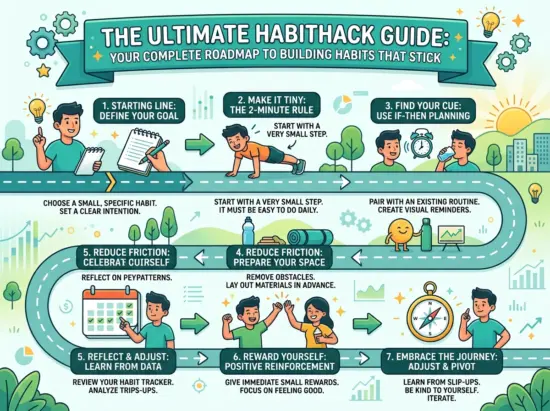
1. Start with Repetition, Not Perfection
One of the biggest mistakes in habit building is trying to be perfect from day one. The key to mastering a habit is to start with repetition, not perfection . You don’t need to map out every aspect of a new habit. You need to practice it. This is supported by research showing that habits form based on frequency of repetition, not time .
The “quantity” versus “quality” study is a powerful illustration of this principle. Students who were judged solely on the amount of work they produced ended up producing better results than those told they’d be judged on a single perfect piece. The quantity group experimented, learned from mistakes, and honed their skills through repetition .
2. Make It Easy: The Two-Minute Rule
When you start a new habit, it should take less than two minutes to do . This is known as the Two-Minute Rule. The idea is to make your habits as easy as possible to start. For example:
- “Read before bed each night” becomes “Read one page.”
- “Do thirty minutes of yoga” becomes “Take out your yoga mat.”
- “Study for class” becomes “Open my notes.”
- “Run three miles” becomes “Tie my running shoes.”
The point is not to do one thing. The point is to master the habit of showing up. A habit must be established before it can be improved . This approach aligns with the “act your way into a new way of thinking” principle, which suggests that changing our behavior is more effective than trying to think our way into change .
3. Habit Stacking
Habit stacking is a powerful technique that takes advantage of the connectedness of human behavior. It involves taking a new habit you want to build and stacking it on top of an existing one . The formula is simple:
After I [habit you already have], I will [new habit].
Examples of habit stacking include:
- “After I pour my morning coffee, I will meditate for one minute.”
- “After I come home from the gym, I will have one protein shake.”
- “After I do my nighttime skincare routine, I will take my daily vitamins and supplements.”
Habit stacking works because you’re piggybacking on a neural pathway that is already well-established. Your existing habit serves as a powerful cue for the new one, making it much easier to remember and perform consistently .
4. Implementation Intentions
An implementation intention is a specific plan that connects a situation with a behavior. Research shows that people are more successful in sticking to their goals when there’s a specific plan in place . An effective habit statement follows this format:
“I will [BEHAVIOR] at/when [TIME/EVENT/PLACE].”
For example:
- “I will get some exercise at 5:00 pm.”
- “When I feel anxious, I will take 3 deep breaths.”
- “I will eat one serving of vegetables with dinner.”
5. Be Specific and Intentional
The key to forming new healthy habits is to be specific and clear about your goals. It’s been shown that people are more successful in sticking to their goals when there’s a specific plan in place . For instance, if you want to get more steps in, tell yourself: “I will take a 15-minute walk every day during my lunch break.” You’ll find more success than just saying “I will go on more walks.”
6. Environment Design
Our environment plays a crucial role in habit building. By engineering your environment, you can make good habits easier and bad habits harder. For example, if you want to eat healthier, move unhealthy snacks to the back of the cupboard or a high shelf, and put fruits and vegetables at eye level .
7. Track Your Progress
Habit tracking can be a powerful motivator. You can use a simple wall calendar with Xs to mark your days, a habit-tracking app, or a habit journal . Seeing your consistency makes you more motivated and helps reinforce the habit. The feeling of “keeping a streak going” becomes its own reward.
The 21/90 Rule: A Framework for Habit Building
The 21/90 rule is a popular framework for habit building that suggests a two-phase process: 21 days for initial habit development and 90 days for lifestyle integration .
Phase 1: The First 21 Days
During these 21 days, your brain is learning. Each time you repeat your chosen action, your brain remembers it better. Like cutting a path through thick grass, each time you walk the same way, it gets easier to see and follow. Most of the time, these first weeks are the hardest. You will need to remind yourself to do your new habit and you might forget some days, which is completely normal when you start something new .
Phase 2: Continuing to 90 Days
The reason to continue to 90 days is that there is a massive difference between making something a habit and making it a part of who you are. By day 90, your new habit will be normal and easy. You just do it, like how you don’t think about brushing your teeth in the morning . Your sense of self starts to change. You will no longer think, “I’m trying to exercise more,” but “I am someone who exercises regularly.” This change in identity is powerful and lasting.
Overcoming Common Challenges in Habit Building
Even with the best strategies, you will face challenges in your habit building journey. Here’s how to overcome them:
When You Start Feeling Bored
Between days 7 and 10, the excitement usually wears off. Whenever you feel like giving up, remind yourself that this is a part of the process. If needed, make your habit smaller for a while. Focus not on how you feel while you’re doing it, but on how you feel afterward .
When You Don’t See Results Yet
It’s frustrating when things don’t change quickly. However, small steps that add up over time are what make habit building work. Consider focusing on how you feel instead of what you see. Are you sleeping better? Do you feel more energetic? Is your mood improving? Often, these internal changes happen before visible effects can be seen .
When Life Gets Crazy Busy
There are weeks when everything seems to happen at once. When you’re really busy, just make your habit as simple as possible. It only takes one minute to make a difference. The key is maintaining the pattern, not achieving perfection .
When You Skip Days
When you miss a day, simply start again the next day. As long as you don’t let one missed day become two, it’s okay. Getting back on track quickly is more important than achieving a perfect streak . The British Psychological Society recommends trying not to miss two days in a row, as this is when the habit is most likely to be abandoned .