Table of Contents
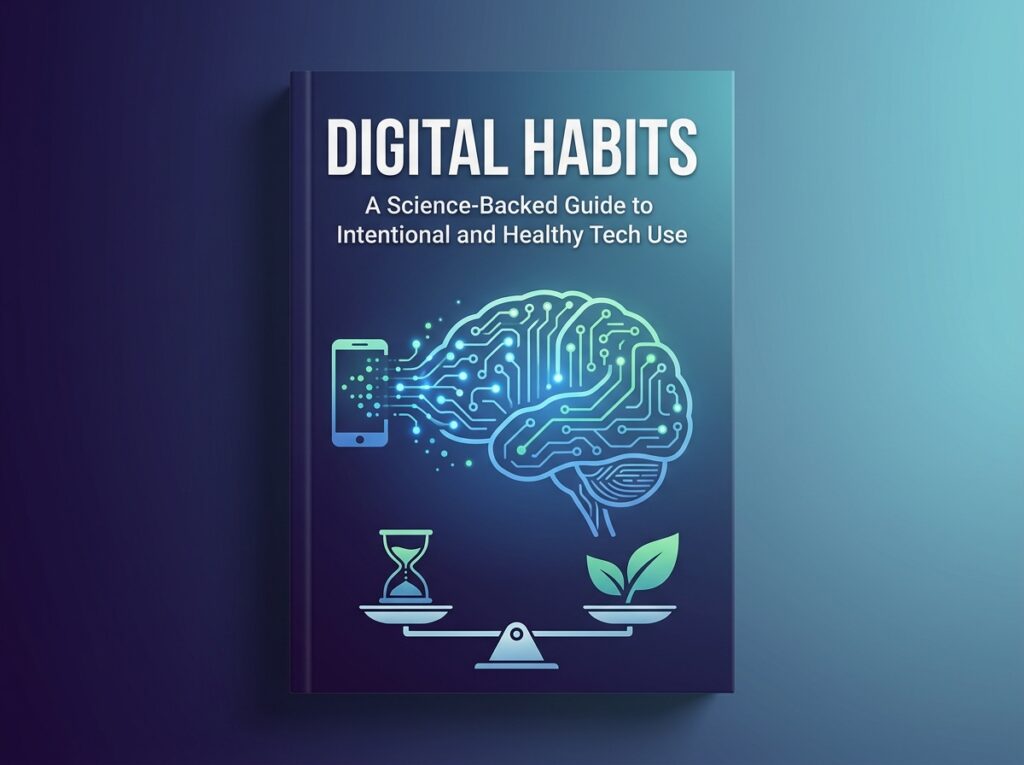
Welcome to HabitHack, your trusted resource for building habits that unlock your full potential. In an era where the average person is surrounded by multiple connected devices, the concept of digital habits has become a cornerstone of modern life and well-being . While digital tools offer unprecedented access to information and connection, the habits we form around them can either enhance our lives or lead to digital addiction, fragmented attention, and poor mental health . This guide explores the science of digital habits and provides actionable strategies to build healthier relationships with technology.
What Are Digital Habits?
Digital habits refer to the routine behaviors and patterns we develop in our daily interactions with digital devices and services—everything from checking email first thing in the morning to mindlessly scrolling through social media . These habits can be positive (using tech to stay connected with family) or negative (spending hours on social media at the expense of work or sleep), depending on their impact on our lives .
The distinction between healthy and unhealthy digital habits often comes down to mindfulness and intentionality. When we understand how and why we use our devices, we’re better positioned to use them positively. This is why researchers emphasize the importance of a proactive relationship with technology, where we are in control rather than reactive .
The Science of Digital Habits
Strong Habitual Patterns
Recent research has quantified just how strong digital habits can be. A 2025 study of 6,816 participants across six major platforms found that app usage shows habitual patterns that exceed established benchmarks for health-related habits like smoking . This suggests that for many people, checking social media or certain apps has become even more automatic than some physical routines.
The strength of these habits is tied to how apps are designed. Contemporary app designs deliberately cultivate habitual usage through variable rewards, push notifications, infinite scrolling, and frictionless interaction patterns .
Self-Perception vs. Reality
One of the most revealing findings from the study is a significant gap between how we perceive our digital habits and our actual behavior . When comparing self-reported habit measures with actual behavioural tracking data, researchers found a weak correlation (r=0.28-0.32). Simple behavioural history (number of sessions, hours spent) proved to be at least 64% more effective at predicting future usage than self-reports.
This means we may not be as aware of our digital patterns as we think. The study suggests observational data offers superior predictive power over self-assessment, challenging the validity of self-report instruments in digital habit research .
The Neurocognitive Impact
Excessive digital engagement has been linked to a cascade of cognitive effects. The “Digital Dependency–Distress Cascade” model describes how compulsive digital use leads to neurocognitive fatigue, emotional dysregulation, and identity tethering to mobile technology . Studies show that young adults using social media for more than four hours daily experience significantly higher levels of depression and anxiety . Nearly half of university students in some studies suffer from severe nomophobia (fear of being without a mobile phone), associated with reduced psychological well-being and greater insomnia severity .
Practical Strategies for Building Healthy Digital Habits
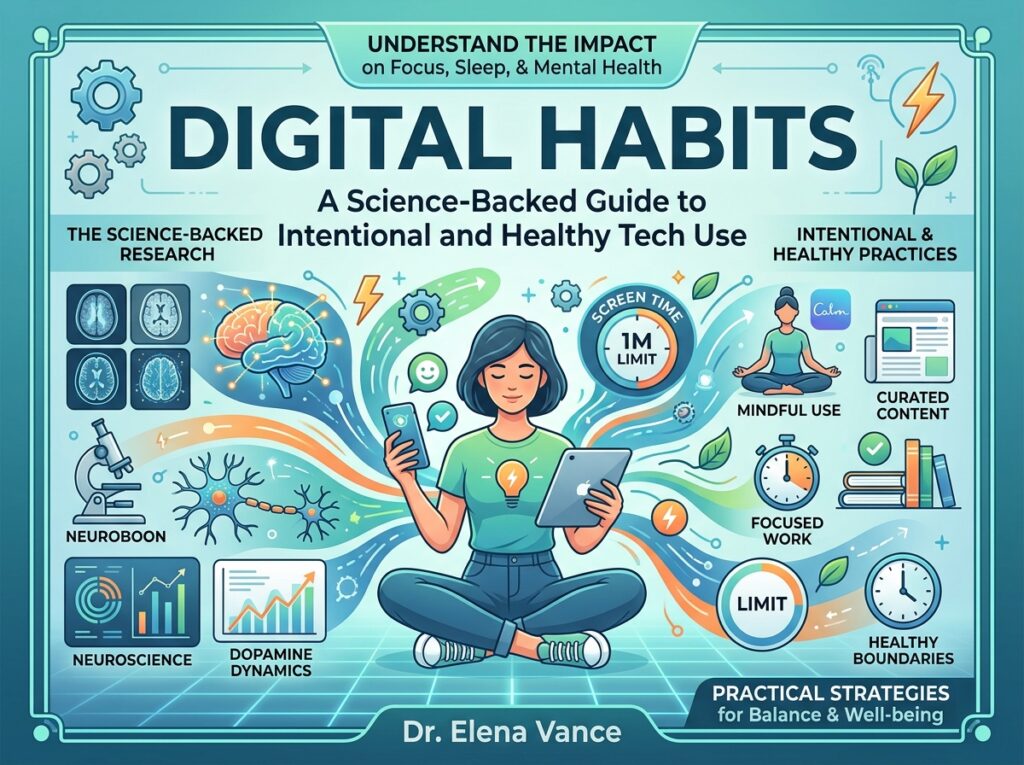
1. Create Digital Boundaries with Intention
One of the most powerful strategies for taking control of your digital life is setting clear boundaries around tech use . Start small: schedule screen-free periods each day (such as the first hour after waking and the last hour before bed), create low-tech zones in your home (like the bedroom or dining table), and set work-life boundaries by removing work email from your personal phone .
2. Audit and Streamline Your Digital Environment
A cluttered digital space can create low-level cognitive noise that drains mental energy. Instead of trying to organize everything, start by eliminating what you don’t need . Go through your phone and delete apps you haven’t used in months, unsubscribe from emails you rarely open, and turn off non-essential notifications . Keep only the most important apps on your home screen . Digital clarity is about elimination, not just organization.
3. Implement Focus-Enhancing Constraints
Paradoxically, one of the most effective ways to improve focus is to introduce constraints . Time-based techniques like the Pomodoro method (25 minutes of focused work followed by a 5-minute break) naturally limit engagement . Platform constraints, such as limiting the number of tabs open to five at a time, reduce cognitive load . Input constraints, like turning off notifications and muting group chats, create a distraction-free environment .
4. Practice Mindful Engagement
Mindful technology use involves being intentional and reflective about your engagement, rather than acting on impulse . Before opening an app, pause and ask yourself: “What is my intention right now? What do I hope to accomplish?” This simple check-in can help break the autopilot loop . Research suggests that the self-report habit index often fails to capture actual behaviour, highlighting the importance of developing genuine awareness rather than relying on perception .
5. Use Technology Intentionally for Goal Achievement
Technology should support your goals, not distract from them. When choosing digital tools, be specific about what you’re trying to achieve . If your goal is to read more books, you might need one e-reader app—not three book-tracking apps, two social reading platforms, and a podcast about reading . Digital clutter creates the same overwhelm as physical clutter.
6. Take Regular Breaks and Practice Digital Detox
Periodic breaks from technology are essential for mental health, sleep quality, and real-world relationships . Schedule tech-free periods, whether it’s a digital-free 10-minute walk without your phone or a full weekend unplugged . Physical activity can serve as a positive alternative for boosting endorphins, reducing the desire to get the same “buzz” from checking your phone .
7. Practice the 20-20-20 Rule and Other Micro-Breaks
To reduce digital eye strain and mental fatigue, use the 20-20-20 rule: every 20 minutes, look at something 20 feet away for 20 seconds . Also consider taking at least 15 minutes away from screens during the day and limiting screen time when you first wake up .
8. Protect Sleep Quality
Over 80% of people keep their phone by their bed at night, which can negatively affect sleep quality—even if you believe you’re getting enough sleep . Create a “digital sunset”: put your phone away at least 30 minutes before bedtime, keep technology out of the bedroom, and charge devices in another room . This helps your brain transition to a more relaxed state conducive to restorative sleep.