Table of Contents
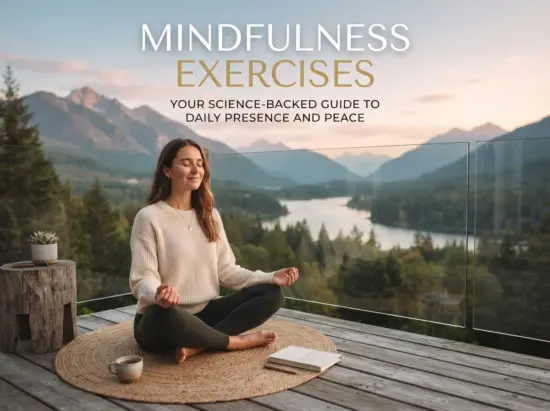
Welcome to HabitHack.fun, your trusted resource for mastering personal growth and habit formation. Mindfulness is the practice of purposefully paying attention to the present moment without judgment . It’s a way to train your brain to be more focused, less reactive, and more resilient. This comprehensive guide explores a variety of science-backed mindfulness exercises, from simple practices you can do anywhere to more structured meditations for deeper relaxation.
Understanding Mindfulness: More Than Just Sitting Still
Many people think of mindfulness as sitting on a pillow with eyes closed for hours. While that’s one way, mindfulness is actually a flexible skill that can be woven into any part of your day . It’s about training your brain to be fully present in whatever you’re doing, rather than getting lost in worry about the future or rumination about the past.
The Neuroscience of Mindfulness
Scientific research has shown that consistent mindfulness practice can actually change the structure and function of your brain. Studies using functional MRI (fMRI) have found that mindfulness-based stress reduction (MBSR) consistently increases functional connectivity between the ventromedial prefrontal cortex and the amygdala—a pathway central to emotion regulation . MBSR also strengthens connectivity within the default mode network, which is involved in self-referential processing . These changes help explain why mindfulness practitioners often report better emotional control and less anxiety.
Additionally, a meta-analysis of 29 randomized controlled trials found that mindfulness interventions lead to adaptive changes in self-reported interoception—the perception of internal bodily signals—which is related to emotional awareness and self-regulation . In other words, mindfulness helps you become more attuned to your body’s signals, which can improve mental well-being .
The Benefits: Why Practice?
Research has shown that just 5 to 15 minutes of daily mindfulness practice can bring a wide range of benefits, including :
- Reduced Stress and Anxiety: Mindfulness helps lower cortisol levels and activates the body’s relaxation response.
- Improved Focus and Attention: Regular practice strengthens your ability to concentrate and resist distractions.
- Better Emotional Regulation: You become less reactive to difficult emotions and more capable of responding calmly.
- Enhanced Self-Compassion: Mindfulness encourages a kinder, more accepting relationship with yourself.
- Improved Sleep: Practices like body scans can help calm a racing mind and prepare you for restful sleep.
Simple Mindfulness Exercises to Start Your Day
1. Mindful Wakeup: Start with Intention
Instead of reaching for your phone first thing in the morning, take a moment to set an intention for the day. This practice, recommended by mindfulness experts, helps align your conscious goals with your deeper motivations .
How to do it :
- Upon waking, sit comfortably in your bed or a chair. Close your eyes and take three deep, nourishing breaths.
- Ask yourself: What is my intention for today? Consider how you want to show up for the people and activities you will face.
- Set a simple intention, such as “Today, I will be patient with others” or “Today, I will be kind to myself.”
- Revisit your intention throughout the day to help guide your actions.
2. Mindful Breathing
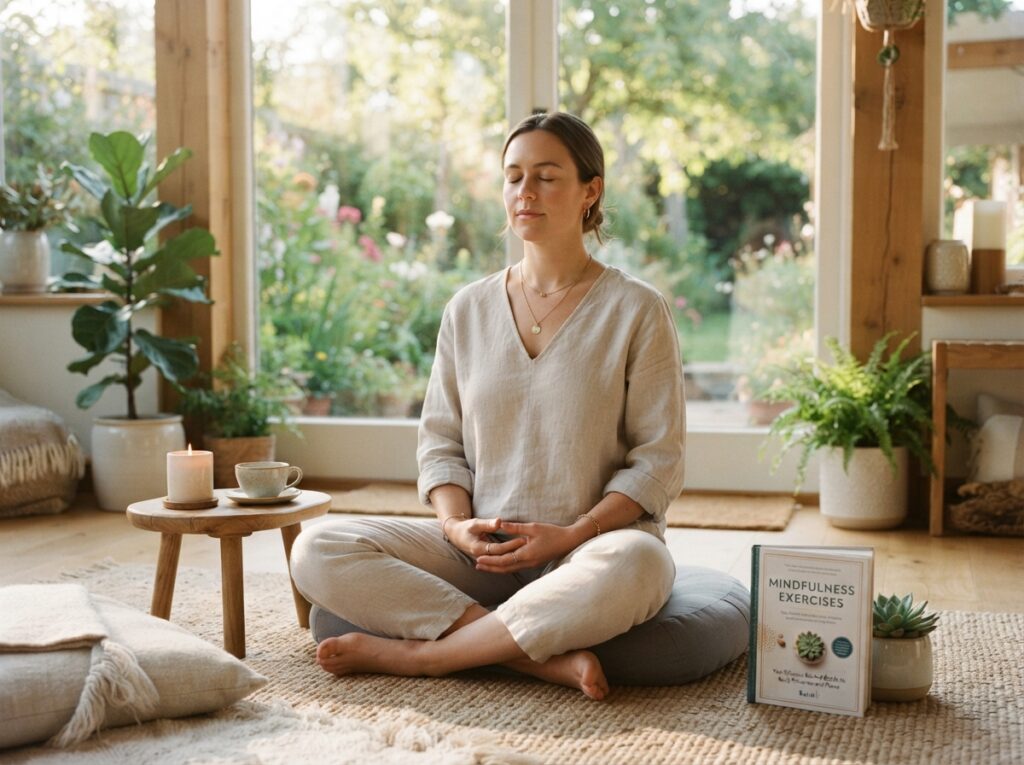
Mindful breathing is a fundamental practice that can be done anywhere, anytime. It’s a powerful way to anchor yourself in the present moment .
How to do it :
- Sit comfortably with your back straight but not rigid. Close your eyes or gaze softly downward.
- Breathe naturally, tuning into the rhythm and flow of your breath. Notice where you feel the breath in your body—your nostrils, chest, or abdomen.
- When your mind wanders (and it will), gently bring your attention back to your breath without judgment.
- Start with 5-7 minutes and gradually increase as you feel comfortable.
Pro Tip: When you feel anxious or panicky, mindful breathing can help you focus on your breath instead of overwhelming thoughts, making you feel more in control .
3. The 5-4-3-2-1 Grounding Exercise
This is an excellent technique to quickly bring your attention to the present moment using your five senses. It’s particularly helpful during moments of stress or overwhelm .
How to do it :
- Inhale deeply, then exhale slowly. Focus on your breathing for a few moments.
- Notice and mentally list:
- 5 things you can see around you.
- 4 things you can physically feel (the fabric of your shirt, the floor beneath your feet).
- 3 things you can hear (traffic, your own breathing, a distant conversation).
- 2 things you can smell (fresh coffee, the air, hand lotion).
- 1 thing you can taste (the lingering flavor of a mint or your last meal).
Structured Mindfulness Meditations
1. Body Scan Meditation
The body scan is a classic mindfulness exercise that involves bringing focused attention to each part of your body, from your toes to the top of your head . It’s a powerful way to release physical tension and become more aware of how emotions manifest in the body.
How to do it :
- Lie on your back with your legs extended and arms at your sides, palms facing up, or sit comfortably in a chair.
- Close your eyes and take a few deep breaths to settle in.
- Bring your attention to your feet. Notice any sensations—tingling, warmth, pressure, or tension.
- Slowly and deliberately, move your focus up through your body: ankles, calves, knees, thighs, hips, abdomen, chest, back, shoulders, arms, hands, neck, and finally, your head.
- Spend a few moments on each area. If you notice tension, imagine breathing into that area and releasing it as you exhale.
- If your mind wanders, gently return your focus to the body part you’re scanning.
2. Sitting Meditation
Sitting meditation is the traditional practice of focusing your attention on a single anchor—often the breath—and gently returning to it whenever your mind wanders .
How to do it :
- Sit comfortably with your back straight, feet flat on the floor, and hands resting in your lap.
- Breathing through your nose, focus your attention on the sensation of your breath moving in and out of your body.
- Notice when your mind becomes distracted by thoughts, sounds, or physical sensations. Without judgment, note the distraction and gently redirect your focus back to your breathing.
3. Walking Meditation
Walking meditation is a mindful movement practice that brings the same focused attention to the act of walking . It is a wonderful alternative if you find it difficult to sit still .
How to do it :
- Find a quiet place 10 to 20 feet long where you can walk slowly and without interruption.
- Stand still for a moment. Notice the sensations of standing—the weight of your body on your feet.
- Begin to walk slowly, at a natural but deliberate pace.
- Focus on the experience of walking: the lifting of one foot, the shifting of your weight, the placing of your heel, and then the rest of your foot on the ground.
- When you reach the end of your path, turn around and continue walking, maintaining your awareness of the sensations.
Everyday Mindfulness Practices
1. Mindful Eating
Mindful eating is the practice of bringing full awareness to the experience of eating, savoring each bite and tuning into your body’s hunger and fullness cues .
How to do it :
- Before you eat, pause and take a few deep breaths.
- Look at your food. Notice its colors, shapes, and textures.
- Take a bite and put your utensils down. Chew slowly, paying attention to the flavors and textures.
- Eat slowly and without distractions like the television or your phone.
- Pause frequently to check in with your body’s hunger and fullness cues.
2. Mindful Driving
Even a stressful commute can be transformed into an opportunity for mindfulness. Instead of getting frustrated by traffic, you can use the time to center yourself .
How to do it :
- Before you start the car, take a few deep breaths. Set an intention for a calm, safe drive.
- While driving, notice the sensation of your hands on the steering wheel and your body in the seat.
- Be aware of your surroundings—the sights and sounds—without judgment.
- If you feel tension or road rage rising, take a deep breath, and extend compassion to yourself and the other drivers.
3. Single-Tasking
Multitasking is a myth; we are simply switching our attention rapidly between tasks, which is inefficient and stressful. Single-tasking—bringing your full focus to one activity at a time—is a powerful way to practice mindfulness .
How to do it :
- Choose a task, such as washing the dishes, taking a shower, or folding laundry.
- Bring all your attention to the sensory experience of the task. What do you see, feel, smell, or hear?
- When you notice your mind wandering, gently guide your attention back to the task at hand.
4. Gratitude Reflection
Cultivating gratitude is a key mindfulness practice that shifts your focus from what’s wrong to what’s good in your life . This can break negative thought patterns and build a more positive, resilient mindset .
How to do it :
- At the end of each day, or when you’re feeling stressed, take two minutes to write down something good that happened or something you’re grateful for.
- You can also keep a daily gratitude journal.