Table of Contents
Welcome to HabitHack.fun, your trusted resource for mastering the art of habit formation and personal growth. Building a successful career isn’t just about working hard—it’s about working strategically. Many professionals work diligently but still feel stuck, overlooked for promotions, or unsure how to advance . This guide combines insights from career experts, behavioral science, and real-world experience to provide a practical, habit-driven approach to accelerating your career growth.
Understanding the Landscape: Why Career Growth Requires Strategy
The modern workplace is evolving rapidly. Technologies like AI, shifting business models, and changing consumer demands are reshaping industries at an unprecedented pace . The World Economic Forum’s Future of Jobs Report highlights that professionals who succeed in the coming decade will be those who commit to lifelong learning and adaptability .
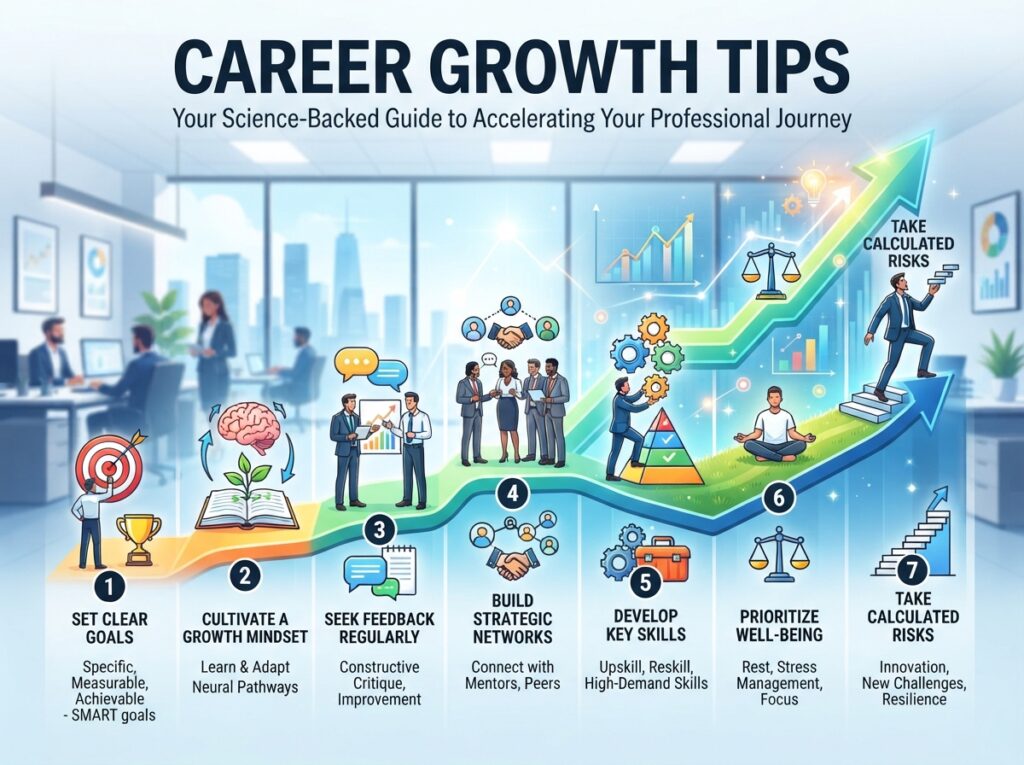
Relying solely on hard work is no longer enough. Career growth requires a strategic approach: visibility, relationships, continuous skill development, and a proactive mindset.
Core Career Growth Strategies
1. Develop Your Skills Strategically
Audit Your Skills and Identify Gaps
Before you can grow, you need to understand where you stand. Start by listing the skills you practice daily and comparing them to job descriptions for roles you aspire to . Use performance reviews, employer feedback, and industry reports to identify your strengths and areas for development .
Embrace Lifelong Learning
Lifelong learning is essential for sustained career success. It signals to employers that you are adaptable and committed to growth . Some strategies to incorporate learning into your routine include:
- Online courses and certifications: Platforms like Coursera, LinkedIn Learning, edX, and Google Career Certificates offer affordable ways to learn in-demand skills like AI, data analytics, and leadership .
- Structured learning and formal certification: Pursuing certifications demonstrates your expertise in a way that is independently validated and recognized by employers .
- Micro-learning: Listen to podcasts during your commute, read industry publications, or set aside 20 minutes a week to stay updated on trends .
Nurture Your Soft Skills
While technical skills are crucial, soft skills like collaboration, emotional intelligence, creative thinking, and resilience are equally valued by employers . As one career expert put it, “how you work matters as much as what you do” .
2. Build Visibility and Demonstrate Your Value
Doing Great Work Isn’t Enough
One of the most common career-limiting habits is “flying under the radar.” Doing excellent work quietly often leads to being overlooked . You need to make your contributions known. Rohit Yadav, a Pune-based professional who shared his promotion journey, recommends listing your “weekly wins”—three accomplishments each week, no matter how minor—to track progress and communicate your work with clarity and confidence .
Share Your Wins and Seek Feedback
- Send regular updates to your manager: Short, outcome-focused emails summarizing what you’ve done, the results, and lessons learned can make you visible without sounding like you are bragging .
- Ask for feedback proactively: Instead of waiting for annual reviews, ask your manager: “What do I need to improve to be seen as ready for the next level?” This turns your growth into a shared goal .
- Use the “stay interview” technique: Proactively discuss your career aspirations with your manager. Frame it positively: “I’m really enjoying my work here. I’d love to discuss what the next year could look like for me” .
3. Master Relationship Building and Networking
Build Relationships Before You Need Them
Neglecting relationships is another habit that stalls careers. Success increasingly depends on collaboration, support, and being part of the right circles . As May Busch, a former COO at Morgan Stanley, explains: “When you wait until you need something, it’s often too late” .
Networking Strategies:
- Build a broad network: Connect with people both inside and outside your organization and industry. Opportunities often come from unexpected places .
- Join professional organizations and groups: Sarah Charai, Executive Director at Cleveland Clinic, credits her career advancement to joining organizations and participating in leadership programs that expanded her network .
- Connect regularly: A quick message or short chat to say hello or share something helpful is enough to keep a connection alive .
Find a Mentor and Form a Personal Board of Directors
A mentor can provide real-world advice, access to resources, and industry connections . Consider forming a “personal board of directors”—a team of trusted advisors who can advocate for you and provide guidance .
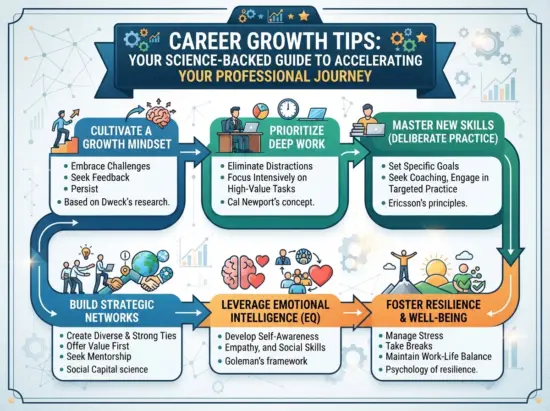
4. Adopt a Growth Mindset and Embrace Challenges
Stop Letting Limiting Beliefs Hold You Back
Internal stories like “I’m not ready yet” or “I don’t have anything interesting to say” can quietly derail your career . Identify these limiting beliefs and challenge them. Stepping out of your comfort zone and embracing challenges is where significant growth happens .
Take on Stretch Assignments
A “stretch assignment” is a project that falls slightly outside your current expertise, forcing you to learn new skills . These demonstrate leadership, strategic thinking, and a commitment to your team’s success .
Become an Intrapreneur
Think like an entrepreneur while enjoying the stability of your company . Identify internal pain points—inefficient processes, recurring issues, or failed communications—and proactively offer solutions . This gets you noticed for promotion.
5. Be Strategic About Timing and Career Moves
Watch the Health of Your Industry
Entire industries can shift within a few years . Stay updated on emerging trends by following thought leaders, listening to industry podcasts, and watching what companies are investing in . If you spot warning signs—your company losing customers or new software doing work that was previously manual—start preparing for a transition while you still have leverage .
Align Moves with Your Life Stages and Energy
Your career should fit into your life, not the other way around. Make career moves that align with your current capacity, energy, and personal life stages . Monitor your internal energy: if tasks feel meaningless, you stop volunteering ideas, or you feel relief instead of pride when projects end, it may be time for a change .
Avoid Staying Too Long or Moving Too Often
Staying at a company for about three years allows you to build real value and show long-term impact, while avoiding the perception that you are stagnant or unreliable .