Table of Contents
Welcome to HabitHack.fun, your trusted resource for mastering the art and science of habit formation. Today, we’re diving deep into the world of daily habits. These are the small, repeated actions that, over time, can dramatically reshape your health, happiness, and productivity. It’s estimated that more than 50% of our daily behavior is a product of habits, not conscious decision-making . This means our lives are largely a sum of our daily habits, for better or worse.
The Science and Significance of Daily Habits
A habit is an automatic behavior or routine that is repeated continuously, often to the point of being performed without conscious awareness . Think about your morning routine: you likely brush your teeth, make coffee, or check your phone without giving it much thought. These actions are deeply ingrained neural pathways forged through repetition . It is this very quality that makes daily habits so powerful. They act as the invisible architecture of our lives, shaping our health, our work, and our overall sense of well-being .
The importance of cultivating positive daily habits cannot be overstated. Research shows that people with structured routines have lower levels of anxiety and depression compared to those who live without them . A well-structured daily routine removes the burden of constant decision-making, thereby reducing mental fatigue and stress . By automating positive behaviors, you are effectively choosing who you want to be. Every action you take is a vote for the type of person you wish to become .
The Power of a Daily Routine for Mental and Physical Health
Establishing a daily routine is a cornerstone of good mental and physical health. Following a consistent schedule provides a sense of security and control that is vital for emotional wellness . Here are some key areas where a solid routine can make a measurable difference.
Prioritize Consistent Sleep
Your body’s internal clock, or circadian rhythm, is heavily influenced by your sleep-wake schedule. Going to bed and waking up at the same time every day is arguably the most critical part of a healthy daily routine . This consistency is so powerful that a 2025 study found that regular sleepers had a 38% lower risk of depression and a 33% lower risk of anxiety compared to those with irregular sleep patterns. This benefit held true even if irregular sleepers got the recommended number of hours . A consistent sleep schedule is a non-negotiable habit for mental well-being.
Move Your Body Every Day
The link between physical activity and mental health is well-established. You don’t need to run a marathon to reap the benefits. According to the American Psychological Association, walking for just 10 to 15 minutes daily may lower your risk of depression by 18% . Exercise releases feel-good chemicals like dopamine and serotonin, which relieve stress and improve mood . The key is to make movement a daily habit, not an occasional chore.
Be Mindful and Practice Gratitude
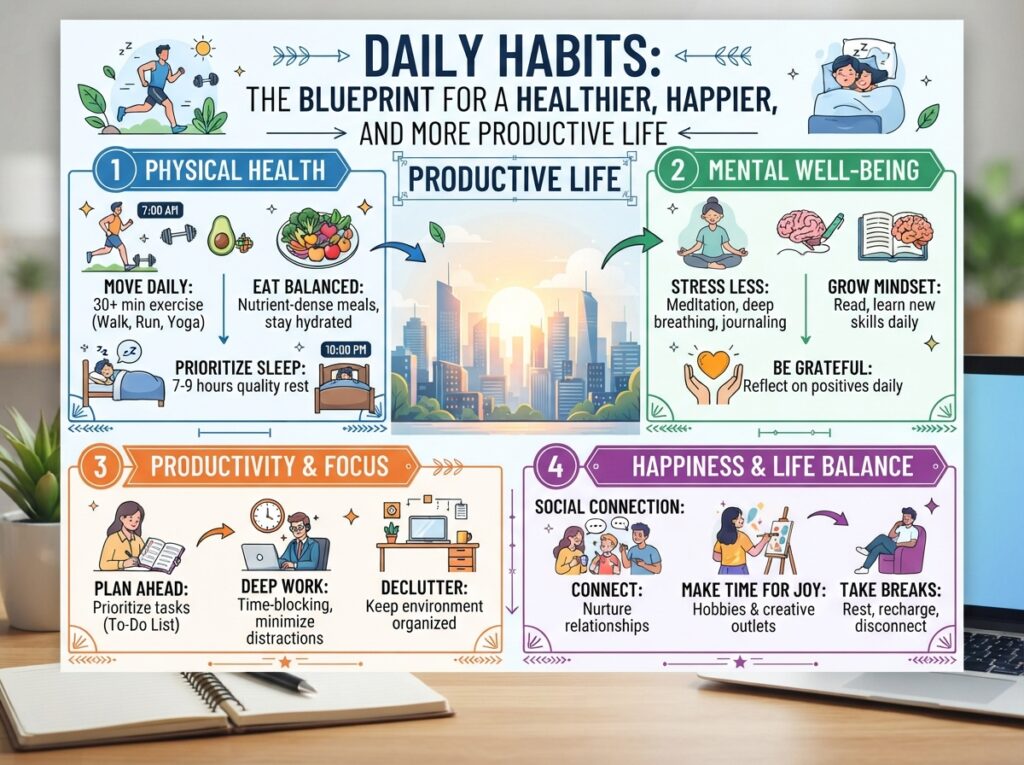
In our fast-paced world, taking time to be present can feel like a luxury, but it is a powerful daily habit. Mindfulness is about letting go of stress from past or future events and focusing on the present moment without judgment. This practice can interrupt harmful thought patterns and reduce stress hormones . Similarly, a habit of gratitude—such as writing down three good things each day—can shift your focus from what you lack to what you have, significantly boosting your overall well-being . Healthline editor Morgan Mandriota notes this practice helps her stay “more mindful of the positives that are easy to lose sight of, especially during rough days” .
The Secret Weapon: Habit Stacking
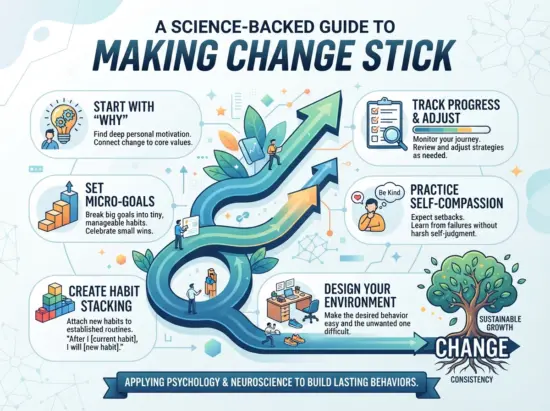
One of the most effective and scientifically supported methods for building new daily habits is habit stacking . This strategy involves pairing a new habit you want to build with an existing one that is already deeply ingrained in your routine . The formula is simple: After [CURRENT HABIT], I will [NEW HABIT] . For example, the American Heart Association recommends smiling at yourself in the mirror and adding positive self-talk while washing up in the morning . Or, after you get into the car and put on your seat belt, take several deep, slow breaths before starting the engine .
This technique is effective because it leverages the neural pathways of your existing habit. By using a consistent cue to trigger the new behavior, you are making the starting process effortless . It removes the guesswork about when and how to start, drastically increasing the likelihood that the new habit will stick .
5 Daily Habits to Skyrocket Your Productivity
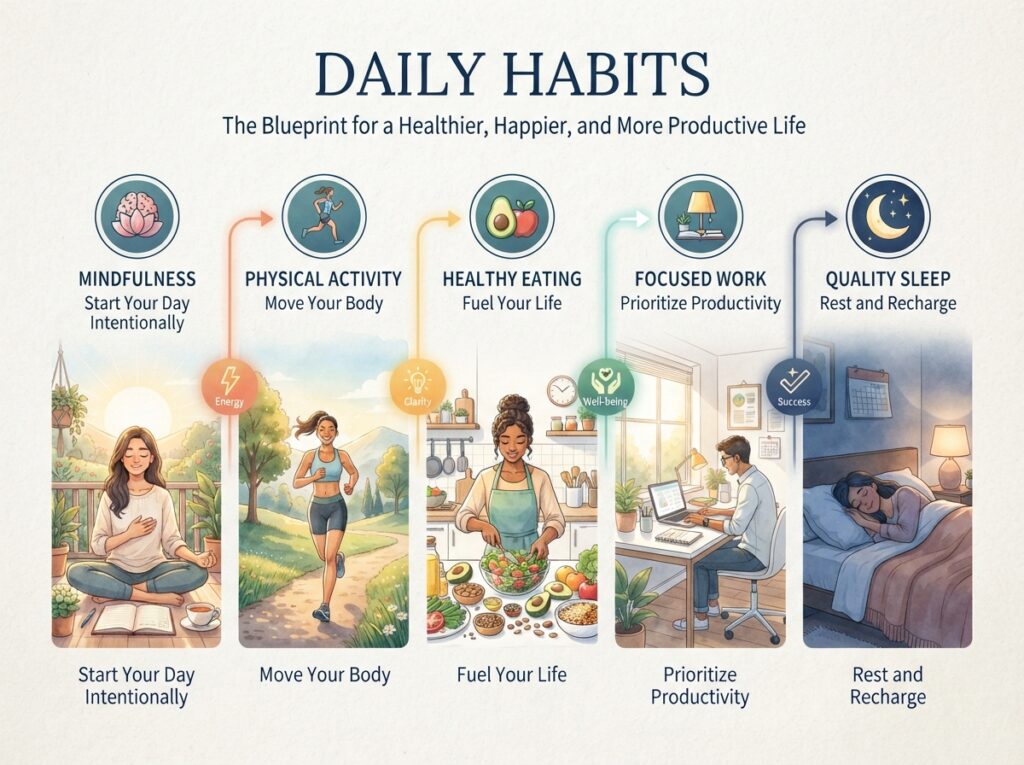
Beyond health, daily habits are the engine of productivity. Here are five habits that can transform your approach to work and life, inspired by experts like billionaire investor Barbara Corcoran and productivity professionals.
1. The Five-Minute Journal
Starting your day with just five minutes of journaling can set a powerful tone. According to Forbes Council member Ryan McGrath, this habit can clarify your intentions and foster gratitude. His routine includes writing down:
- What you are grateful for.
- What will make today great.
- A daily affirmation .
This small habit shifts your mindset toward positivity and purpose.
2. Corcoran’s A-List Strategy
Barbara Corcoran, the “Shark Tank” investor, credits her success to a simple daily habit: making a to-do list the night before . But her secret weapon is how she organizes it. She ranks tasks by importance, marking the most critical and often uncomfortable tasks as “A-List” items. She tackles these challenging tasks first thing in the morning . Getting the hardest work out of the way early prevents decision fatigue and makes the rest of your day feel manageable.
3. Time Blocking
Instead of a vague to-do list, schedule specific tasks for specific blocks of time on your calendar . For example, instead of “work on project,” schedule “9:00 AM – 10:30 AM: Draft introduction.” This approach minimizes decision fatigue and gives you a clear roadmap for your day . Treat these blocks as mandatory appointments you cannot miss.
4. Create a “Done” List
At the end of your day, don’t just look at what you failed to do; celebrate what you accomplished . Creating a “done” list is a powerful way to acknowledge your triumphs, no matter how small. Recognizing your completed tasks can provide a sense of accomplishment and motivate you for the next day .
5. Batch Similar Tasks
Not all work is created equal. Batching involves grouping similar, low-energy administrative tasks together (like answering basic emails, organizing files, or inputting data) and doing them all at once . By scheduling these repetitive activities in a single block, you minimize the mental friction that comes from constantly switching gears between different types of work. This preserves your brainpower for the high-focus tasks that require deep work .
Conclusion: Your Daily Habits are Your Future
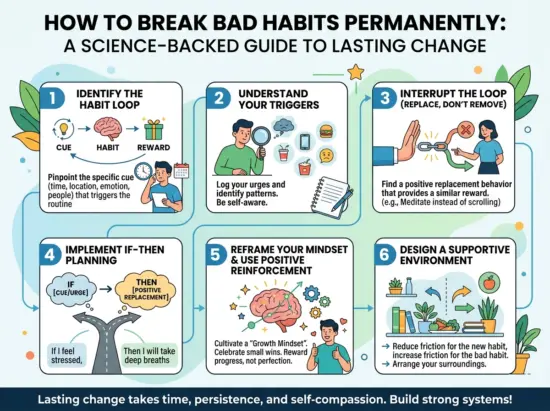
The science is clear: daily habits are the building blocks of our lives. They shape our health, our productivity, and our happiness. By understanding the power of the habit loop, leveraging techniques like habit stacking, and intentionally designing a consistent daily routine, you are not just changing your behavior—you are changing your identity .
It is important to remember that habit formation takes time, often ranging from 18 to 254 days . The goal is not perfection, but progress. Start small, be specific, and be consistent. As James Clear, author of Atomic Habits, states, “Your habits shape your identity, and your identity shapes your habits” . With patience and the right strategies, you can build a set of daily habits that propel you toward the life you want to live.