Table of Contents
Welcome to HabitHack.fun, your trusted companion on the journey toward personal growth and transformation. Self-improvement is more than just a buzzword—it’s a lifelong commitment to becoming the best version of yourself. It’s about recognizing that you have untapped potential and taking deliberate steps to unlock it. In this comprehensive guide, we’ll explore the science, strategies, and daily practices that can help you evolve into the person you’ve always wanted to be.
Understanding Self-Improvement: What It Really Means
Self-improvement is the intentional act of bettering yourself in various aspects of your life, including your physical health, mental well-being, emotional intelligence, skills, and relationships. It’s a continuous journey rather than a destination—a commitment to lifelong learning and growth.
At its core, self-improvement is about:
- Self-awareness: Understanding your strengths, weaknesses, values, and motivations.
- Growth mindset: Believing that your abilities can be developed through dedication and hard work.
- Intentional action: Taking deliberate steps toward becoming better.
- Resilience: Bouncing back from setbacks and learning from failures.
Why Self-Improvement Matters
Investing in yourself is the best investment you can make. Here’s why:
- Increased fulfillment: When you work toward becoming your best self, you experience a deeper sense of purpose and satisfaction.
- Better relationships: Self-improvement helps you become more empathetic, patient, and understanding, improving your connections with others.
- Greater resilience: You develop the tools to handle life’s challenges with grace and strength.
- Professional success: Continuous learning and skill development open doors to new opportunities.
- Improved health: Many self-improvement practices lead to better physical and mental health.
The Foundations of Self-Improvement
Before you can improve, you need to understand where you currently stand and where you want to go.
1. Self-Reflection and Self-Awareness
Self-awareness is the cornerstone of self-improvement. Without understanding your current state—your strengths, weaknesses, patterns, and triggers—you cannot effectively chart a course for growth.
How to build self-awareness:
- Journaling: Write down your thoughts, feelings, and experiences regularly. This helps you identify patterns and gain clarity.
- Meditation: Practice observing your thoughts without judgment, which increases self-awareness.
- Feedback: Ask trusted friends, family, or colleagues for honest feedback about your blind spots.
- Personality assessments: Tools like the Myers-Briggs Type Indicator (MBTI), Enneagram, or Big Five personality test can provide insights into your tendencies.
2. Goal Setting for Self-Improvement
Setting clear, meaningful goals gives direction to your self-improvement efforts.
How to set effective goals:
- Start with your “why”: Connect your goals to your deeper values and purpose. Why is this improvement important to you?
- Use the SMART framework: Ensure your goals are Specific, Measurable, Achievable, Relevant, and Time-bound.
- Break it down: Divide big goals into smaller, manageable steps.
- Write them down: The act of writing solidifies commitment and makes goals feel more tangible.
3. The Growth Mindset
Psychologist Carol Dweck’s research on mindset reveals that people with a growth mindset—who believe their abilities can be developed—achieve more than those with a fixed mindset, who believe their abilities are static.

Cultivating a growth mindset:
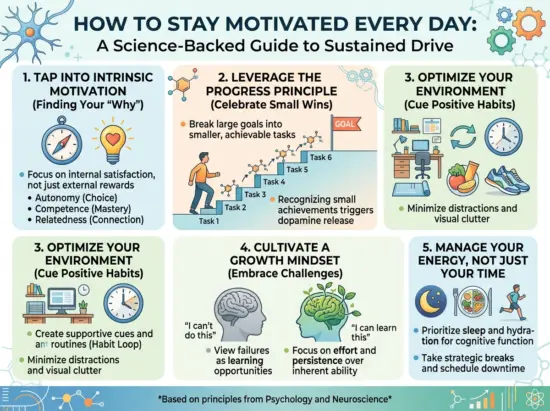
- Embrace challenges: View challenges as opportunities to learn and grow, not threats.
- Learn from criticism: Instead of taking feedback personally, see it as valuable information for improvement.
- Celebrate effort, not just outcomes: Recognize that the process of trying is as important as the result.
- Say “not yet” instead of “I can’t”: When you struggle with something, remind yourself that you haven’t mastered it yet.
Critical Areas of Self-Improvement
Self-improvement encompasses many dimensions of life. Here are the key areas where focused effort can yield transformative results.
1. Physical Health and Wellness
Your body is the vehicle through which you experience life. Taking care of it is foundational to all other forms of self-improvement.
Key habits to develop:
- Prioritize sleep: Aim for 7-9 hours of quality sleep per night. Consistent sleep patterns improve mood, cognitive function, and physical health.
- Move daily: Incorporate physical activity into your routine—whether walking, strength training, yoga, or dancing.
- Eat nourishing foods: Focus on whole, unprocessed foods that fuel your body and brain.
- Stay hydrated: Drink adequate water throughout the day.
- Regular check-ups: Don’t neglect preventive healthcare.
2. Mental and Emotional Well-Being
Mental health is just as important as physical health. Cultivating emotional resilience and a healthy mindset supports all areas of life.
Key habits to develop:
- Practice mindfulness: Regular mindfulness meditation reduces stress, improves focus, and increases emotional regulation.
- Cultivate gratitude: Write down three things you’re grateful for each day.
- Manage stress: Develop healthy coping mechanisms like deep breathing, exercise, or talking to a trusted friend.
- Seek support: Don’t hesitate to reach out to a therapist or counselor when needed.
- Challenge negative self-talk: Replace self-criticism with self-compassion.
3. Skill Development and Lifelong Learning
In a rapidly changing world, continuous learning is essential for personal and professional growth.
Key habits to develop:
- Read regularly: Read books, articles, and other materials that expand your knowledge.
- Take courses: Online platforms like Coursera, edX, and Udemy offer affordable learning opportunities.
- Learn a new skill: Challenge yourself to acquire a new skill each year—whether a language, instrument, coding, or public speaking.
- Practice deliberate learning: Seek feedback and push yourself beyond your comfort zone.
- Stay curious: Cultivate a mindset of curiosity and wonder about the world.
4. Relationships and Social Skills
We are social creatures, and the quality of our relationships significantly impacts our happiness and well-being.
Key habits to develop:
- Practice active listening: Give people your full attention when they speak.
- Show empathy: Try to understand things from others’ perspectives.
- Communicate clearly: Express your thoughts and feelings honestly and respectfully.
- Set healthy boundaries: Protect your time and energy while respecting others’ boundaries.
- Nurture connections: Invest time in meaningful relationships.
5. Financial Literacy and Management
Financial well-being reduces stress and provides freedom to pursue your passions.
Key habits to develop:
- Create a budget: Track income and expenses to understand your financial picture.
- Build an emergency fund: Save 3-6 months of living expenses.
- Pay yourself first: Automate savings before spending.
- Educate yourself: Learn about investing, debt management, and financial planning.
- Live below your means: Distinguish between needs and wants.
6. Career and Professional Growth
Investing in your career can lead to greater fulfillment and opportunities.
Key habits to develop:
- Set career goals: Identify where you want to be in 1, 5, and 10 years.
- Network strategically: Build meaningful professional relationships.
- Seek mentorship: Learn from those who have walked the path before you.
- Develop soft skills: Communication, leadership, and emotional intelligence are highly valued.
- Stay adaptable: Be open to new opportunities and changes in your field.
How to Start Your Self-Improvement Journey
Embarking on a self-improvement journey can feel overwhelming. Here’s a roadmap to get started.
Step 1: Take Stock of Your Current Situation
To improve, you first need to know where you’re starting from. This involves:
- Conducting a personal SWOT analysis (Strengths, Weaknesses, Opportunities, Threats).
- Journaling about various life areas (health, relationships, career, finances, personal growth).
- Identifying patterns and areas of dissatisfaction.
Step 2: Define Your Vision for Self-Improvement
Imagine your best self in five years. Write a detailed description of this person:
- How do they think and feel?
- What habits do they practice?
- What relationships do they nurture?
- What career or life path are they on?
Step 3: Set Priorities
You can’t improve everything at once. Identify two to three areas that will have the greatest impact on your well-being and focus on those first.
Step 4: Create a Self-Improvement Plan
Your plan should be specific, actionable, and realistic. It might include:
- Daily habits you’ll practice.
- Books, courses, or resources you’ll utilize.
- A timeline for achieving specific goals.
- A method for tracking progress.
Step 5: Build Habits That Stick
Self-improvement is about consistent daily action. Use the habit-building strategies we’ve covered in other articles:
- Start small (the 2-minute rule).
- Use habit stacking.
- Track your progress.
- Be patient with yourself.
Step 6: Find Accountability
Share your goals with someone you trust. Regular check-ins can help you stay on track and motivated.
Step 7: Reflect and Adjust
Regularly review your progress. What’s working? What’s not? Adjust your approach as needed.
Overcoming Common Self-Improvement Challenges
No journey is without obstacles. Here are common challenges and how to address them.
1. Lack of Motivation
Motivation is fickle; it comes and goes. Relying on motivation alone will eventually lead to failure.
Solution: Build systems, not just goals. Create habits that become automatic. Focus on identity-based goals (who you want to become) rather than just outcomes.
2. Procrastination
Procrastination often stems from fear, overwhelm, or perfectionism.
Solution: Break tasks into tiny steps. Start with just two minutes. Forgive yourself for past procrastination and focus on the present. Use the “5-second rule”: when you feel the urge to procrastinate, count down 5-4-3-2-1 and take immediate action.
3. Fear of Failure
Fear of failure can paralyze you and prevent you from even trying.
Solution: Reframe failure as feedback. Every “failure” provides valuable data about what doesn’t work. Adopt a growth mindset: setbacks are opportunities to learn and grow, not reflections of your worth.
4. Overwhelm
Trying to change too many things at once can lead to paralysis.
Solution: Focus on one habit at a time. The “Kaizen” approach emphasizes small, incremental improvements. Master one area before moving to the next.
5. Lack of Support
Going it alone can be challenging.
Solution: Join communities of like-minded people. Attend workshops, join online forums, or find a mentor. Support makes the journey easier and more enjoyable.
6. Impatience
We want results immediately, but meaningful change takes time.
Solution: Trust the process. Focus on being consistent rather than perfect. Trust that small daily actions will compound into significant results.
The Role of Daily Habits in Self-Improvement
Self-improvement isn’t about grand gestures—it’s about the small habits you practice every day. Here are some transformative daily habits.
Morning Habits
- Wake up early: Give yourself quiet time before the demands of the day begin.
- Hydrate: Drink water upon waking to rehydrate your body.
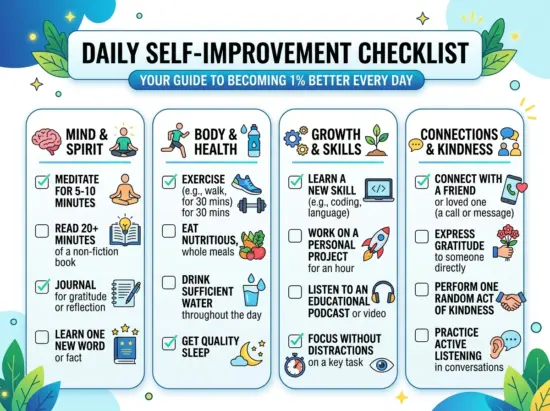
- Meditate: Start with just 2 minutes of mindfulness.
- Journal: Write down your goals, gratitudes, or intentions for the day.
- Move: Do some stretching or light exercise to wake up your body.
- Read: Spend at least 15 minutes reading something enriching.
Evening Habits
- Reflect: Review your day—what went well, what could be improved?
- Plan tomorrow: Write down your top three priorities for the next day.
- Disconnect: Limit screen time at least an hour before bed.
- Gratitude: Write down three things you’re grateful for from your day.
- Prepare: Set out clothes, pack your bag, or prepare for the next day.
- Sleep: Prioritize consistent sleep at the same time each night.
Continuous Habits
- Learn daily: Listen to a podcast, read an article, or watch an educational video.
- Practice gratitude: Regularly acknowledge the good things in your life.
- Connect: Reach out to someone you care about.
- Move: Incorporate physical activity into your daily routine.
- Reflect: Take time to think about your progress and adjust as needed.
Recommended Self-Improvement Resources
To support your journey, here are some highly recommended books, podcasts, and practices.
Books
| Book | Author | Focus |
|---|---|---|
| Atomic Habits | James Clear | Habit formation and behavior change |
| The Power of Habit | Charles Duhigg | Understanding the science of habits |
| Mindset | Carol Dweck | The power of a growth mindset |
| The 7 Habits of Highly Effective People | Stephen R. Covey | Personal and professional effectiveness |
| Daring Greatly | Brené Brown | Vulnerability and courage |
| The Compound Effect | Darren Hardy | The power of small actions over time |
| Thinking, Fast and Slow | Daniel Kahneman | Understanding how we think and decide |
| Deep Work | Cal Newport | Focused work and productivity |
Podcasts
| Podcast | Focus |
|---|---|
| The Tim Ferriss Show | Life optimization and learning from experts |
| The School of Greatness | Inspirational interviews and personal growth |
| The One You Feed | Personal development and mindfulness |
| Hidden Brain | Psychology and human behavior |
| The Tony Robbins Podcast | Peak performance and personal development |