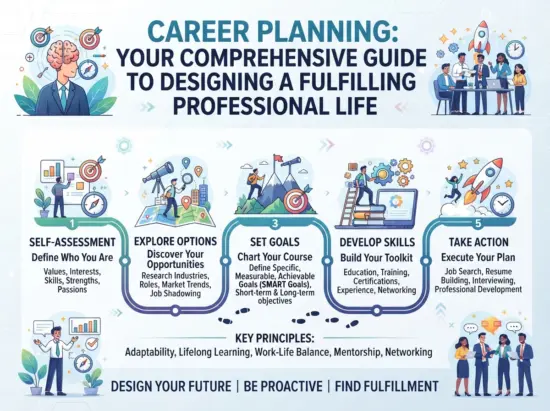
Table of Contents
Welcome to HabitHack.fun, your trusted resource for building habits that unlock your full potential. Career planning is more than just a task you complete once—it’s a dynamic, ongoing process that empowers you to navigate your professional life with clarity and confidence . Whether you are just starting out, considering a change, or aiming for advancement, a strategic career plan helps you avoid impulsive decisions and recognize the right time to pursue new opportunities . This guide provides a step-by-step framework to help you design a fulfilling career.
What is Career Planning and Why Does It Matter?
Career planning is the cyclical process of understanding yourself, exploring the world of work, and mapping out the steps needed to achieve your professional goals . It’s a strategic approach that moves you from passively “going with the flow” to actively designing your professional future. Your most important asset is yourself; the more you invest in self-awareness, skills, and networking, the more you expand your opportunities .
A well-structured career plan serves as your personal GPS. It helps you identify your starting point, chart a course to where you want to be, and navigate inevitable detours along the way. It is a living document that evolves as you grow, ensuring your professional path remains aligned with your personal ambitions and changing life circumstances .
The Career Planning Process: A Step-by-Step Guide
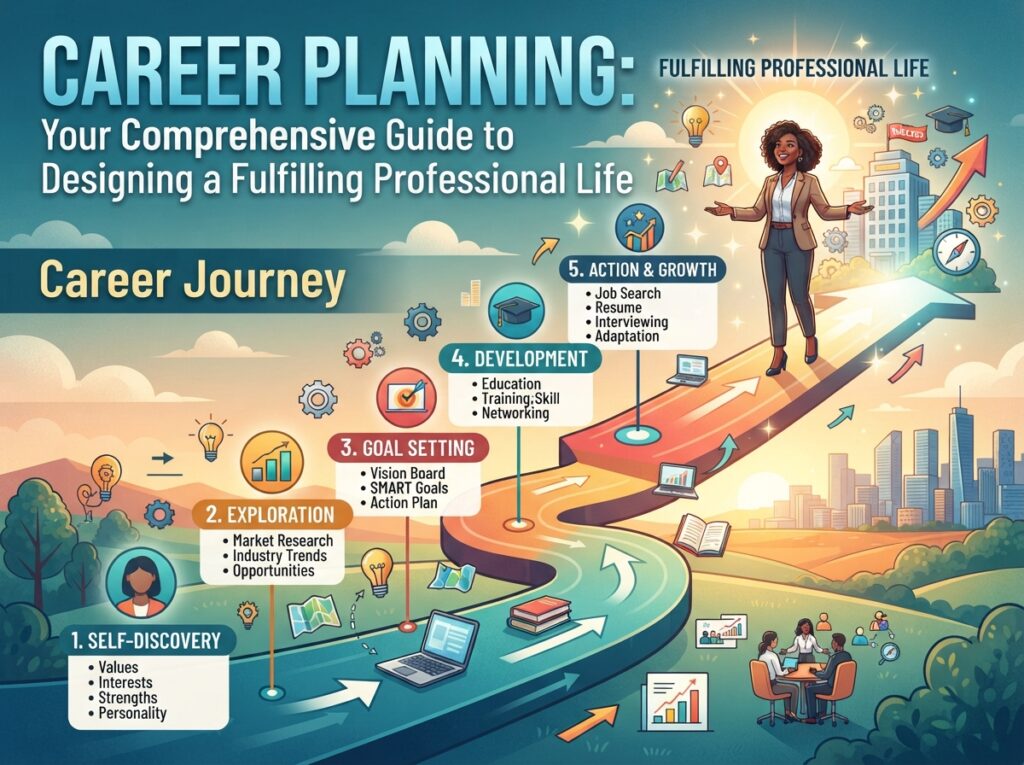
The career planning process can be broken down into core stages that help you make informed and intentional decisions about your future .
Step 1: Define—Know Yourself
The first and most crucial step is self-understanding. You cannot choose a fulfilling career without a clear understanding of your own Values, Interests, Personality, and Skills (VIPS). This self-awareness forms the foundation of your career plan .
This involves a deep self-reflection to identify:
- Values: What principles and beliefs are most important to you? Do you value helping others, financial security, intellectual challenge, autonomy, or work-life balance?
- Interests: What topics fascinate you? How do you spend your free time? What tasks do you find most absorbing?
- Personality: What kind of work environment suits you best? Do you thrive in collaborative teams or prefer independent work? Are you analytical, creative, or a blend of both?
- Skills: What are your strengths? This includes both hard skills (like coding or data analysis) and transferable soft skills (like communication, problem-solving, and leadership). An honest self-assessment will help narrow your options in the next step .
Step 2: Discover—Explore Your Options
Once you have a strong sense of your VIPS, you can begin exploring career paths that might be a good fit. This research phase is about expanding your horizons and learning what opportunities exist .
- Desktop Research: Browse job descriptions on platforms like LinkedIn and Indeed to see what skills and qualifications are in demand. Read industry publications and follow thought leaders to understand where the job market is heading .
- Informational Interviews: Talk to people who are doing the work you think you might enjoy. This can provide an inside look that you cannot get from a job description .
- Gain Hands-on Experience: Volunteering, job shadowing, and internships are invaluable ways to “test-drive” a career before fully committing .
Step 3: Decide—Set Achievable Goals
With a list of promising career paths, it’s time to make decisions and set concrete goals. The SMART framework is an effective tool for defining objectives that are clear and actionable .
SMART Goals are:
- Specific: Clearly define what you want to achieve.
- Measurable: Establish criteria to track your progress.
- Achievable: Set goals that are realistic and attainable.
- Relevant: Ensure your goals align with your overall career ambitions and values.
- Time-bound: Assign a deadline to create urgency and focus .
Step 4: Develop and Deliver—Create an Action Plan
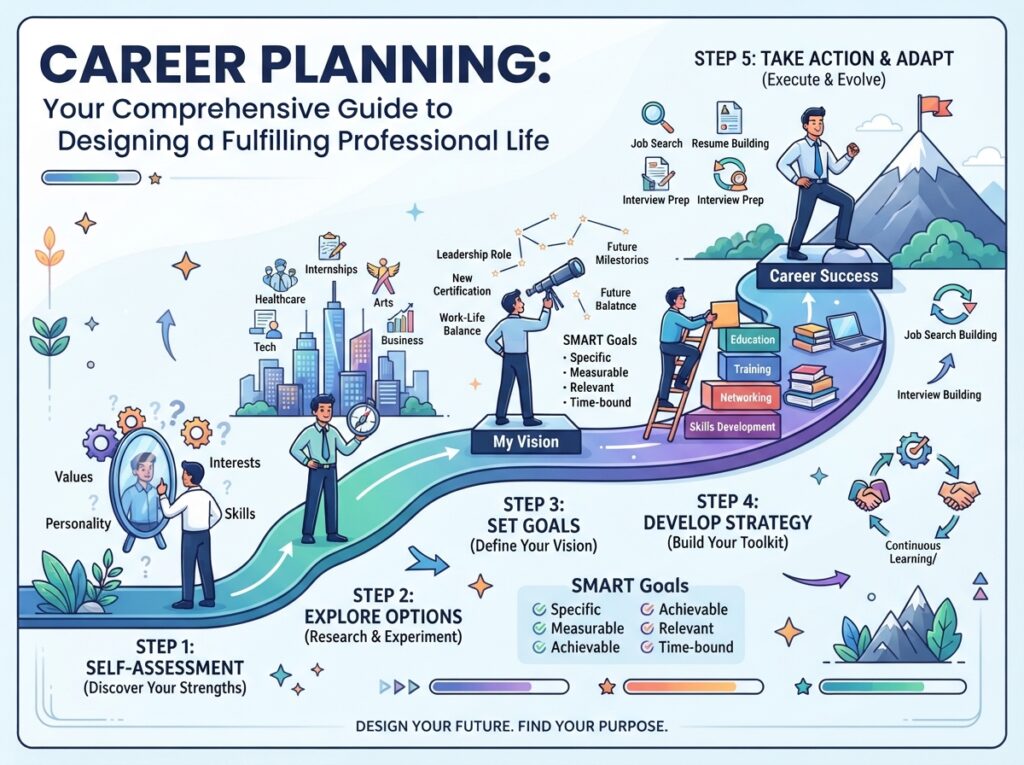
This final step involves breaking down your goals into concrete actions. Your plan should outline what you need to do, when you will do it, and how you will get there .
- Skill Development: Identify gaps in your skills and seek ways to fill them through courses, workshops, or on-the-job training .
- Networking and Mentorship: Build relationships with mentors and professionals who can offer guidance and support. A mentor can provide real-world advice, access to resources, and industry connections .
- Regular Review: Treat your career plan as a dynamic document. Schedule regular check-ins to assess your progress and make adjustments as needed .