Table of Contents
Welcome to HabitHack.fun, your ultimate destination for mastering the art and science of habit formation. Today, we’re exploring the cornerstone of a vibrant life: healthy habits. These are the daily practices that nourish your body, calm your mind, and elevate your overall quality of life. While it’s easy to get overwhelmed by the sheer volume of health advice out there, the truth is that lasting wellness is built on simple, consistent actions performed day in and day out. In this comprehensive guide, we’ll explore the science behind healthy habits, provide actionable strategies for adopting them, and show you how small changes can lead to extraordinary results.
Understanding the Science of Healthy Habits
Before we dive into specific habits, it’s essential to understand what makes a habit “healthy” and how our brains form these patterns. A healthy habit is any behavior that benefits your physical, mental, or emotional well-being. These actions, when repeated consistently, become automatic responses that require little conscious effort.
The Habit Loop and Health
The same neurological framework that governs all habits—the habit loop of cue, routine, and reward—applies to healthy behaviors. When you successfully build a healthy habit, you’re essentially rewiring your brain to automatically choose behaviors that benefit you. For example, the cue might be waking up, the routine could be a five-minute stretching session, and the reward is the feeling of energized alertness that follows.
The Cumulative Effect of Healthy Habits
One of the most beautiful aspects of healthy habits is their cumulative effect. A single healthy choice might seem insignificant, but when repeated daily, these small actions compound over time. As James Clear writes in Atomic Habits, “Habits are the compound interest of self-improvement.” A single glass of water won’t transform your health, but consistent hydration over months and years dramatically improves every system in your body.
The Mind-Body Connection
Healthy habits don’t exist in isolation. Physical habits influence mental health, and vice versa. Research consistently shows that people who maintain healthy physical habits—like regular exercise and balanced nutrition—experience lower rates of depression, anxiety, and cognitive decline. Conversely, mental habits like mindfulness and gratitude practices have been shown to reduce inflammation and boost immune function. This bidirectional relationship means that investing in any healthy habit creates ripple effects throughout your entire being.
Core Healthy Habits for Physical Wellness
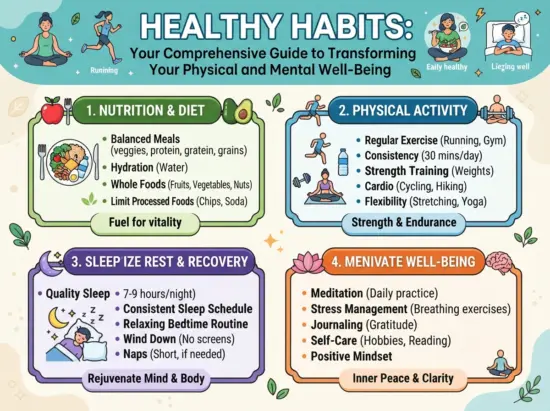
Let’s explore the foundational healthy habits that support physical health. These are the non-negotiables that form the bedrock of a healthy life.
1. Prioritize Quality Sleep
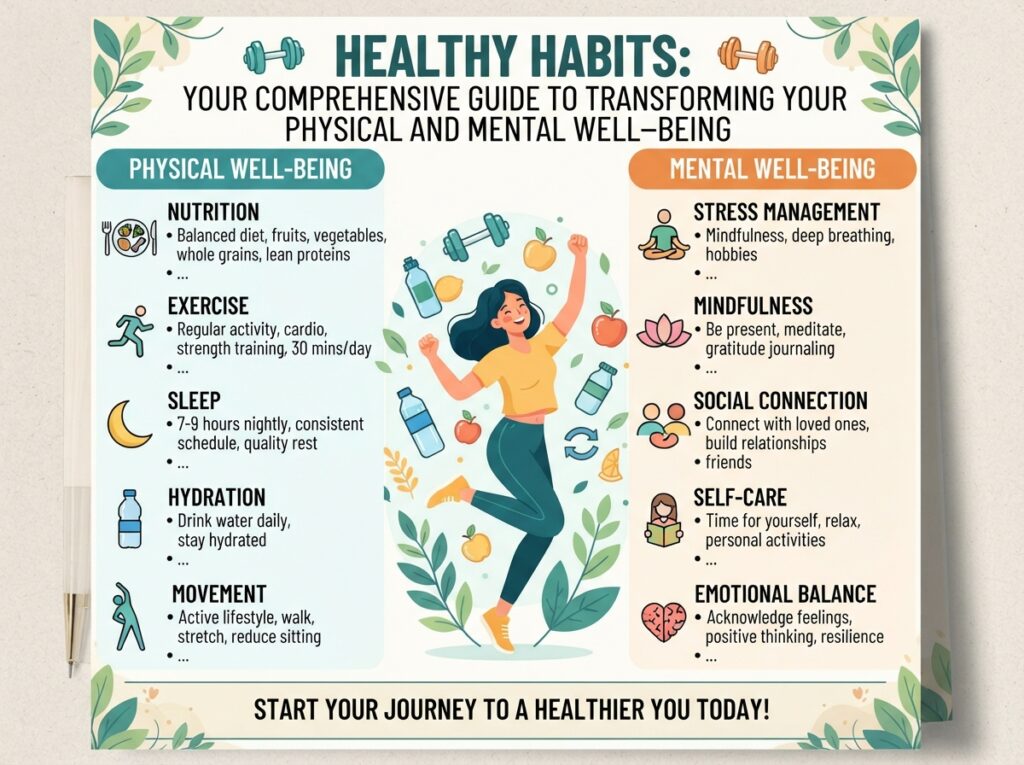
Sleep is not a luxury; it’s a biological necessity. During sleep, your body repairs tissues, consolidates memories, and clears waste from your brain. Chronic sleep deprivation is linked to obesity, heart disease, depression, and a weakened immune system.
How to build this habit:
- Go to bed and wake up at the same time every day, even on weekends. A 2025 study found that regular sleepers had a 38% lower risk of depression compared to those with irregular patterns.
- Create a relaxing bedtime routine that signals to your body it’s time to wind down. This could include reading a physical book, gentle stretching, or listening to calming music.
- Keep your bedroom cool (around 65°F/18°C), dark, and quiet.
- Avoid screens for at least 30 minutes before bed, as blue light disrupts melatonin production.
2. Move Your Body Daily
Regular physical activity is arguably the single most important healthy habit you can adopt. The benefits are staggering: reduced risk of chronic disease, improved mood, better sleep, stronger bones and muscles, and even enhanced cognitive function.
How to build this habit:
- Start small. If you’re inactive, begin with a 10-minute daily walk. According to the American Psychological Association, walking for just 10 to 15 minutes daily may lower your risk of depression by 18%.
- Find activities you genuinely enjoy. Exercise doesn’t have to mean running on a treadmill. Dance, swim, hike, do yoga, or join a recreational sports league.
- Use habit stacking: “After I brush my teeth in the morning, I’ll do 10 push-ups.”
- Schedule exercise like any other important appointment. Block time in your calendar and treat it as non-negotiable.
- Aim for at least 150 minutes of moderate-intensity activity or 75 minutes of vigorous activity each week, as recommended by health authorities.
3. Hydrate Consistently
Water is essential for virtually every bodily function. It regulates temperature, lubricates joints, delivers nutrients to cells, and flushes waste. Even mild dehydration can cause fatigue, headaches, and reduced cognitive performance.
How to build this habit:
- Start your day with a glass of water. This kickstarts hydration after hours of sleep.
- Carry a reusable water bottle with you throughout the day. Having it visible serves as a constant reminder.
- Set a timer on your phone to drink water every hour.
- Flavor your water with cucumber, lemon, or fresh mint if you find plain water boring.
- Eat water-rich foods like cucumbers, watermelons, oranges, and celery.
4. Nourish Your Body with Whole Foods
Nutrition is the fuel for your body and brain. A diet rich in whole, unprocessed foods provides the vitamins, minerals, and antioxidants your body needs to thrive. The concept of “eating the rainbow”—consuming a variety of colorful fruits and vegetables—ensures you get a diverse range of nutrients.
How to build this habit:
- Shop the perimeter of the grocery store where whole foods like produce, meats, and dairy are typically located.
- Practice meal prep. Spend a few hours on Sunday preparing healthy meals and snacks for the week ahead.
- Use the “plate method”: fill half your plate with vegetables, a quarter with lean protein, and a quarter with complex carbohydrates.
- Keep healthy snacks visible and accessible. Place fruit on the counter and pre-cut vegetables at eye level in the fridge.
- Cook more meals at home, where you control the ingredients and portion sizes.
5. Practice Good Hygiene
Basic hygiene habits protect you from illness and promote overall health. These include regular handwashing, dental care, and personal cleanliness.
How to build this habit:
- Create a morning and evening hygiene routine that feels restorative rather than chore-like. This might include skincare, flossing, and tongue scraping.
- Make it pleasant. Use products you enjoy, play music, or listen to a podcast while you shower.
- Stack new hygiene habits onto existing ones. For example, “After I brush my teeth, I’ll floss.”
Essential Healthy Habits for Mental and Emotional Well-Being
Physical health is only half the equation. Mental and emotional well-being are equally important and require their own set of healthy habits.
1. Practice Mindfulness and Meditation
Mindfulness is the practice of paying attention to the present moment without judgment. Regular mindfulness practice reduces stress, lowers anxiety, improves focus, and increases emotional regulation.
How to build this habit:
- Start with just two minutes a day. Use a guided meditation app like Headspace or Calm.
- Practice mindful moments throughout the day. This could be as simple as taking three deep breaths before starting your car or savoring your first sip of coffee without distractions.
- Use habit stacking: “After I sit down with my morning coffee, I’ll meditate for two minutes.”
- Try walking meditation, where you focus on the sensation of your feet touching the ground with each step.
2. Cultivate Gratitude
Gratitude is more than just saying “thank you.” It’s a mindset that actively seeks out the positive aspects of life. Research shows that people who practice daily gratitude experience better sleep, lower stress levels, and stronger relationships.
How to build this habit:
- Keep a gratitude journal. Each evening, write down three things you’re grateful for from your day.
- Share your gratitude with others. Express appreciation to someone daily, whether it’s a family member, friend, or coworker.
- Practice mental subtraction. Reflect on how your life would be different without certain people or opportunities.
- Use the “gratitude walk.” During your daily walk, consciously notice things you appreciate in your environment.
3. Connect Socially
Humans are inherently social beings. Strong social connections are associated with lower rates of anxiety and depression, higher self-esteem, and even longer life expectancy. The quality of relationships matters more than the quantity.
How to build this habit:
- Schedule regular time with loved ones. Treat social connections as seriously as you treat professional appointments.
- Join a club, group, or class based on your interests. This creates built-in social opportunities.
- Practice active listening when with others. Put away your phone, make eye contact, and genuinely engage in conversation.
- Send a check-in text or call a friend or family member weekly.
- Volunteer. Helping others builds community while benefiting your own mental health.
4. Set Healthy Boundaries
Boundaries are the limits we set to protect our time, energy, and well-being. They’re essential for preventing burnout and maintaining healthy relationships.
How to build this habit:
- Identify your limits. What drains your energy? What feels stressful?
- Practice saying no gracefully. You don’t need to explain or justify your boundaries.
- Create digital boundaries. Set specific times to check email and social media, and avoid screens for the first and last hour of your day.
- Protect your time. Block off “me time” in your calendar and defend it fiercely.
- Communicate your boundaries clearly and kindly.
5. Engage in Lifelong Learning
Mental stimulation keeps your brain sharp and can reduce the risk of cognitive decline. Learning new things also brings a sense of purpose and accomplishment.
How to build this habit:
- Read for at least 15 minutes daily. This could be fiction, non-fiction, news, or poetry.
- Learn a new word each day.
- Take up a new hobby or skill, such as cooking, painting, coding, or playing an instrument.
- Listen to educational podcasts during your commute or while exercising.
- Enroll in an online course. Platforms like Coursera, edX, and Khan Academy offer thousands of free classes.
The Art of Building Healthy Habits That Stick
Now that we’ve covered what healthy habits to build, let’s explore how to make them permanent. Here are science-backed strategies for successful habit formation.
1. Start Absurdly Small
The biggest mistake people make when trying to adopt healthy habits is starting too big. If you want to start running, don’t commit to a 5K. Commit to putting on your running shoes and stepping outside for two minutes. This is BJ Fogg’s “Tiny Habits” approach, and it works because it reduces the friction of starting. Once you’ve begun, it’s much easier to continue.
2. Use Habit Stacking
We’ve mentioned this technique before, but it bears repeating because it’s so effective. Habit stacking involves pairing a new habit with an existing one. For example:
- “After I pour my morning coffee, I will take my vitamins.”
- “After I brush my teeth at night, I will write in my gratitude journal.”
- “After I get into bed, I will read for 10 minutes.”
This piggybacks on existing neural pathways, making the new habit easier to remember and implement.
3. Design Your Environment
Your environment shapes your behavior more than you realize. Make healthy habits easy and unhealthy ones difficult.
- Want to eat more fruit? Put it in a bowl on the counter, not hidden in the fridge crisper.
- Want to drink more water? Fill a bottle and place it on your desk.
- Want to exercise in the morning? Sleep in your workout clothes.
- Want to stop checking your phone? Put it in another room while you work or sleep.
4. Track Your Progress
What gets measured gets managed. Tracking your habits provides immediate feedback and motivation.
- Use a habit tracker app, a calendar, or a simple bullet journal.
- Mark each day you complete your habit. The visual evidence of your consistency becomes its own reward.
- Don’t break the chain. This concept, popularized by comedian Jerry Seinfeld, encourages you to keep your streak going.
- Celebrate small wins. Acknowledge your progress, even if it feels minor.
5. Be Patient and Forgiving
Habits take time to form. Research shows it can take anywhere from 18 to 254 days for a new behavior to become automatic. This depends on the habit and the individual.
- Expect setbacks. Life happens. You’ll miss days.
- Never miss twice. If you skip a day, get right back on track the next day. One missed day is a mistake; two is a pattern.
- Focus on consistency, not perfection. A habit done imperfectly is better than a perfect habit you never start.
The 21/90 Rule for Healthy Habits
The 21/90 rule is a popular framework that proposes a two-phase process for habit formation:
Phase 1: The First 21 Days
During these three weeks, your brain is learning new patterns. Each repetition strengthens the neural pathway. This is the most challenging phase. You’ll need to consciously remember to perform your new habit. Motivation might be high at first, but it will likely wane. Persistence is key.
Phase 2: Continuing to 90 Days
By 90 days, your habit becomes integrated into your identity. It’s no longer something you “try” to do; it’s something you “are.” At this point, the habit feels natural and automatic. You’ve moved from being a person who wants to be healthy to being a healthy person who naturally makes healthy choices.
Healthy Habits for Different Life Stages
Healthy habits aren’t one-size-fits-all. Different life stages require different priorities and approaches.
For Children and Teenagers
- Establish consistent sleep and meal schedules.
- Limit screen time and encourage active play.
- Model healthy habits. Children learn by watching.
- Make nutrition fun with colorful plates and involving them in cooking.
For Adults
- Balance work and personal life with clear boundaries.
- Schedule regular health check-ups and screenings.
- Manage stress through exercise, mindfulness, and hobbies.
- Prioritize sleep despite busy schedules.
For Seniors
- Focus on balance and strength exercises to prevent falls.
- Stay socially connected to combat loneliness.
- Engage in brain-stimulating activities like puzzles, reading, or learning new skills.
- Adapt habits to changing physical abilities, such as swapping running for swimming or walking.