Table of Contents
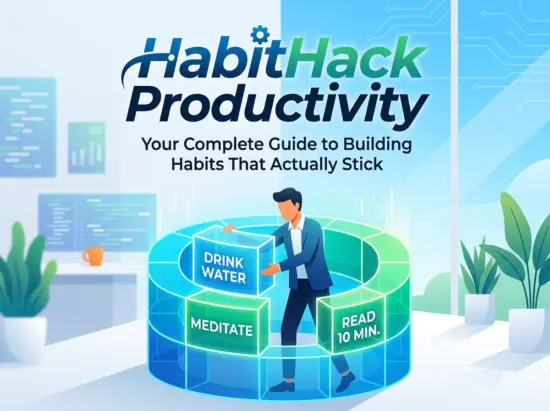
Welcome to HabitHack, your ultimate resource for mastering the art of habit formation. Productivity isn’t about working harder—it’s about building systems that make the right actions feel effortless. The problem most people face isn’t a lack of motivation; it’s that they’re using tools and strategies that work against how their brains are wired. This guide combines the minimalist philosophy of HabitHack with proven, science-backed techniques to help you build productivity habits that actually stick.
The Birth of HabitHack: A Philosophy of Simplicity
HabitHack was born out of a personal struggle. Like many on the path of self-improvement, the creator found themselves constantly falling off track with new habits. They tried countless habit tracker apps, but every one was too cluttered, too distracting, or trying to sell something. What was needed was something different: a clean, functional tool that helped people stay disciplined and focused on what truly matters.
The result is a minimalist habit tracker built to help users create momentum, build discipline, and track their daily habits without distractions. From custom habits and daily check-ins to features like Memory Lane and motivational quotes, the app gives users everything they need—and nothing they don’t.
The core philosophy is simple: the goal isn’t to gamify your life. The goal is to make it easier to show up every single day. Every feature is designed to support discipline, not get in the way of it. As the creator puts it, “I learned that simplicity is a strength”.
The Science Behind Habit Formation

Before diving into productivity techniques, it’s essential to understand how habits work. Research shows that approximately 40% of our daily actions are driven by habits rather than conscious decisions. This means that if you can shape your habits, you can shape a significant portion of your life.
The Habit Loop
Every habit operates on a three-part neurological loop: cue, routine, reward.
- Cue (Trigger): The signal that initiates the habit—a specific time, location, emotional state, or preceding action.
- Routine (Behavior): The action you perform in response to the cue.
- Reward: The positive feeling or outcome that reinforces the loop, teaching your brain to repeat the behavior.
When you repeat this loop consistently, your brain strengthens the neural pathway associated with that behavior. Over time, the behavior becomes automatic—requiring less mental effort and willpower. This is why habits feel effortless once they’re established.
The B = MAP Formula
BJ Fogg’s Behavior Model provides a powerful framework for understanding what it takes to make a habit stick:
Behavior = Motivation × Ability × Prompt (B = MAP)
For any behavior to occur, you need all three elements to align:
- 🔥 Motivation – Do I want to do it?
- 💪 Ability – Can I do it?
- ⏰ Prompt – What reminds me to do it now?
If even one element is missing, the habit fails. The key insight is to make the habit so tiny that you don’t have to depend on unreliable motivation. The real magic, as Fogg explains, is the shift in your identity that happens when you consistently show up.
The HabitHack Approach to Productivity
1. Start with the Two-Minute Rule
One of the most common mistakes in habit formation is trying to do too much too soon. When you set the bar too high, you’re more likely to fail and feel discouraged.
The Two-Minute Rule solves this by scaling your habit down to a version that takes less than two minutes to complete:
- “Read before bed” becomes “Read one page”
- “Exercise” becomes “Put on my workout clothes”
- “Meditate” becomes “Take three deep breaths”
This technique makes starting so easy that you can’t say no. Once you’ve started, it’s much easier to continue. The goal isn’t to complete the habit perfectly—it’s to build the habit of showing up.
2. Use Habit Stacking
Habit stacking is one of the most powerful productivity techniques you can learn. It involves linking a new habit to an existing one, piggybacking on a routine you already perform without thinking.
The formula is simple: After/Before [CURRENT HABIT], I will [NEW HABIT] .
Examples:
- “After I pour my morning coffee, I will write down my top three priorities.”
- “After I brush my teeth, I will do 10 squats.”
- “After I sit down at my desk, I will review my goals.”
Habit stacking works because it reduces friction, removes decision fatigue, and helps habits become automatic faster. The simpler the stack, the more likely it is to stick. You can apply habit stacking to almost any area of life—health, productivity, or mental well-being.
3. Design Your Environment for Success
Your environment has a powerful influence on your behavior. You can hack your productivity by designing your surroundings to make good habits easy and bad habits difficult.
To encourage a positive habit, reduce friction:
- Put your workout clothes and gym bag out the night before
- Place a book on your pillow to remind you to read before bed
- Keep a water bottle on your desk to encourage hydration
To break a bad habit, increase friction:
- Leave your phone in another room while you work
- Unplug the TV after each use
- Log out of social media accounts so you have to enter your password each time
By shaping your environment, you make the right choice the easy choice.
4. Track Your Progress Visually
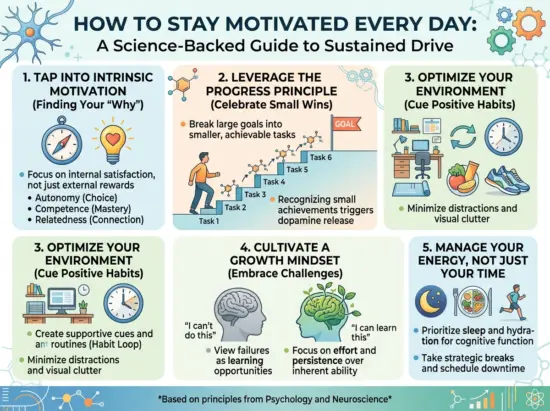
Tracking your habits provides visual evidence of your consistency. Each day you mark off your habit, you release a small dose of dopamine—the reward chemical that makes you want to keep going.
HabitHack makes this simple with features like:
- Custom habits and daily check-ins: Create and track habits that matter to you
- Memory Lane: View your progress over time and celebrate your wins
- Motivational quotes: Stay inspired and on track
The visual representation of your consistency is a powerful motivator. When you see a streak of completed habits, it reinforces the identity of someone who follows through on their commitments.
5. Practice the “Never Miss Twice” Rule
Consistency, not perfection, is the key to lasting change. It takes an average of 66 days to form a new habit. You will miss days—it’s inevitable. The key is to get back on track quickly.
The “Never Miss Twice” rule is a powerful mindset shift: if you miss a day, just start again the next day. As long as you don’t let one missed day become two, you’re still on track.
6. Use the Pomodoro Technique for Focused Work
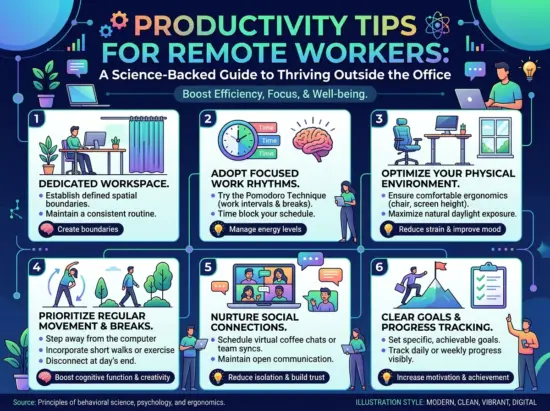
The Pomodoro Technique is a simple time management method that uses a timer to break down work into focused intervals, traditionally 25 minutes in length, followed by a short break.
How it works:
- Pick a task
- Set a timer for 25 minutes
- Work with complete focus until the timer rings
- Take a 5-minute break
- After four Pomodoros, take a longer break (15-30 minutes)
This technique prevents burnout and matches your brain’s natural attention span. It’s particularly effective for overcoming the urge to procrastinate on large projects.
7. Focus on Identity, Not Just Outcomes
One of the most powerful principles in habit formation is shifting your focus from goals to identity. Instead of asking “What do I want to achieve?” ask “Who do I want to become?”
Examples:
- Instead of “I want to write a book,” think “I am a writer”
- Instead of “I want to run a marathon,” think “I am a runner”
- Instead of “I want to eat healthier,” think “I am someone who nourishes their body”
When you believe you are the type of person who does a behavior, consistency follows naturally. Every action you take is a vote for the type of person you wish to become.
8. Use the Maui Habit
One of the simplest yet most powerful habits is the Maui Habit: every morning as soon as you wake up, repeat the phrase, “Today is going to be a great day.” On challenging days, add the word “somehow” at the end.
This one simple habit has helped thousands of people start their day with intention and positivity. It’s a small action that sets the tone for everything that follows.
The HabitHack App: Your Productivity Partner
HabitHack is designed to support you through every stage of your habit-building journey. Key features include:
- Custom habits and daily check-ins: Create and track habits that matter to you
- Memory Lane: View your progress over time and celebrate your wins
- Motivational quotes: Stay inspired and on track
- Smart reminders (coming soon): Help you stay consistent at the right time
- Journal export (coming soon): Download your journal entries for deeper self-reflection
The app was built with a focus on a smooth, clean user interface that puts the user experience first. It’s fast, focused, and built with care—and the creator uses it every single day.
Common Productivity Traps to Avoid
The “All-or-Nothing” Trap
Many people believe that if they can’t do a habit perfectly, they shouldn’t do it at all. This leads to giving up entirely after one missed day. Instead, remember that consistency is about showing up regularly, not perfectly.
The “Motivation” Trap
Waiting until you “feel like” working on your goals guarantees inconsistency. Motivation is an emotion—it’s fleeting and unreliable. Instead of relying on motivation, build systems that work even when you don’t feel like it.
The “Too Much, Too Soon” Trap
Trying to change too many habits at once is a recipe for failure. Start with one habit, master it, then add another. The compound effect of small, consistent changes is far more powerful than short-term intensity.