Table of Contents
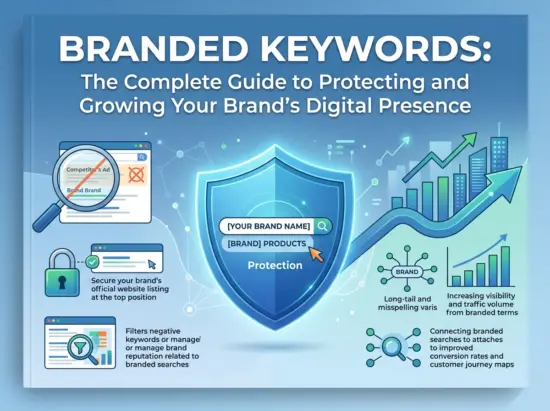
Welcome to HabitHack.fun, your trusted resource for building habits that drive success. In today’s highly competitive digital landscape, branded keywords are one of the most powerful assets your brand can possess. They represent the direct connection between your brand identity and consumer intent, making them essential for both SEO and paid search strategies.
What Are Branded Keywords?
Branded keywords are search terms that include your company name, product names, or variations of your brand identity . Unlike generic searches, these keywords are used by people who already know about your brand and are actively seeking you out .
Types of Branded Keywords
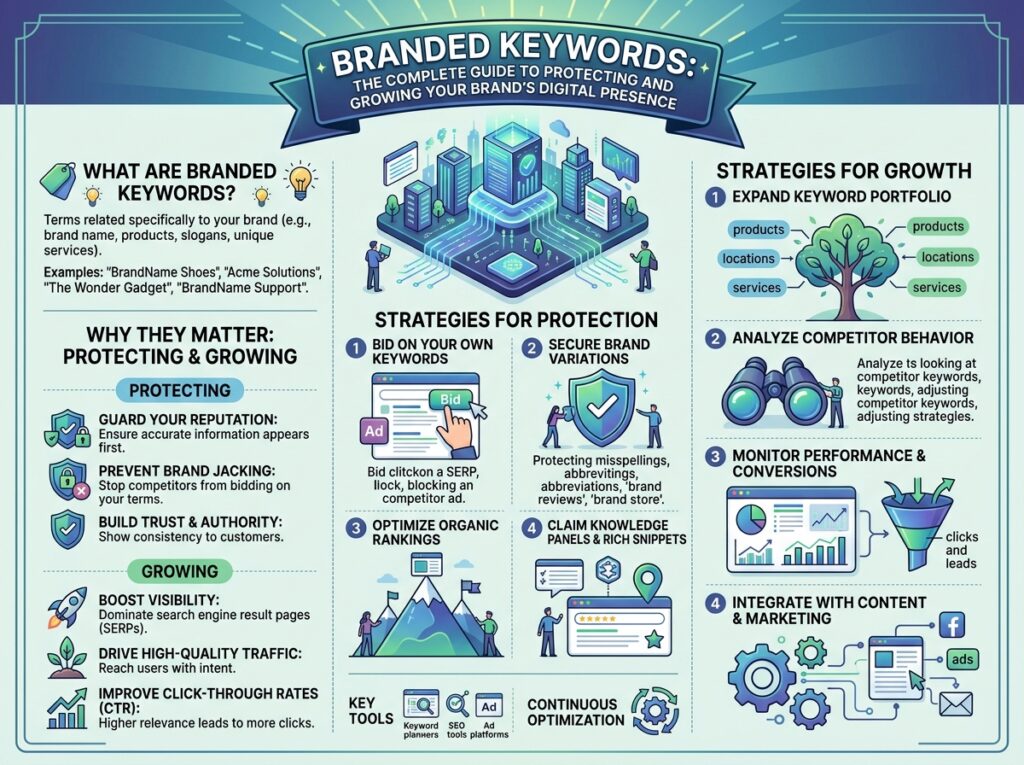
Branded keywords come in several forms :
| Type | Example |
|---|---|
| Pure brand terms | “Nike” |
| Brand + product | “Nike Air Max” |
| Brand + modifier | “cheap Nike shoes” |
| Brand misspellings | “Addidas” for Adidas |
| Brand + location | “Nike store NYC” |
| Brand + informational | “Nike company history” |
| Brand + competitor | “Nike vs Adidas” |
| Brand + review | “Nike shoes review” |
Branded vs. Non-Branded Keywords
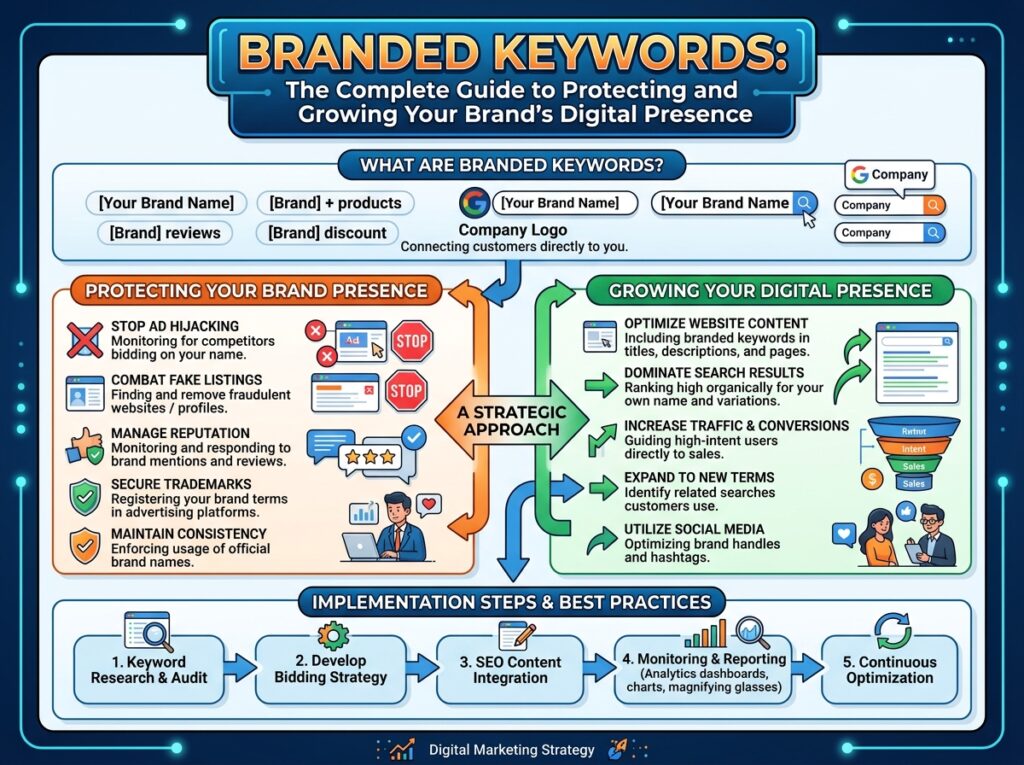
Understanding the distinction is crucial for strategy :
| Aspect | Branded Keywords | Non-Branded Keywords |
|---|---|---|
| User Intent | High—ready to convert | Research phase |
| Conversion Rate | 2-10× higher | Lower |
| Competition | Lower | Higher |
| CPC (PPC) | Lower | Higher |
| Search Volume | Lower | Higher |
| Funnel Position | Bottom | Top/Middle |
Why Branded Keywords Matter
Higher Conversion Rates
Users searching for your brand have already moved past the discovery phase. They’re at the bottom of the marketing funnel and actively considering your products or services . Studies show branded keyword campaigns have approximately 50% higher click-through rates than non-branded campaigns .
Lower Cost and Competition
Branded keywords typically have lower keyword difficulty and cost-per-click (CPC) due to higher relevance, giving you a natural advantage in search results . However, this also means competitors can cheaply bid on your brand terms .
Brand Protection
If competitors appear above you in searches for your own brand, it can damage customer trust and divert potential sales . Approximately 44% of Google searches involve branded terms, representing a substantial portion of user intent . Bidding on your own branded keywords prevents competitors from hijacking your traffic .
Valuable Customer Insights
Analyzing how people search for your brand reveals their needs—are they looking for “promo code,” “customer service,” or “reviews”? This feedback directly informs your marketing and product strategies .
How to Find Your Branded Keywords
- Google Search Console: Review your performance report for branded queries users used to find your site
- Google Autocomplete: Enter your brand name and note the popular searches that appear
- Keyword Research Tools: SEMrush, Ahrefs, Google Keyword Planner can identify branded keyword opportunities
- Competitor Analysis: Use tools like Google Ads Auction Insights to see if competitors bid on your brand terms
How to Optimize for Branded Keywords
Organic Strategy
- Create dedicated landing pages for popular brand + product combinations
- Optimize title tags and meta descriptions with branded keywords
- Use heading tags (H1, H2) and image alt text effectively
- Build a strong brand presence across social media channels
- Monitor and respond to brand mentions
PPC Strategy
- Run separate branded and non-branded campaigns for better tracking
- Use exact and phrase match to avoid irrelevant spending
- Optimize ad copy with trust-building language like “Official Website”
- Use ad extensions (site links, callouts) to direct users to the right pages
- Monitor competitor bidding on your brand terms
The Competitive Landscape in 2026
Search engines are getting sharper, and AI-powered search has changed the game. Branded terms are no longer “safe”—competitors may appear in AI-generated overviews, comparison lists, and paid results for your own brand .
Recent research shows that 13.14% of all queries triggered AI Overviews, with the number of navigational (brand-specific) queries triggering AI Overviews doubling since January . This means your brand’s name can appear next to competitive comparisons, sloppy matching, and unintended leakage that can quickly turn into search chaos .
The brands that succeed are those that test and adapt quickly, treating branded strategy like the performance lever it is. Defending your branded keywords is no longer optional—it’s essential for protecting your market position .