Table of Contents
Welcome to HabitHack.fun, your trusted resource for building habits that unlock your full potential. Remote work offers incredible freedom—no commute, flexible hours, and the comfort of your own space. But it also comes with unique challenges: blurred boundaries, endless distractions, and the risk of burnout. This guide provides science-backed productivity tips for remote workers, based on proven strategies from remote-first companies and expert research.
Master Your Environment
Designate a Workspace That Works
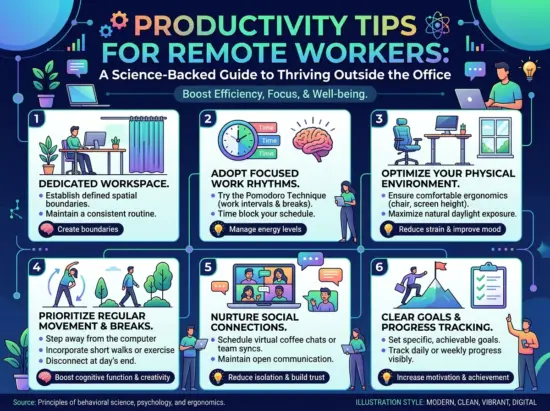
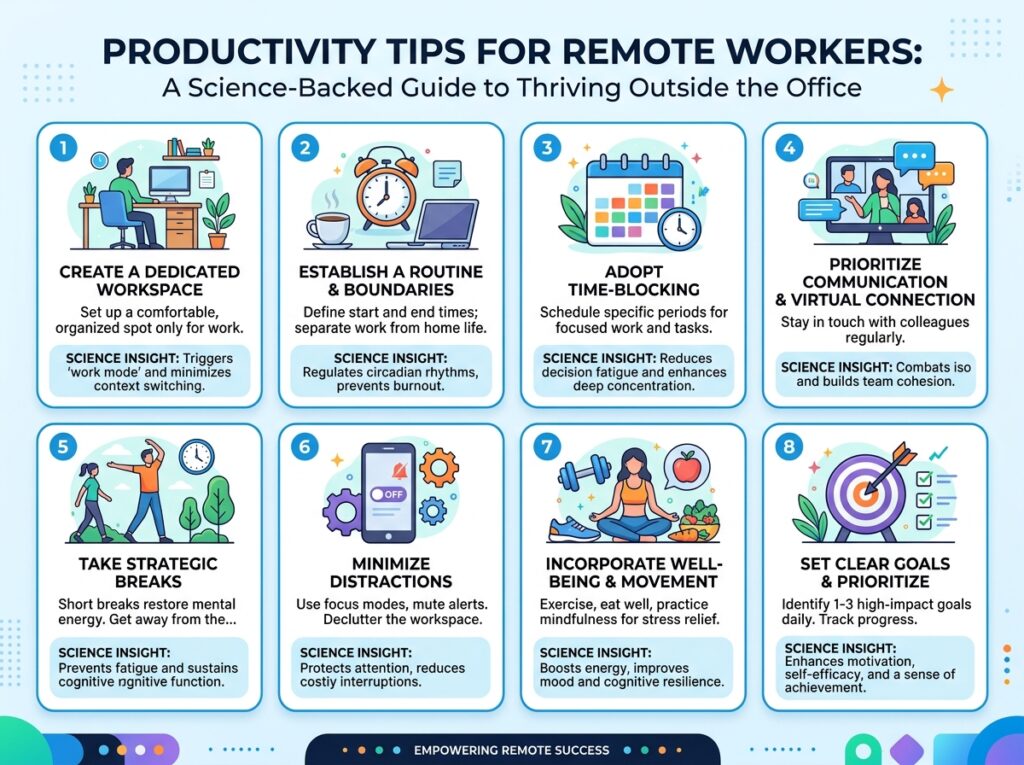
Your physical environment profoundly influences your focus. A cluttered space competes for your attention, while a well-designed workspace signals to your brain that it’s time to work .
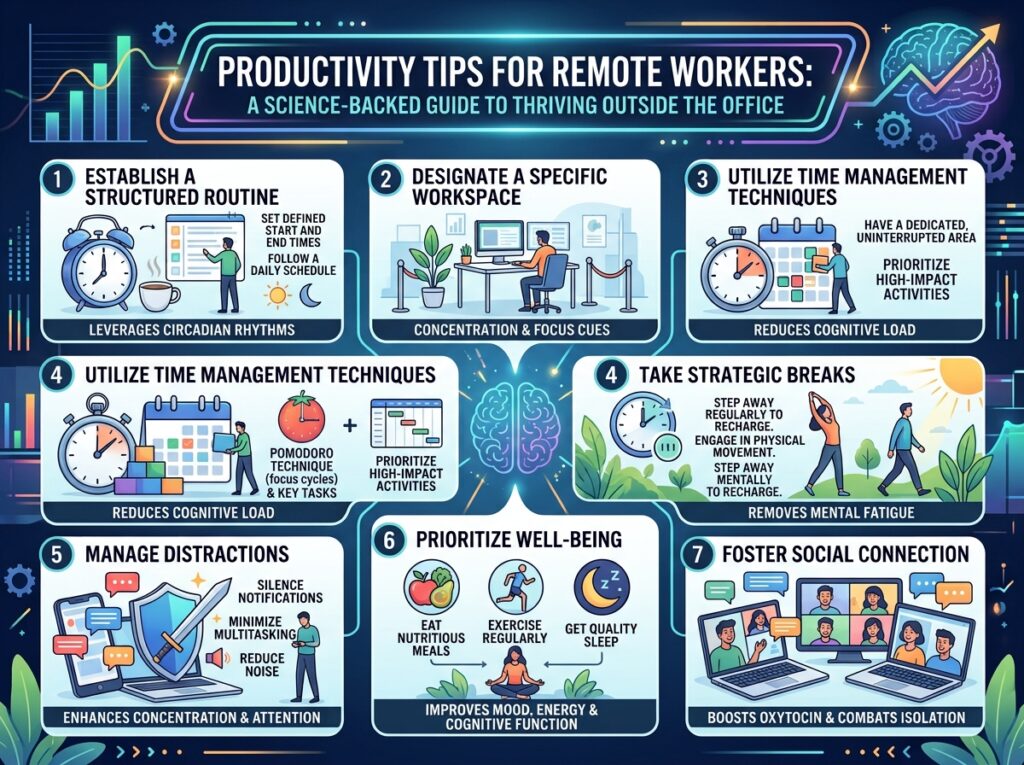
Set up a dedicated area: Choose a quiet spot with natural light if possible, away from high-traffic areas like the kitchen or bedroom. Even a corner with a desk is better than working from your couch .
Invest in ergonomics: Position your monitor at eye level, use a chair that supports your lower back, and keep your feet flat on the floor. These small adjustments prevent the physical discomfort that drains mental energy .
Declutter daily: Start each day with a clean desk and end it by tidying up. A clear space creates mental clarity and helps you transition in and out of work mode .
Dress for Focus
Your clothing choices affect your mindset. While you don’t need a suit, changing out of pajamas creates a psychological separation between rest and work. A consistent “getting ready” routine signals your brain that it’s time to focus .
Build a Rhythm, Not Just a Routine
Align Work with Your Energy Peaks
We all have natural energy cycles. Instead of fighting them, schedule your most demanding tasks during your peak hours—often the first two hours of the morning for many people .
Find your rhythm: Track your focus and energy levels for a week. Identify when you feel sharpest, then protect those blocks for deep work like writing, coding, or strategy. Save routine tasks like email for lower-energy periods .
Create Opening and Closing Rituals
Without a commute, you need intentional cues to start and end your day. These rituals prevent the “always-on” feeling that leads to burnout .
Opening ritual example: Make coffee, review your top three goals, and listen to a work playlist before logging in. This signals “work mode” .
Closing ritual example: Shut your laptop, tidy your desk, and write down tomorrow’s priorities. This creates psychological closure and helps you disconnect .
Manage Time and Focus
Use Time Blocking, Not Just To-Do Lists
A to-do list tells you what to do; time blocking tells you when. Assign specific tasks to specific blocks on your calendar to prevent work from sprawling across your day .
How to implement:
- Block 90-minute chunks for deep work
- Schedule breaks, meetings, and admin tasks in separate blocks
- Color-code your calendar for easy visual planning
Batch Similar Tasks
Constant context switching can cost up to 40% of productive time . Group similar activities together—respond to emails twice a day, schedule all meetings in one afternoon, and handle admin tasks on a specific day .
Apply the “Eat the Frog” Principle
Tackle your biggest, most challenging task first thing in the morning. When you complete your most important work early, you build momentum and reduce procrastination for the rest of the day .
Take Structured Breaks
Productivity isn’t about nonstop work. Your brain needs recovery to sustain focus .
Pomodoro Technique: Work for 25 minutes, then take a 5-minute break. After four cycles, take a longer 15-30 minute break .
Ultradian Rhythm: Work for 90 minutes, then take a 20-minute break. Step away from screens—stretch, walk, or step outside .
Protect Your Focus from Distractions
Tame Digital Distractions
Your devices are designed to steal your attention. Take control:
- Silence notifications during deep work blocks
- Use website blockers like Freedom to limit time on non-work sites
- Put your phone in another room while focusing
Set Communication Windows
Create boundaries around when you check email and Slack. Outside those windows, use “Do Not Disturb” mode. Communicate your availability to colleagues so they know when to expect responses .
Communicate Boundaries Clearly
When sharing a space with others—whether family or flatmates—be clear about your work hours. A closed door or “do not disturb” sign can prevent interruptions .
Stay Connected and Visible
Over-Communicate
In remote work, visibility isn’t automatic. Your manager can’t see you working hard, so you need to make your contributions known .
Share regular updates: Post brief progress notes in team channels: “Working on the Q2 report—ready for review tomorrow” .
Volunteer for presentations: Demos and lunch-and-learns increase your visibility beyond your immediate team .
Publicly recognize others: Thank teammates publicly when they help you. This builds goodwill and signals collaboration .
Schedule Regular Check-Ins
Daily or weekly meetings help maintain alignment. Many teams use daily stand-ups to answer: What did I work on yesterday? What am I working on today? What issues are blocking me? .
Build Social Connection
Combat isolation by creating human touchpoints:
- Virtual coffee breaks: Use tools like Donut to randomly pair team members for casual chats .
- Non-work channels: Create chat threads for hobbies, pet photos, or general conversation .
Prioritize Well-Being to Sustain Performance
Move Throughout the Day
Sitting for hours drains energy and harms health .
- Take a walk during lunch
- Do 5-minute movement snacks between tasks (10 squats, a yoga pose)
- Stand or walk during calls
Protect Your Mental Health
Gallup research shows remote workers face elevated stress and emotional strain . Build recovery into your routine:
- Get fresh air and sunlight daily
- Stay hydrated—dehydration impairs concentration
- Schedule offline time to recharge