Table of Contents
Welcome to HabitHack.fun, your trusted resource for mastering personal growth and habit formation. The concept of a growth mindset, pioneered by psychologist Carol Dweck, has revolutionized how we understand success, learning, and human potential. At its core, the growth mindset is the belief that your abilities and intelligence can be developed through dedication, hard work, and the right strategies. This comprehensive guide explores the science of the growth mindset, its profound impact on every area of life, and actionable steps to cultivate it.
What Is a Growth Mindset?
In her groundbreaking research, Carol Dweck identified two core mindsets that shape how we approach challenges and learning.
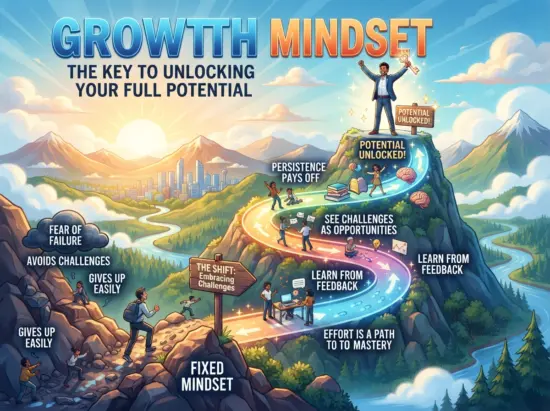
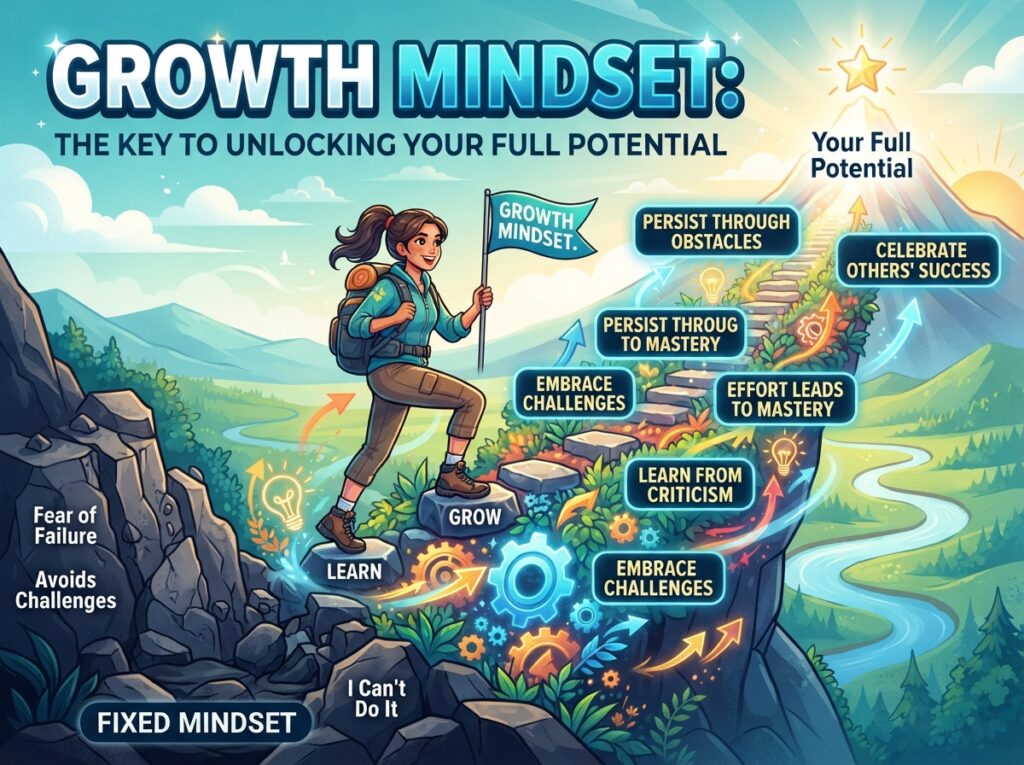
Fixed Mindset: People with a fixed mindset believe their intelligence, talents, and abilities are static traits—you’re born with a certain amount, and that’s that. They tend to avoid challenges (for fear of failing), give up easily, see effort as fruitless, ignore constructive feedback, and feel threatened by the success of others.
Growth Mindset: In contrast, individuals with a growth mindset understand that their abilities can be cultivated through effort, good strategies, and input from others. They embrace challenges, persist in the face of setbacks, see effort as the path to mastery, learn from criticism, and find inspiration in the success of others.
The core belief of the growth mindset is simple: You can grow. Your brain is like a muscle that can be strengthened with use.
The Neuroscience of the Growth Mindset
The growth mindset is grounded in the science of neuroplasticity—the brain’s remarkable ability to form new neural connections throughout life. When you learn something new, your brain creates new pathways and strengthens existing ones. The more you practice a skill, the stronger and more efficient these neural connections become.

The belief that you can grow actually changes your brain. Studies show that when people adopt a growth mindset, their brains become more active and engaged when they make mistakes—because mistakes are seen as opportunities to learn. Conversely, those with a fixed mindset show reduced brain activity when they make mistakes, because they view errors as a sign of failure.
The Profound Impact of a Growth Mindset
The differences between a fixed and growth mindset are not just theoretical—they have measurable effects on nearly every aspect of life.
On Education and Learning
In Dweck’s research, students with a growth mindset consistently outperformed their fixed-mindset peers. They were more resilient, more likely to embrace challenging coursework, and achieved higher grades. A growth mindset also fosters a love of learning. When you believe you can grow, you’re more willing to explore new subjects and persist when things get tough.
On Career and Professional Growth
In the workplace, a growth mindset is strongly correlated with career advancement. Employees with a growth mindset are more likely to seek feedback, embrace new challenges, and innovate. Leaders with a growth mindset create cultures of learning and development, which leads to higher employee engagement and better business outcomes. They view challenges as opportunities to learn and innovate, not as threats.
On Mental Health and Well-Being
A growth mindset is a powerful buffer against anxiety and depression. When you view setbacks as opportunities to learn, you are less likely to feel defeated. You are also more likely to take risks, seek help, and persist through difficulties. It also fosters greater resilience—people with a growth mindset bounce back more quickly from failures.
On Relationships
A growth mindset in relationships means believing that both you and your partner can change and grow. It leads to healthier communication, a willingness to work through problems, and a deeper connection. You see disagreements not as insurmountable differences but as opportunities to understand each other better.
Core Strategies to Develop a Growth Mindset
1. Change Your Self-Talk
The words you say to yourself shape your beliefs. Pay attention to your internal dialogue and consciously reframe fixed-mindset statements.
| Fixed Mindset | Growth Mindset |
|---|---|
| “I’m not good at this.” | “I’m not good at this yet.” |
| “I give up.” | “I’ll try a different strategy.” |
| “It’s good enough.” | “Is this my best work?” |
| “I can’t do this.” | “I need more practice.” |
2. Embrace Challenges
Challenge yourself to step outside your comfort zone. Pick one thing that scares you and do it this week. It could be something small, like speaking up in a meeting or learning a new skill. Each time you embrace a challenge, you reinforce the belief that growth is possible.
3. Reframe Failure as Feedback
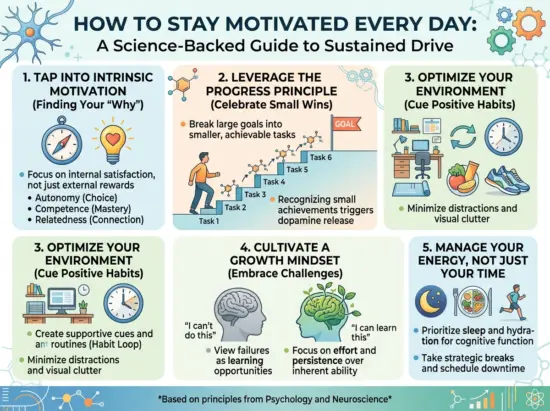
When you fail, don’t see it as a sign of who you are. See it as data—it tells you what doesn’t work and gives you a clue about what might. Ask yourself: “What can I learn from this?” and “What will I do differently next time?”
4. Focus on the Process, Not Just the Outcome
When you are learning a new skill, focus on the practice itself, not just the final result. Celebrate your effort, strategy, and persistence. This keeps you motivated even when results don’t come quickly.
5. Learn from the Success of Others
Instead of feeling threatened by others’ success, see it as a source of inspiration. Ask yourself: “What did they do to succeed?” and “What can I learn from their journey?” This shift turns envy into curiosity.
6. Seek Feedback and Act on It
Constructive feedback is a gift—it helps you see your blind spots. Ask for it regularly and commit to acting on it. When you receive feedback, don’t get defensive. Instead, thank the person for their honesty and ask clarifying questions.
7. Replace the Word “Failing” with “Learning”
This simple shift in language can rewire your brain. Instead of saying, “I failed,” say, “I learned something that doesn’t work.” This puts you back in the driver’s seat.
8. Cultivate a “Yet” Attitude
When you catch yourself saying, “I can’t do this,” simply add the word “yet.” This tiny word acknowledges the present limitation while opening the door to future growth.
9. Surround Yourself with Growth-Minded People
Your environment shapes your mindset. Surround yourself with people who challenge you, believe in you, and encourage you to grow. They will inspire you to keep pushing forward.
10. Develop the Practice of Self-Reflection
Journaling is a powerful tool for cultivating a growth mindset. At the end of each day, ask yourself: “What did I learn today? What was my biggest challenge? How did I handle it?” This builds self-awareness and reinforces a growth-oriented perspective.
11. Celebrate Effort, Not Just Results
When you or someone else puts in genuine effort, acknowledge it. This reinforces the belief that hard work is the path to mastery. In your relationships, shift from praising traits (“You’re so smart”) to praising effort (“You worked so hard on that”).
Overcoming Common Barriers to a Growth Mindset
The “I’m Too Old” Trap
It’s a myth that you can’t teach an old dog new tricks. Neuroplasticity works at every age. The brain is not a fixed machine; it’s a flexible organ that can adapt and grow throughout life. Start small, be patient, and remember: every expert was once a beginner.
The “I Don’t Have Time” Trap
Growth takes time, but it’s a worthwhile investment. You don’t need hours a day. Even five minutes of mindful practice can move the needle. Start by dedicating just 10 minutes a day to learning something new.
The “I’m Not Talented” Trap
Talent is overrated. Research shows that deliberate practice—focused, intentional effort—is a far more reliable predictor of success than natural talent. The most accomplished people in any field are not the most talented; they are the most persistent.