Table of Contents
Welcome to HabitHack.fun, your ultimate resource for transforming your life through intentional growth and consistent habits. Personal development is not a destination—it’s a lifelong journey of self-discovery, learning, and evolution. It’s about becoming the best version of yourself, not for anyone else, but for your own fulfillment and contribution to the world. This comprehensive guide will explore the principles, strategies, and daily practices that make personal development a sustainable and rewarding journey.
What Is Personal Development?
Personal development is the conscious pursuit of personal growth by developing self-awareness, enhancing skills, improving quality of life, and realizing your potential. It encompasses all aspects of life—physical, mental, emotional, social, and spiritual.
Key Components of Personal Development:
- Self-awareness: Understanding your thoughts, emotions, values, and behaviors.
- Skill enhancement: Continuously learning and improving abilities.
- Goal setting: Defining and working toward meaningful objectives.
- Mindset shifts: Adopting beliefs that empower rather than limit you.
- Emotional intelligence: Understanding and managing your emotions and relationships.
- Health and wellness: Prioritizing physical and mental well-being.
Why Personal Development Matters
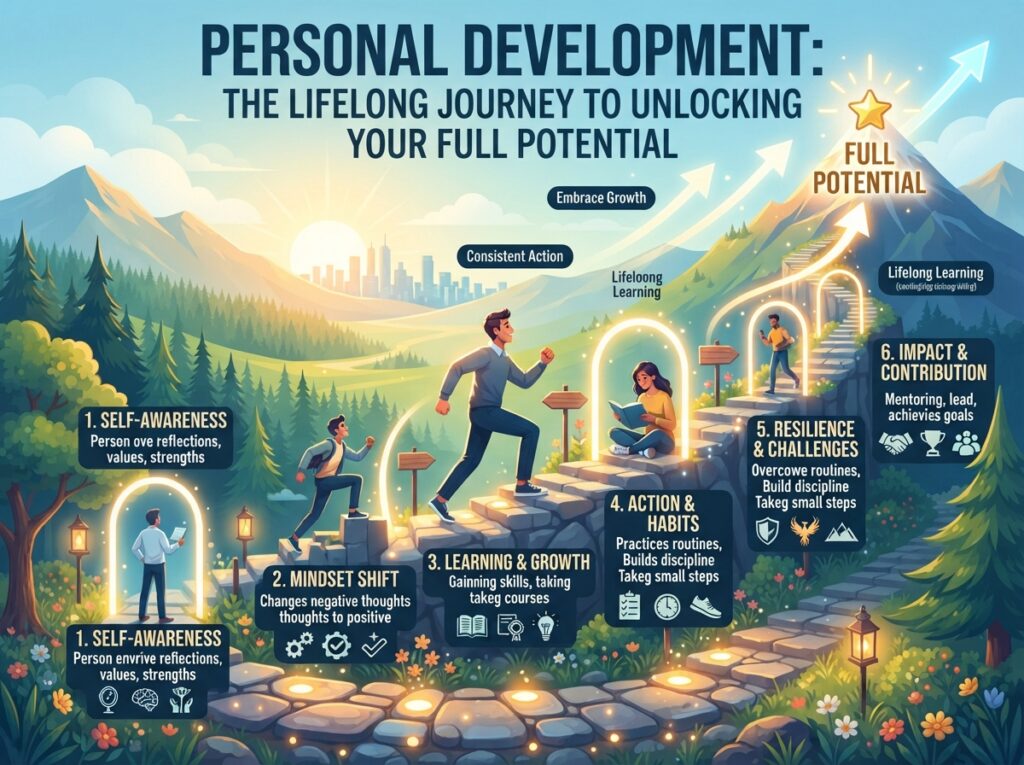
Personal development is not selfish—it’s essential. When you invest in yourself, everyone around you benefits.
- Greater fulfillment: Living intentionally creates a deeper sense of purpose and satisfaction.
- Improved relationships: Self-aware individuals communicate better and connect more deeply.
- Professional success: Continuous learning opens doors and accelerates career growth.
- Resilience: Personal development equips you to handle life’s inevitable challenges.
- Positive impact: When you grow, you inspire others to grow too.
The Foundations of Personal Development
Every successful personal development journey is built on a strong foundation. Let’s explore the core pillars that support sustainable growth.
1. Self-Awareness: The Starting Point
Self-awareness is the ability to objectively observe your thoughts, emotions, and behaviors. It’s the foundation upon which all personal development is built. Without self-awareness, you cannot identify areas for improvement or measure your progress.
How to Develop Self-Awareness:
- Journaling: Regular writing helps you process experiences and identify patterns. Try stream-of-consciousness writing for 10 minutes each morning.
- Mindfulness meditation: Practice observing your thoughts without judgment. This builds the “witness” part of your mind.
- Feedback: Ask trusted people for honest feedback about your strengths and blind spots.
- Personality assessments: Tools like Myers-Briggs, Enneagram, StrengthsFinder, and DISC provide valuable insights.
- Emotion tracking: Notice and name your emotions throughout the day. This builds emotional intelligence.
2. A Growth Mindset: The Engine of Growth
Psychologist Carol Dweck’s research distinguishes between fixed and growth mindsets. Those with a growth mindset believe their abilities can be developed through effort and learning. Those with a fixed mindset believe their abilities are static.
How to Cultivate a Growth Mindset:
- Embrace challenges: See them as opportunities to grow, not threats to your ego.
- Reframe failure: View failures as learning experiences, not final verdicts on your abilities.
- Use the word “yet”: Instead of “I can’t do this,” say “I can’t do this yet.”
- Learn from others: Instead of feeling threatened by others’ success, be inspired and learn from them.
- Celebrate effort: Reward yourself for trying, not just for succeeding.
3. Purpose and Values: Your Compass
Your purpose and values provide direction for your personal development journey. Without them, you risk growing in directions that don’t truly fulfill you.
How to Discover Your Purpose and Values:
- Reflect on peak experiences: When have you felt most alive and fulfilled?
- Identify your values: What matters most to you? Integrity? Creativity? Connection? Freedom?
- Consider your legacy: What do you want to be remembered for?
- Ikigai exercise: Find the intersection of what you love, what you’re good at, what the world needs, and what you can be paid for.
Key Areas of Personal Development
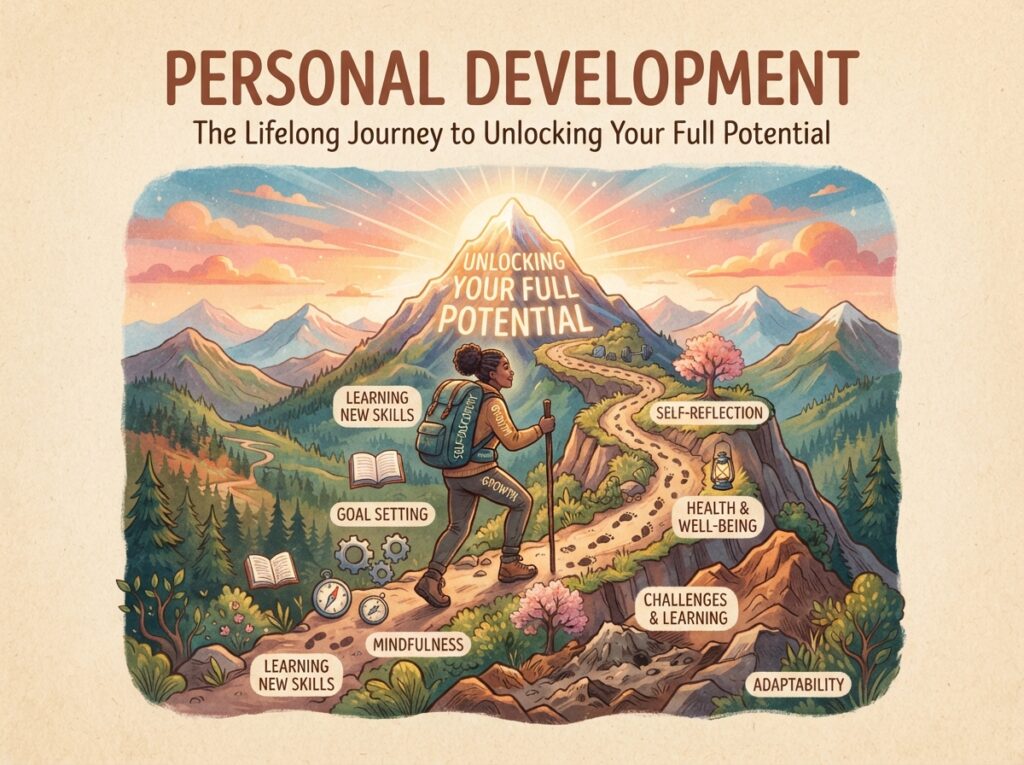
Personal development is multidimensional. Here are the key areas to focus on for holistic growth.
1. Physical Development
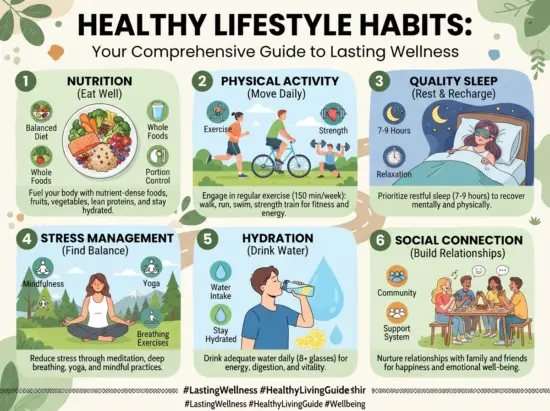
Your physical health affects every other aspect of your life. Energy, focus, mood, and resilience all depend on how well you care for your body.
Key Practices:
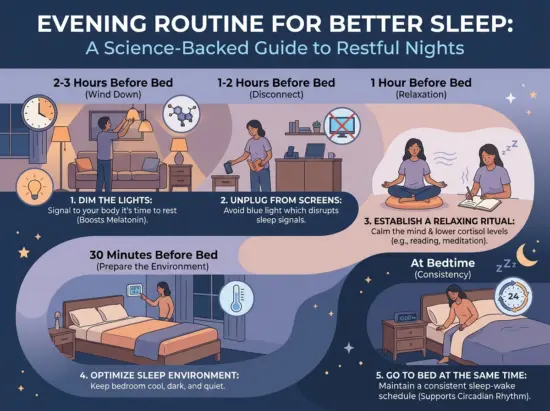
- Quality sleep: Aim for 7-9 hours of consistent, restful sleep. Create a relaxing bedtime routine and keep a consistent schedule.
- Regular movement: Incorporate both cardiovascular and strength-building exercise. Even 20 minutes daily makes a difference.
- Nourishing nutrition: Focus on whole, unprocessed foods. Eat a variety of colorful vegetables, lean proteins, and healthy fats.
- Hydration: Drink adequate water throughout the day, especially upon waking.
- Rest and recovery: Listen to your body. Take rest days and practice active recovery.
2. Mental and Intellectual Development
Your mind is the most powerful tool you possess. Continually expanding your knowledge and sharpening your thinking is essential for personal development.
Key Practices:
- Daily reading: Read books, articles, and materials that challenge and expand your thinking.
- Lifelong learning: Take courses, attend workshops, or pursue certifications in areas of interest.
- Critical thinking: Question assumptions, evaluate evidence, and consider different perspectives.
- Creative expression: Write, draw, compose, or create in whatever medium resonates with you.
- Mental puzzles: Engage in activities that challenge your brain, like chess, Sudoku, or strategy games.
3. Emotional Development
Emotional intelligence—the ability to recognize, understand, and manage emotions—is a critical predictor of success and well-being.
Key Practices:
- Emotion labeling: Practice naming your emotions with precision. “I feel frustrated” is more helpful than “I feel bad.”
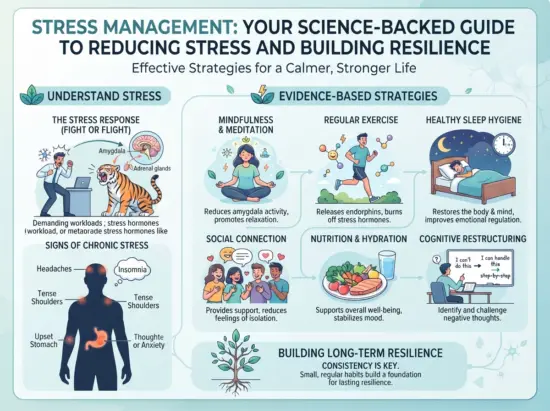
- Self-regulation: Develop strategies to manage strong emotions, like deep breathing, taking a pause, or going for a walk.
- Empathy: Practice putting yourself in others’ shoes. Listen to understand, not just to respond.
- Self-compassion: Treat yourself with the same kindness you’d offer a good friend.
- Vulnerability: Allow yourself to be seen and known authentically.
4. Social Development
Humans are social creatures. The quality of our relationships profoundly impacts our happiness and health.
Key Practices:
- Active listening: Give people your full presence. Put away distractions and truly hear what they’re saying.
- Authentic communication: Express your thoughts and feelings honestly and respectfully.
- Setting boundaries: Know your limits and communicate them kindly but firmly.
- Nurturing connections: Invest time and energy in meaningful relationships.
- Community involvement: Connect with groups or causes that align with your values.
5. Career and Professional Development
Your work occupies a significant portion of your life. Developing your career in alignment with your values leads to greater fulfillment.
Key Practices:
- Continuous skill development: Stay current in your field and expand your skillset.
- Networking: Build genuine professional relationships.
- Mentorship: Seek guidance from those who have walked the path before you, and mentor others.
- Goal setting: Define clear career objectives and create a plan to achieve them.
- Personal branding: Cultivate a reputation that reflects your values and expertise.
6. Financial Development
Financial literacy and management provide security and freedom to pursue your passions.
Key Practices:
- Budgeting: Track income and expenses to understand your financial picture.
- Saving and investing: Build an emergency fund and invest for the future.
- Financial education: Learn about money management, investing, and wealth building.
- Mindful spending: Align your spending with your values and priorities.
- Debt management: Develop a plan to reduce and eliminate high-interest debt.
7. Spiritual Development
Spirituality doesn’t necessarily mean religion. It’s about connecting with something greater than yourself and finding meaning in life.
Key Practices:
- Meditation or contemplation: Take time for stillness and inner reflection.
- Gratitude practice: Regularly acknowledge the goodness in your life.
- Nature connection: Spend time in nature to feel a sense of connection and awe.
- Service: Help others through volunteering, acts of kindness, or mentorship.
- Exploring purpose: Contemplate the deeper questions of life and your place in it.
The Role of Habits in Personal Development
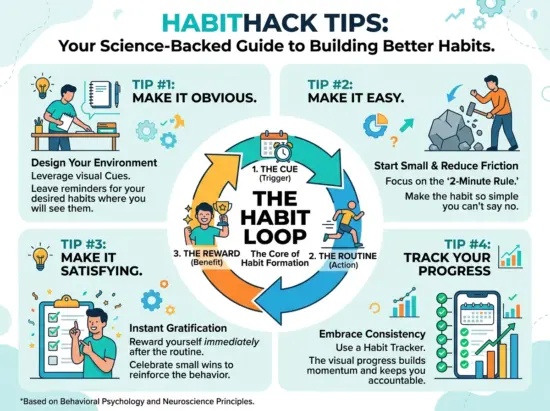
Habits are the vehicles through which personal development occurs. Your daily habits determine who you become over time.
Why Habits Matter in Personal Development
- Consistency: Habits create consistent action without relying on motivation.
- Automaticity: Once established, habits become automatic, freeing mental energy.
- Compound effect: Small daily actions accumulate into significant results.
- Identity formation: As James Clear writes, “Every action you take is a vote for the type of person you wish to become.”
Personal Development Habits to Cultivate
Morning Rituals:
- Wake up early to have quiet time before the day’s demands begin.
- Hydrate by drinking water immediately upon waking.
- Practice meditation for 5-10 minutes.
- Journal about intentions, gratitudes, or goals.
- Move your body with stretching, walking, or a workout.
- Read something inspiring or educational.
Throughout the Day:
- Practice mindfulness during routine activities.
- Take breaks to reset and recharge.
- Learn something new—a podcast, article, or skill.
- Connect meaningfully with others.
- Eat nourishing meals mindfully.
Evening Rituals:
- Reflect on the day’s accomplishments and lessons.
- Practice gratitude by listing three good things.
- Plan tomorrow’s priorities.
- Prepare for a restful night’s sleep.
- Disconnect from screens at least an hour before bed.
Building a Personal Development Plan
A structured plan transforms vague intentions into tangible results. Here’s how to create one.
Step 1: Assess Your Current State
Conduct an honest assessment of where you are in each area of your life. Use a scale of 1-10 for:
- Physical health
- Mental well-being
- Emotional intelligence
- Relationships
- Career satisfaction
- Financial health
- Spiritual fulfillment
Step 2: Define Your Vision
Where do you want to be in 1, 5, or 10 years? Be specific and vivid. Write a detailed description of your ideal life.
Step 3: Set Goals
Turn your vision into specific, measurable goals. Use the SMART framework:
- Specific: Clearly defined.
- Measurable: Trackable progress.
- Achievable: Realistic given your circumstances.
- Relevant: Aligned with your values.
- Time-bound: With a deadline.
Step 4: Identify Habits
For each goal, identify the daily habits that will lead to its achievement. Break down large goals into small, daily actions.
Step 5: Create Systems
Design your environment to support your habits. Make good habits easy and bad habits hard.
Step 6: Track Progress
Monitor your habits and goals regularly. Use journals, apps, or simple calendars.
Step 7: Review and Adjust
Schedule regular reviews—weekly, monthly, and quarterly. Celebrate wins, learn from setbacks, and adjust your approach as needed.
Overcoming Obstacles in Personal Development
Every journey faces challenges. Here’s how to navigate common obstacles.
1. Fear and Self-Doubt
Fear of failure, judgment, or the unknown can paralyze you.
Strategies:
- Recognize fear as normal. Courage is acting despite fear.
- Reframe fear as excitement. The physiological response is similar.
- Start small. Building confidence through small wins.
- Use positive affirmations to counter negative self-talk.
- Visualize success to build confidence.
2. Procrastination
Procrastination often stems from overwhelm, perfectionism, or fear.
Strategies:
- Break tasks into tiny, manageable steps.
- Use the 2-Minute Rule: if it takes less than 2 minutes, do it now.
- Focus on starting, not finishing.
- Remove distractions.
- Create deadlines and accountability.
3. Lack of Motivation
Motivation is fickle. You can’t rely on it to sustain your journey.
Strategies:
- Build habits that don’t depend on motivation.
- Connect to your deeper “why.”
- Find an accountability partner.
- Celebrate small wins.
- Remember your progress and how far you’ve come.
4. Setbacks and Failures
Everyone experiences setbacks. They’re not the end of your journey—they’re part of it.
Strategies:
- Reframe setbacks as learning opportunities.
- Practice self-compassion. Don’t beat yourself up.
- Get back on track quickly. Don’t let one failure become two.
- Learn from what happened and adjust your approach.
- Remember that growth is not linear.
5. Time Constraints
Feeling too busy for personal development is common. However, growth doesn’t require hours each day.
Strategies:
- Integrate development into your existing routine (habit stacking).
- Use micro-habits—actions that take just 1-2 minutes.
- Identify and eliminate time-wasters.
- Wake up 20-30 minutes earlier.
- Use transition times (commutes, waiting) for learning.
Recommended Personal Development Resources
Books
| Book | Author | Focus |
|---|---|---|
| Atomic Habits | James Clear | Habit formation |
| The Power of Habit | Charles Duhigg | Habit science |
| Mindset | Carol Dweck | Growth mindset |
| Daring Greatly | Brené Brown | Vulnerability and courage |
| The 7 Habits of Highly Effective People | Stephen R. Covey | Personal effectiveness |
| The Compound Effect | Darren Hardy | Small actions, big results |
| Deep Work | Cal Newport | Focused productivity |
| Man’s Search for Meaning | Viktor E. Frankl | Purpose and resilience |
Podcasts
- The Tim Ferriss Show: Life optimization
- The School of Greatness: Personal growth
- Unlocking Us with Brené Brown: Emotional intelligence
- The Daily Stoic: Stoic philosophy
- Happier with Gretchen Rubin: Happiness and habits
Journals and Tools
- The Five Minute Journal for gratitude and intention setting
- Habit trackers (apps like Habitica, Streaks, or simple calendars)
- Bullet journaling for organization and reflection
- Meditation apps like Headspace, Calm, or Insight Timer
The Lifelong Nature of Personal Development
One of the most important truths about personal development is that it never ends. There is no point at which you “arrive” and are done growing.
This isn’t a flaw in the process—it’s the beauty of it. Embracing lifelong growth means:
- Staying curious: Life remains an adventure of discovery.
- Remaining humble: There’s always more to learn.
- Staying adaptable: You can navigate changing circumstances.
- Living fully: Each day brings new opportunities for growth.
The philosopher Heraclitus said, “No man ever steps in the same river twice.” You are always changing. The question is whether you’re changing deliberately or by default.