Table of Contents
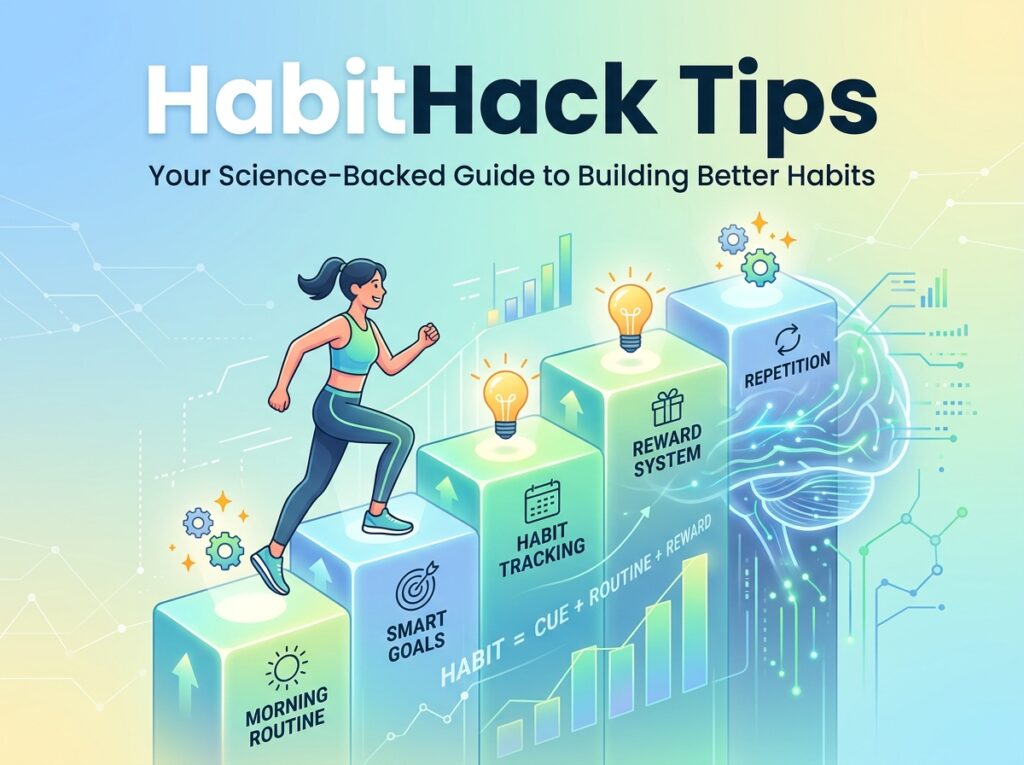
Welcome to HabitHack, your ultimate resource for building habits that stick. If you’ve ever started a new habit with enthusiasm only to lose momentum weeks later, you’re not alone. The problem isn’t a lack of willpower—it’s that we’re often working against how our brains are wired. This guide provides practical, science-backed tips to help you hack your habits and build lasting change.
What Are Habit Hacks?
A “habit hack” is a technique or strategy that works with your brain’s natural mechanisms to make new behaviors easier to adopt and maintain . Instead of relying on sheer willpower, habit hacks leverage psychology, environmental design, and the structure of your daily routine to create sustainable change . The goal is not a radical overhaul but to make modest, small adjustments that can turn your habits in a new direction .
Core Habit Hacks
1. Start Small
One of the most common mistakes in habit formation is setting the bar too high. When you begin with a large, intimidating goal, you’re more likely to fail and feel discouraged . Instead, break your goal down into the smallest possible action—a “microgoal” .
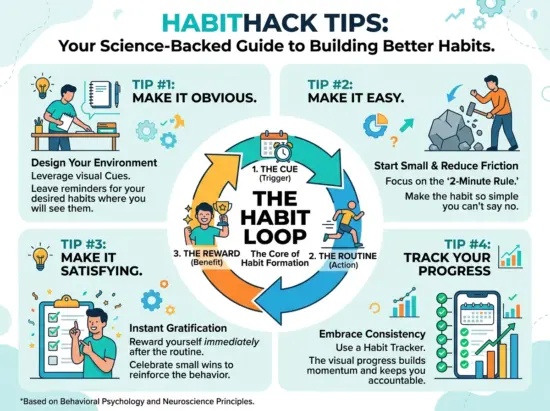
How It Works: Begin with actions that take less than two minutes . For example, instead of “read for 30 minutes,” start with “read one page.” Instead of “do a full yoga routine,” take out your yoga mat . This technique, known as the Two-Minute Rule, makes starting so easy that you can’t say no . Once you’ve started, it’s much easier to continue.
2. Be Specific
Vague goals like “exercise more” or “eat healthier” don’t give your brain a clear direction, making them easy to ignore . To hack your habits, you need to be specific about what, when, and how you will act.
How It Works: Instead of “I want to get fit,” try “I will go for a 20-minute walk every day after lunch.” This creates a clear, actionable plan that is much easier to follow .
3. Design Your Environment
Our environment has a powerful influence on our behavior. You can hack your habits by designing your surroundings to make good habits easy and bad habits difficult .
How It Works: To encourage a positive habit, reduce friction. Put your workout clothes and gym bag out the night before, or place a book on your pillow to remind you to read before bed . To break a bad habit, increase friction . If you want to stop scrolling on your phone, leave it in another room while you work . If you want to stop watching TV, unplug it after each use .
4. Use Habit Stacking
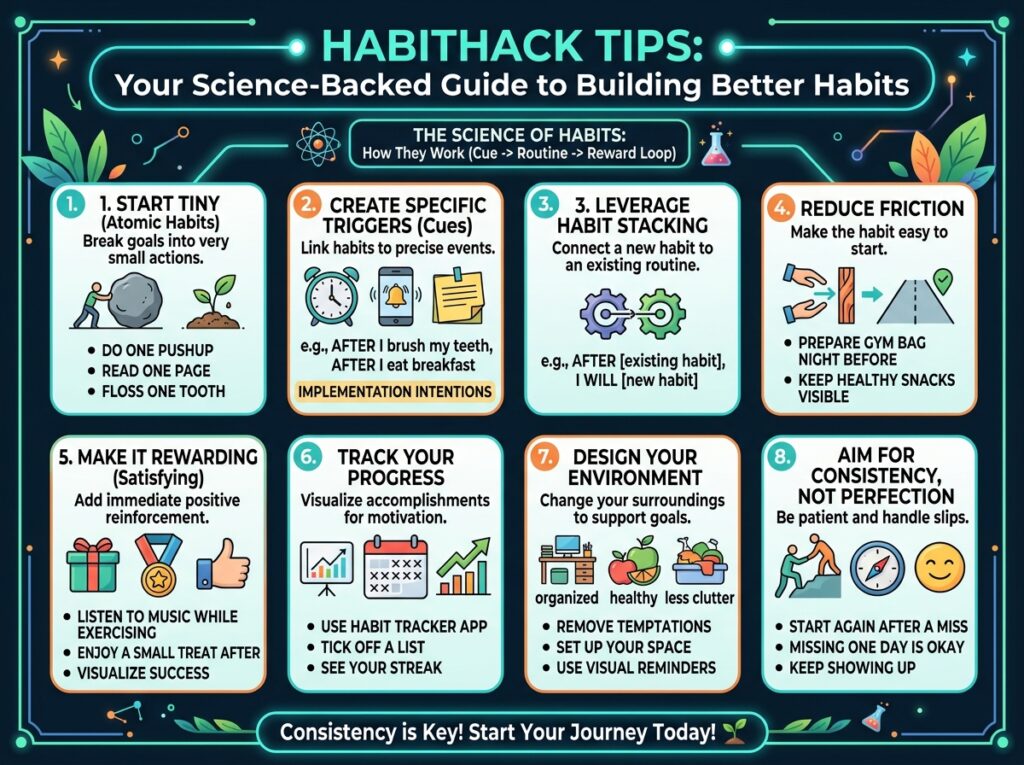
Habit stacking is a classic and powerful technique that involves linking a new habit to an existing one . Instead of trying to remember to do a new behavior, you piggyback it onto a routine you already perform without thinking.
How It Works: The formula is simple: After [CURRENT HABIT], I will [NEW HABIT] . For example:
- “After I pour my morning coffee, I will do a five-minute stretch.”
- “After I brush my teeth, I will drink a full glass of water.”
- “After I get into the car, I will take three deep breaths.”
By attaching the new habit to a stable, existing one, you create a trigger (cue) that makes it much easier to remember and follow through .
5. Understand the Habit Loop
Every habit operates on a three-part loop: cue, routine, and reward . By understanding this loop, you can hack your habits by intervening at any stage . To build a new habit, make the cues obvious, boost your craving for the reward, simplify the response, and celebrate your achievements . To break a bad habit, you can identify the cue, and then experiment with replacing the routine while keeping the same reward .
6. Track Your Progress
Monitoring your progress provides valuable feedback and motivation . You can use a simple tracking tool, such as a calendar or a dedicated app . The visual evidence of your consistency becomes a reward in itself and helps you stay accountable .