Table of Contents
Welcome to HabitHack.fun, your trusted resource for mastering the art of habit formation and personal growth. Adopting a healthy lifestyle isn’t about drastic, short-term changes; it’s about cultivating consistent, sustainable habits that promote long-term health and happiness . This guide provides practical, evidence-based tips to integrate healthy habits into your daily life.
Why Healthy Lifestyle Habits Matter
A healthy lifestyle is the primary defense against chronic disease and premature mortality . Research consistently shows that healthy habits are linked to a lower risk of developing heart disease, stroke, cancer, type 2 diabetes, dementia, and other chronic conditions . The benefits extend beyond disease prevention, improving brain and heart health, strengthening bones, and enhancing overall quality of life . In fact, studies have found that individuals who maintain a healthy lifestyle can significantly extend their healthspan—the number of years spent in good health .
The Power of Small Changes
You don’t need to overhaul your life overnight. Small, gradual changes are often more effective for building lasting habits . Even modest shifts in diet and physical activity can have meaningful health benefits that accumulate over time . The key is consistency, not perfection.
Eating Well for Lasting Health
1. Prioritize Whole, Nutrient-Rich Foods
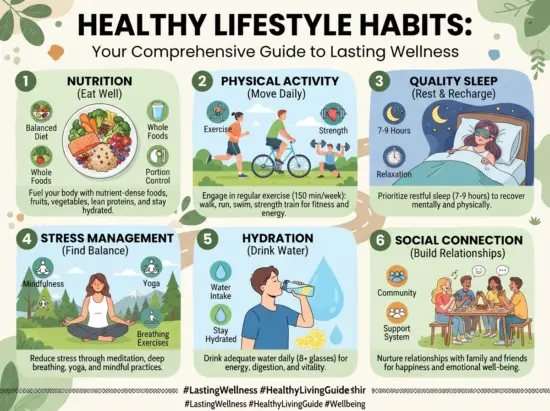
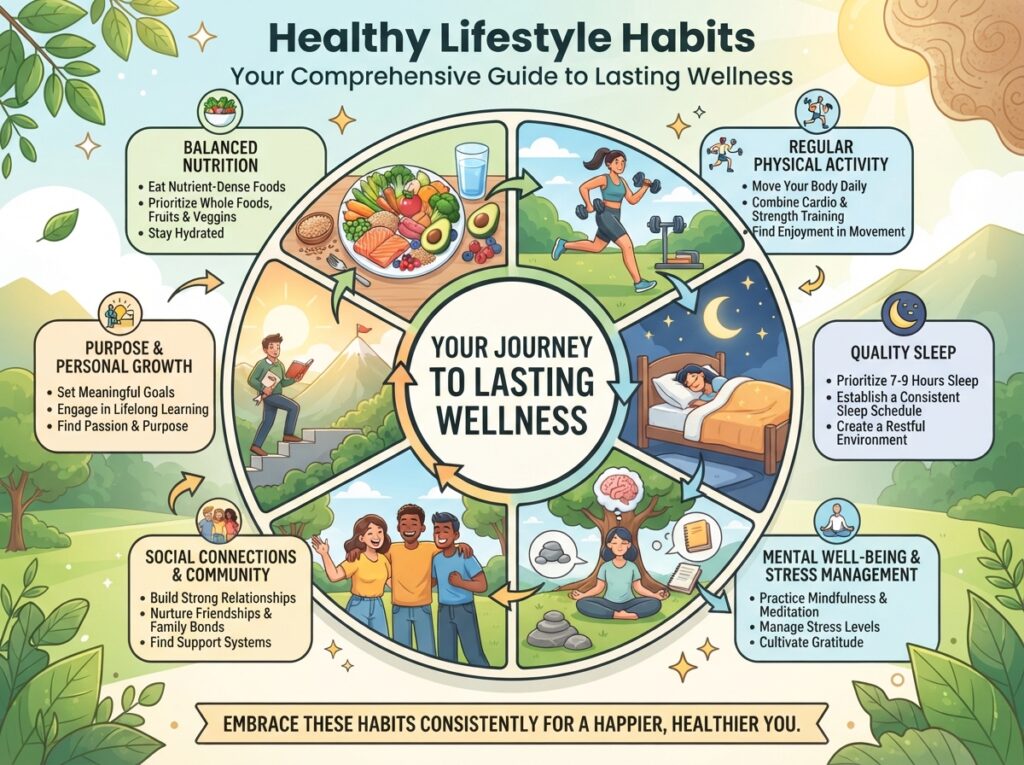
Focus on building your meals around whole foods, including a colorful variety of vegetables, fruits, whole grains, lean proteins, and healthy fats . These foods are packed with essential vitamins, minerals, and fiber that nourish your body and help maintain a healthy weight .
- Eat in color: Aim to eat all the colors of the rainbow by adding more fruits and vegetables to your plate .
- Choose whole grains: Opt for whole-wheat bread, brown rice, and oatmeal instead of refined grains .
- Include lean proteins: Incorporate sources like poultry, fish, beans, nuts, and seeds .
2. Limit Processed Foods, Added Sugars, and Salt
Reducing your intake of processed foods, sugary drinks, and items high in sodium is crucial for good health . These foods often pack many calories with few essential nutrients .
- Avoid sugary drinks: Replace sodas and sweetened teas with water or unsweetened herbal tea .
- Read Nutrition Facts labels: Learn to look at labels to understand what you’re consuming, focusing on serving size, added sugars, and sodium content .
- Be mindful of portion sizes: Use smaller plates and bowls to help control portions without feeling deprived .
Staying Active and Moving Your Body
3. Incorporate Regular Physical Activity
The goal is to be as active as possible. It is recommended to aim for at least 150 minutes of moderate-intensity activity (like brisk walking) or 75 minutes of vigorous activity per week .
- Start small: If you’re new to exercise, begin with short walks and gradually increase your time and intensity .
- Find activities you enjoy: You are more likely to stick with exercise if you have fun doing it. Walking, dancing, swimming, biking, and gardening are all great options .
- Fight sitting disease: If your job requires you to sit for long periods, try to stand up, stretch, or take a short walk every hour to improve your circulation and energy .
- Incorporate movement throughout the day: Take the stairs, park farther away from your destination, or have a walking meeting .
4. Get Outside More
Spending time outdoors has numerous benefits, including lowering stress, improving blood pressure, and promoting exercise . Sunlight is also a great source of Vitamin D, which builds a healthy immune system .
Prioritizing Sleep and Mental Well-Being
5. Make Quality Sleep a Priority
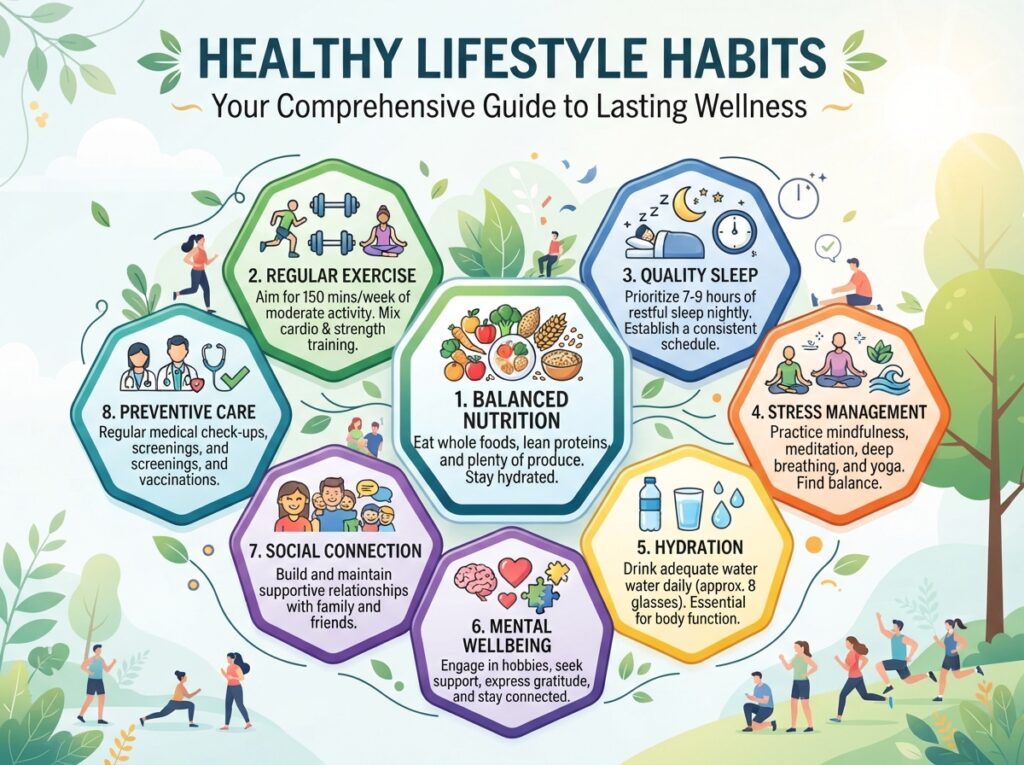
Sleep is essential for your mood, immune system, and appetite control . Aim for 7 to 9 hours of quality sleep per night .
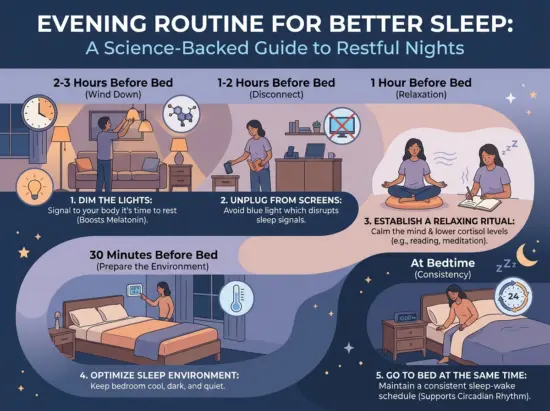
- Establish a regular bedtime routine: Go to bed and wake up at roughly the same time each day to set your body’s internal clock .
- Create a restful environment: Keep your bedroom cool, dark, and quiet .
- Limit screen time before bed: Avoid looking at TVs, phones, and computers at least an hour before you go to sleep .
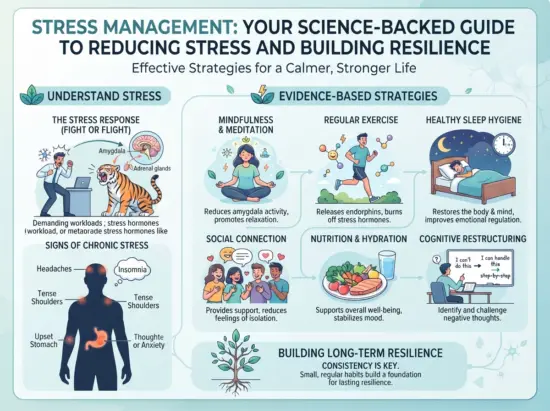
6. Manage Stress and Practice Mindfulness
Your mental well-being is just as important as your physical health . Unmanaged stress can contribute to chronic disease .
- Practice mindfulness: Spend a few minutes a day on deep breathing exercises or guided meditations, which can help you relax and feel more grounded .
- Engage in hobbies and activities you love: Try a new hobby to incite creativity and improve your mental health .
- Practice gratitude: Taking time to appreciate the small things has been shown to decrease depression, anxiety, and stress .
Strategies for Building Habits That Stick
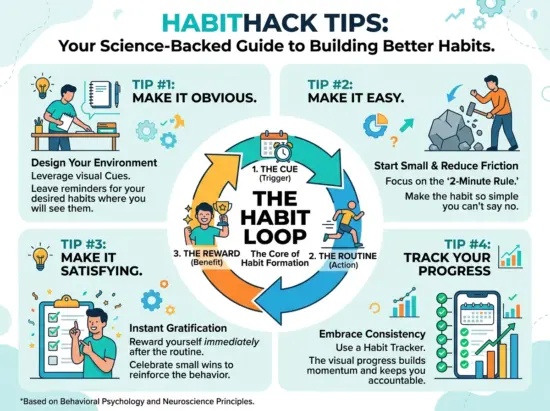
7. Start Small and Be Specific
One of the best ways to build a new habit is to make your goal clear and manageable . For example, instead of saying “I’ll be healthier,” try “I will eat a serving of vegetables with dinner” or “I’ll go for a 10-minute walk every day” .
8. Use Habit Stacking
Habit stacking is a powerful technique where you link a new habit to something you already do regularly . For example:
- After you pour your morning coffee, you could do a 10-minute stretch .
- When you brush your teeth in the evening, you could do your physio exercises .
- Before you check your email, you could watch a short video on healthy cooking .
By attaching a new action to an established routine, you make it easier to remember and follow through .
9. Track Your Progress and Reward Yourself
Tracking your progress can be a powerful motivator . Whether you use an app, a journal, or a simple chart, seeing how far you’ve come builds confidence . Don’t forget to reward yourself for your efforts with something that supports your well-being, like a relaxing bath or a movie night .