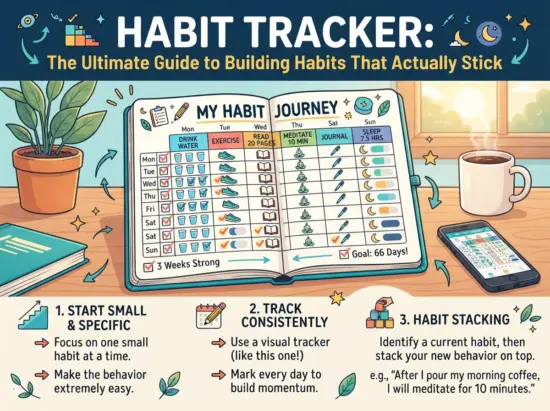
Table of Contents
Welcome to HabitHack.fun, your trusted resource for mastering the art of habit formation. If you’ve ever struggled to maintain a new routine or felt frustrated by a lack of progress, a habit tracker might be the missing piece in your journey. This comprehensive guide will explain what habit trackers are, why they work, how to choose the right one, and how to use them effectively for lasting change.
What Is a Habit Tracker?
At its simplest, a habit tracker is a tool—whether a paper checklist, a spreadsheet, or a mobile app—designed to help you record whether you’ve performed a specific behavior on a given day . Think of it as a visual accountability partner. You choose a habit, like “go for a 10-minute walk” or “read for 15 minutes,” and then mark each day you successfully complete it. It’s a way to turn something abstract and automatic into something concrete and measurable . This simple act of tracking is a powerful tool for creating positive feedback, making invisible progress visible and keeping you motivated.
The Psychology Behind Habit Tracking
The effectiveness of a habit tracker is deeply rooted in behavioral psychology. By creating a visual record of your actions, you’re tapping into several powerful psychological principles that support lasting behavior change.
- The Power of Visual Streaks: The “chain method,” popularized by comedian Jerry Seinfeld, involves marking an X on a calendar for each day you complete your habit. The goal is simply “don’t break the chain” . This creates a powerful visual streak that becomes its own motivation. The longer your streak, the more you have to lose if you break it. This leverages a psychological principle called “loss aversion,” where the pain of losing something (your streak) is a stronger motivator than the pleasure of gaining something .
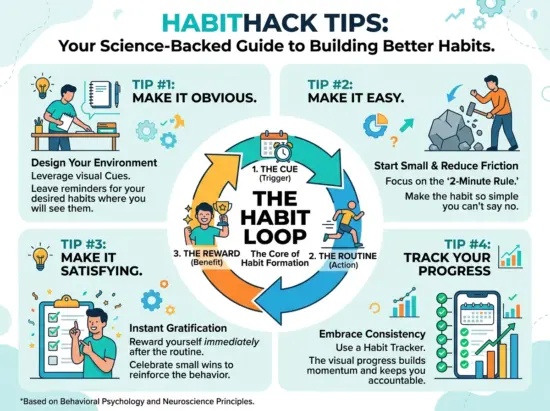
- Immediate Feedback and Motivation: Unlike long-term goals where results can take months to appear, a habit tracker provides immediate feedback. The simple act of checking a box or tapping “complete” in an app delivers a small, satisfying reward. This instant gratification helps reinforce the behavior, making you more likely to repeat it . This is why elite performers in all fields “frequently measure, quantify, and track their progress” to receive valuable feedback .
- Turning Intention into Action: A habit tracker converts abstract, fuzzy intentions like “I should exercise more” into a concrete daily question: “Did I exercise today? Yes or No.” . This binary, yes-or-no format removes ambiguity and forces a moment of conscious decision, making you far more likely to follow through. Research on self-monitoring shows that the simple act of tracking a behavior changes the behavior itself. For example, a study published in the American Journal of Preventive Medicine found that people who kept daily food records lost twice as much weight as those who didn’t .
How to Use a Habit Tracker Effectively
To harness the power of a habit tracker, it’s important to use it strategically. Here are some key guidelines for success.
1. Start Small and Be Specific
The most common mistake is trying to track too many habits at once or starting with overly ambitious goals . Experts recommend starting with just one to three habits. Each habit should be specific and binary—a “yes” or “no” question. For example, instead of tracking “exercise,” track “a 10-minute walk” or “went to the gym for 20 minutes” . Following the “Two-Minute Rule” from James Clear’s Atomic Habits is a great way to start; break a new habit down so it takes less than two minutes to complete, making it so easy you can’t say no . When you track these tiny habits, you’re building the foundation for something much bigger.
2. Choose Habits That Align with Your Values
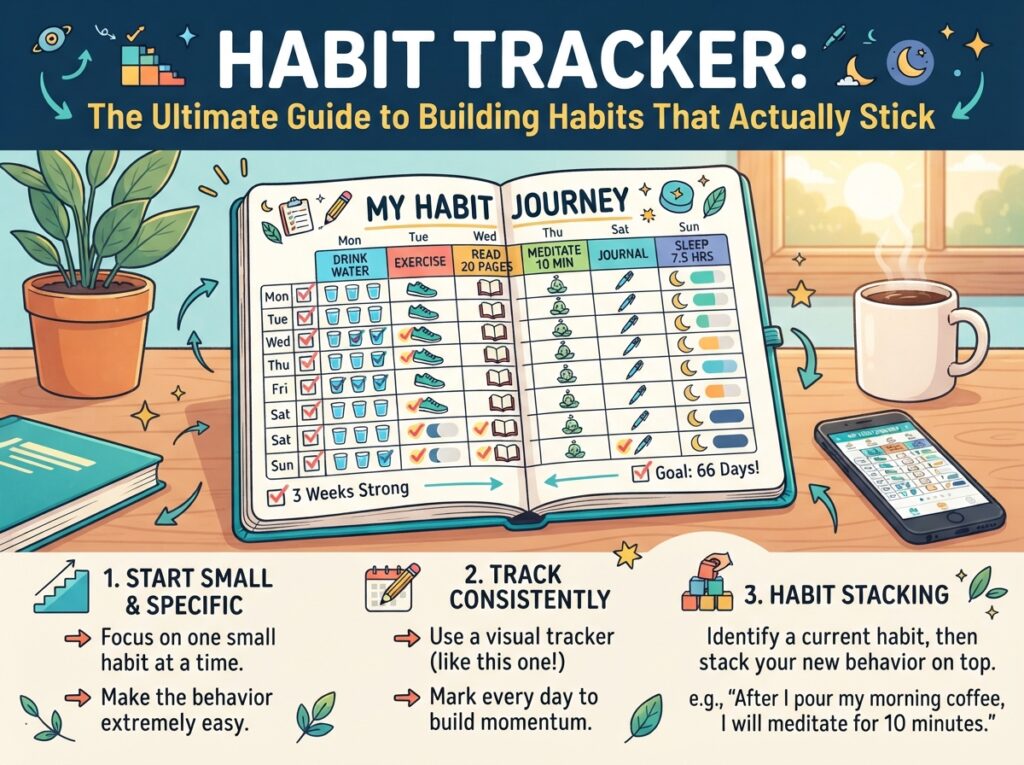
Before you start tracking, ask yourself what traits, behaviors, and actions sum up the person you hope to become . Your new habits need to align with your core values and your sense of purpose. If you’re tracking a habit that doesn’t connect to a meaningful goal, it will feel like a chore rather than a tool for growth. When you attach your habit to something you care about—like better energy, improved mood, or a stronger sense of accomplishment—it becomes easier to sustain .
3. Pick a Format That Works for You
Habit trackers come in many forms. The best one is the one you will actually use consistently .
- Paper Trackers: This is the classic method using a journal, calendar, or a printable template. The physical act of marking a checkmark or coloring in a square provides a tactile satisfaction that many people love. It also keeps you away from a distracting phone screen .
- Spreadsheet Trackers: Google Sheets or Excel allow for complete customization. You can set up conditional formatting to turn cells green when a habit is completed, and calculate your completion percentage and longest streak automatically .
- Dedicated Habit Apps: There are thousands of apps designed specifically for habit tracking. Some popular ones include Streaks (iOS, $5.99), known for its clean, minimalist design , and Loop Habit Tracker (Android, Free), which is praised for its simple, ad-free interface and unique non-binary habit score algorithm . Other popular options include Habitica (for those who love gamification) and Fabulous (which uses behavioral science to guide you) . ClickUp provides a detailed comparison table of these apps’ features, including streak tracking, custom frequency, and statistics .
4. Review and Reflect Regularly
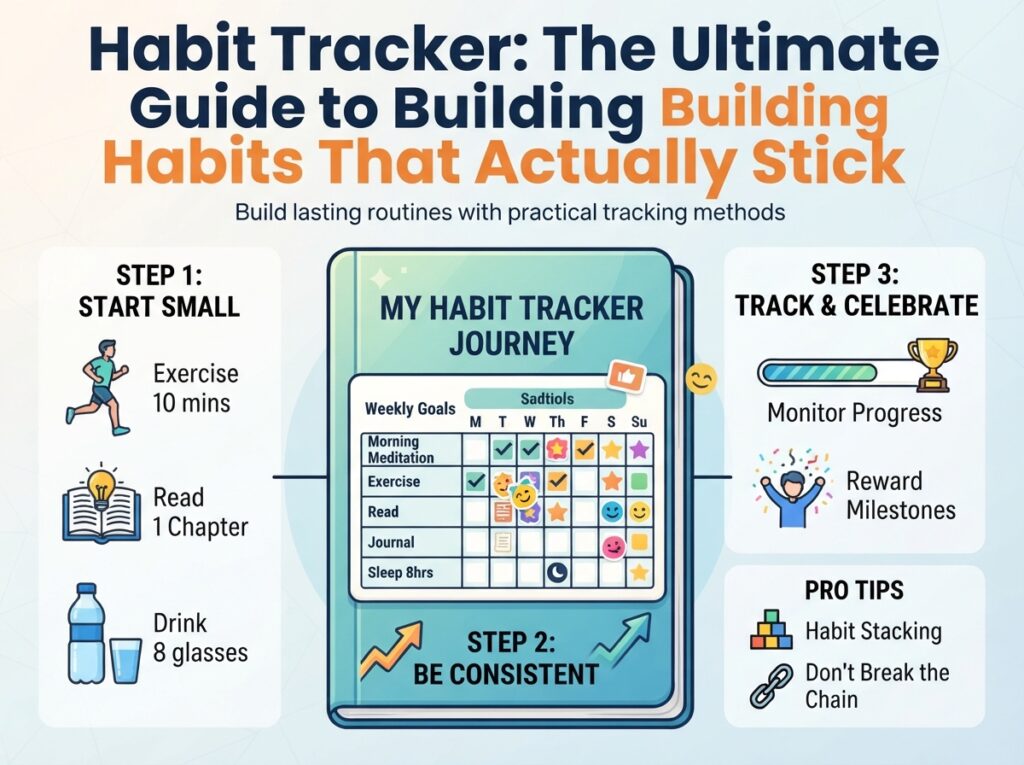
A tracker that you fill out daily but never review is just a diary. To turn it into a powerful tool, set aside a few minutes for a weekly review . Ask yourself: What’s helping and what needs tweaking? Is this behavior feeling easier? Is the cue I set working for me? . This practice helps you identify patterns, celebrate wins, and make adjustments before small problems become big obstacles.
The Science of Streaks and Why They Work
The streak, a consecutive run of completed days, is the most powerful motivational mechanism in habit tracking . When you have a 15-day streak, you have 15 days of visible progress that makes day 16 feel like an obligation rather than a choice . It triggers “loss aversion,” where the thought of losing your streak is a stronger motivator than the thought of starting one. However, streaks have a vulnerability: the “what the hell” effect. When a streak breaks, some people abandon the habit entirely. To prevent this, James Clear recommends the “never miss twice” rule . Missing one day is acceptable and inevitable, but missing two days in a row starts a new negative pattern. Consistency over time is the goal, not perfection.