Table of Contents
Welcome to HabitHack.fun, your trusted resource for mastering personal growth and habit formation. In our fast-paced world, mental wellness often takes a backseat to the demands of daily life. Yet, it is the foundation upon which our ability to think, feel, connect, and thrive is built. This guide provides practical, science-backed tips to help you strengthen your mental wellness .
What is Mental Wellness?
Mental wellness is the ability to manage stress, connect with others, and sustain a sense of meaning and purpose . It’s not about feeling happy all the time, but about having the tools to navigate life’s ups and downs with resilience and balance . It’s an active process of maintaining emotional and cognitive balance, built on practical habits that support your brain and emotional regulation .
Core Mental Wellness Tips
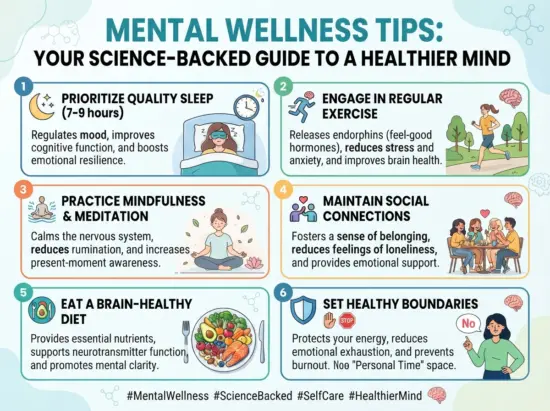
1. Prioritize Quality Sleep
Sleep is foundational to mental health. A consistent, restful sleep routine helps regulate mood, enhance memory, and reduce stress . During sleep, your brain repairs itself and consolidates memories . A 2025 study found that regular sleepers had a 38% lower risk of depression and a 33% lower risk of anxiety compared to those with irregular sleep patterns .
How to build this habit:
- Maintain a consistent bedtime and wake time—even on weekends
- Keep your bedroom cool, dark, and quiet
- Limit screen time at least an hour before bed
- Avoid caffeine and alcohol close to bedtime
- Aim for 7-9 hours of sleep per night
2. Move Your Body Daily
Physical activity is one of the most powerful tools for mental wellness. It releases endorphins—your body’s natural mood boosters—and has been shown to reduce symptoms of anxiety and depression . Even short bursts of activity can make a difference . According to the American Psychological Association, walking for just 10 to 15 minutes daily may lower your risk of depression by 18% .
How to build this habit:
- Start small—even a 10-minute walk is beneficial
- Find activities you genuinely enjoy
- Aim for 20-30 minutes of movement most days
- Exercise can improve sleep quality, creating a positive cycle for mental health
3. Practice Mindfulness and Present-Moment Awareness
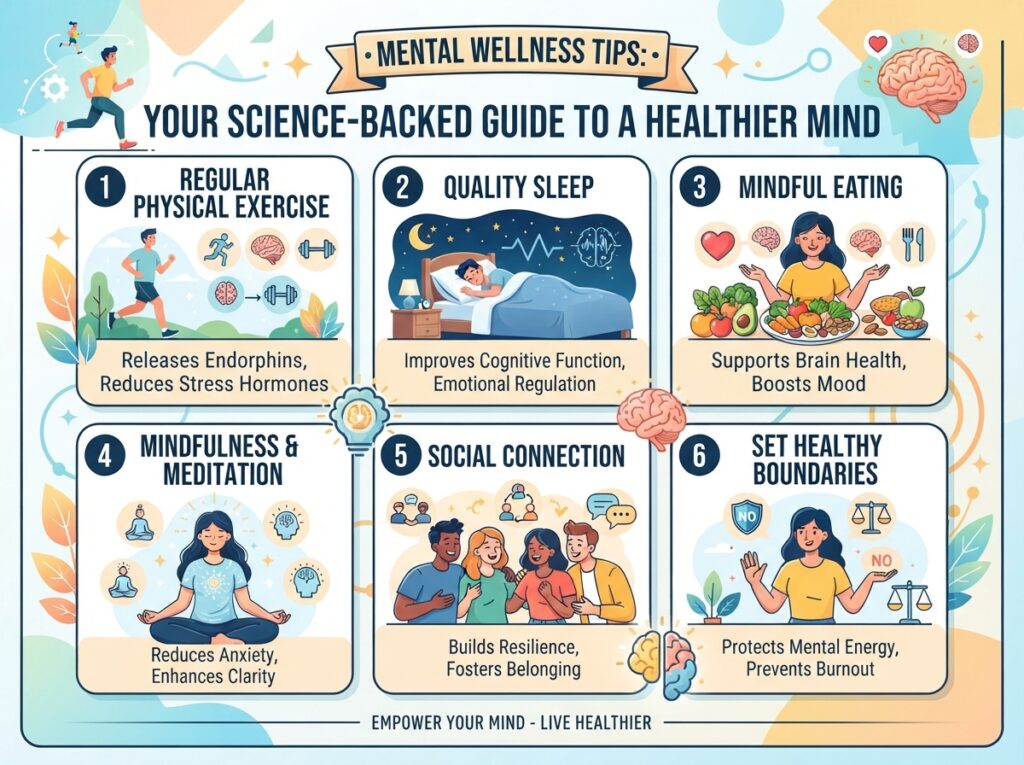
Mindfulness is the practice of being fully present in the moment, without judgment . It has been shown to reduce symptoms of anxiety and depression, enhance emotional regulation, and lower stress levels .
How to build this habit:
- Take a few deep breaths throughout the day (inhale for 4 counts, exhale for 5)
- Notice the sights and sounds around you during a short walk
- Practice mindful eating—savor the taste and texture of your food
- Set aside 5-10 minutes for a grounding ritual, like enjoying a cup of tea
4. Strengthen Social Connections
Social connections can protect health and lengthen life . Humans are wired for connection, and even small interactions can improve your mood and lower stress . Nurturing relationships that are supportive and positive is vital for mental wellness .
How to build this habit:
- Send a check-in text or call a friend
- Share a meal or activity with family
- Join a group focused on a favorite hobby
- Schedule regular time to connect with people who uplift you
5. Cultivate Gratitude
Gratitude is one of the most evidence-based habits for emotional well-being . It calms the brain’s emotional centers and amplifies judgment centers . Research shows that people who regularly express gratitude are healthier, more optimistic, and enjoy a greater sense of well-being .
How to build this habit:
- Write down three things you’re grateful for each day
- Text or call someone to express your appreciation
- When feeling down, read past gratitude entries to boost your mood
6. Manage Stress with Healthy Coping Mechanisms
Chronic stress can be harmful, but healthy coping strategies can build resilience . Unmanaged stress can lead to anxiety, depression, and other health issues, so it’s essential to develop effective coping mechanisms .
How to build this habit:
- Set priorities—decide what must get done and what can wait
- Practice self-compassion—note what you’ve accomplished, not what you haven’t
- Schedule regular time for relaxing activities
- Create a “toolkit” for emergencies—a list of activities or phrases that help you cope
7. Practice Self-Compassion and Positive Self-Talk
Most of us have a harsh inner critic. But replacing negative self-talk with kindness is crucial for mental wellness . Shifting from “I should be handling this better” to “This is a lot, and I’m doing the best I can today” can reduce shame and help your brain return to problem-solving mode .
How to build this habit:
- Acknowledge your feelings without judgment
- Treat yourself with the same kindness you’d offer a good friend
- Thank your inner critic for its intentions, but resolve to talk to yourself compassionately
When to Seek Professional Help
If you’ve tried these practices and still feel overwhelmed, or if your struggles interfere with daily life, seek support from a physician or therapist . Reaching out for help is a sign of strength, not weakness . Mental health conditions are among the most common health issues in the U.S. and around the world—you are not alone .