Table of Contents
Welcome to HabitHack.fun, your trusted resource for mastering the art of habit formation. Sleep is one of the most essential pillars of health, yet more than one-third of adults don’t get enough rest . This comprehensive guide explores the science of sleep and provides actionable strategies to build better sleep habits.
Why Better Sleep Habits Matter
Sleep is not passive downtime—it’s an active process where your body repairs itself and your brain consolidates memories . During sleep, your body cycles through different stages, each serving specific functions:
| Sleep Stage | Key Functions |
|---|---|
| Light Sleep (N1/N2) | Transition from wakefulness; heart rate and temperature drop |
| Deep Sleep (N3) | Body repairs tissue, boosts immunity, releases growth hormone |
| REM Sleep | Brain processes memories, regulates emotions, dreams occur |
Adults typically need 7-9 hours of sleep per night, cycling through these stages four to six times in 90-minute intervals . Without enough restorative sleep, you risk long-term health problems including heart disease, diabetes, depression, and cognitive decline .
The Circadian Rhythm
Your body operates on a 24-hour internal clock called the circadian rhythm, primarily regulated by light and darkness . Morning sunlight signals your brain to suppress melatonin and increase alertness, while darkness triggers melatonin production to prepare you for sleep .
Core Sleep Habits to Build
1. Maintain a Consistent Sleep Schedule
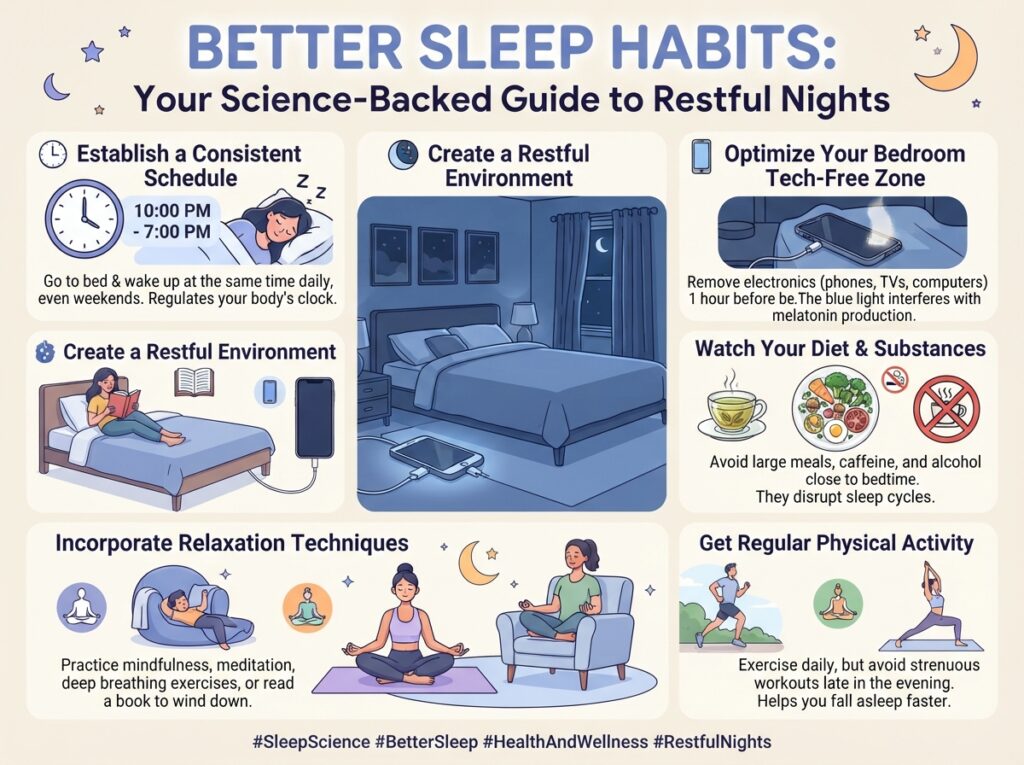
Go to bed and wake up at roughly the same time every day—even on weekends . A fixed wake-up time is more important than a fixed bedtime, as it reinforces your body’s sleep-wake cycle . This consistency trains your internal clock and makes falling asleep easier over time .
Habit stacking tip: If you want to build a consistent wake time, stack it with an existing morning habit: “After I turn off my alarm, I will open the curtains to let in sunlight.”
2. Optimize Your Bedroom Environment
Make your bedroom a sleep sanctuary with these key elements :
- Cool: Keep temperature around 65-68°F (18-20°C)
- Dark: Use blackout curtains or an eye mask
- Quiet: Use earplugs or a white noise machine
- Comfortable: Ensure your mattress and pillows support restful sleep
3. Limit Screen Time Before Bed
Blue light from phones, computers, and TVs inhibits melatonin production, tricking your brain into thinking it’s still daytime . Put your phone away at least one hour before bed and avoid screens in the bedroom .
When to stop using devices: Set a “device bedtime” that’s one hour before your actual bedtime . For example, if you want to sleep at 11 PM, put your phone away at 10 PM.
4. Watch Your Evening Diet
What you eat and drink significantly impacts sleep quality . Follow these guidelines :
| Do | Don’t |
|---|---|
| Eat dinner at least 3 hours before bed | Eat heavy, rich meals close to bedtime |
| Limit caffeine after 2 PM | Consume caffeine in the evening |
| Avoid alcohol in the evening | Drink alcohol 4 hours before bed |
| Choose sleep-supporting snacks (bananas, oats) | Eat refined carbs or sugary snacks |
5. Create a Relaxing Bedtime Routine
A calming pre-sleep ritual signals your brain that it’s time to wind down . Choose activities that help you relax:
- Reading a physical book (reduces stress by 50% in 6 minutes)
- Taking a warm bath or shower
- Deep breathing or meditation
- Journaling worries to clear your mind
Habit stacking formula: “After I finish my evening routine, I will read for 10 minutes before turning off the lights.”
6. Stay Active During the Day
Regular physical activity promotes deeper, more restorative sleep . However, avoid vigorous exercise within 2-3 hours of bedtime, as it can be stimulating . Morning exercise is ideal, as it helps reset your circadian rhythm .
7. Manage Stress and Racing Thoughts
Stress and anxiety are major sleep disruptors . Try these strategies to quiet your mind:
- Write down tomorrow’s to-do list (gets worries out of your head)
- Practice the “10-second rule”: before reacting to a stressful thought, pause and breathe
- Use guided meditation apps or videos
- Assign a “worry period” earlier in the day to address concerns
8. What to Do When You Can’t Sleep
If you’re lying awake for more than 20-30 minutes, get out of bed and do something relaxing in dim light . Only return to bed when you feel sleepy. This prevents your brain from associating the bed with frustration .
Building Better Sleep Habits: A Step-by-Step Approach
- Track your current sleep: Keep a sleep diary for 2 weeks . Note sleep times, wake times, caffeine/alcohol consumption, and how you feel each morning .
- Start with one change: The list of sleep tips is long—don’t try everything at once . Choose 1-2 habits to focus on first.
- Use habit stacking: Link new sleep habits to existing routines. For example: “After I brush my teeth, I will dim the lights and start my wind-down routine.”
- Be consistent and patient: Changes in sleep quality may take days or weeks to appear . Progress, however small, is still progress .