Table of Contents
Welcome to HabitHack.fun, your ultimate destination for mastering the art and science of habit formation. We often believe that life-changing transformation requires dramatic, sweeping changes—quitting a job, moving to a new city, or completely overhauling our lifestyle overnight. The reality is far more subtle and, in many ways, more empowering: life-changing transformation is built on small, consistent habits that compound over time.
The Philosophy of Lasting Change
The core premise of life-changing habits is beautifully captured by Admiral William H. McRaeven in his commencement speech: “If you want to change the world, start off by making your bed.” His point is profound—by beginning each day with a simple act of discipline and completion, you’ve already achieved your first success. That small win gives you momentum to tackle bigger challenges, and it reminds you that discipline in the little things builds strength for the bigger things .
The ancient philosopher Aristotle understood this well: “We are what we repeatedly do. Excellence, then, is not an act, but a habit.” This principle remains as relevant today as it was millennia ago—your identity is shaped not by your intentions but by your daily actions .
Keystone Habits: The Catalyst for Change
The concept of keystone habits, popularized by Charles Duhigg in The Power of Habit, is central to understanding how certain behaviors can trigger a cascade of positive changes. A keystone habit is a routine that, once established, creates a ripple effect, sparking other positive behaviors that you may not even be consciously trying to improve .
Exercise: The Ultimate Keystone Habit

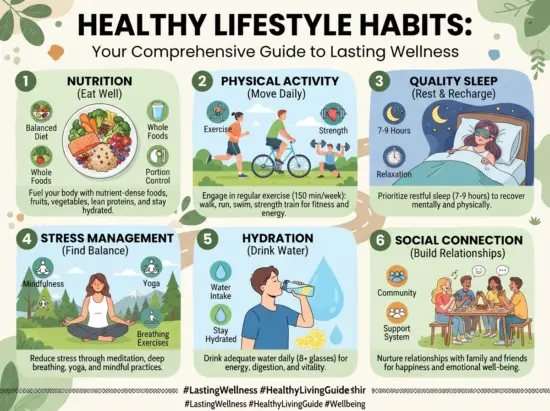
Perhaps the most powerful keystone habit is regular physical activity. When people start exercising, they often begin to eat healthier, sleep better, drink more water, manage time more effectively, feel more motivated, experience less stress, and enjoy improved mood. The habit of moving your body doesn’t just improve your physical fitness—it reshapes your entire identity .
As Saurabh Bothra, founder of Habuild and a certified yoga instructor, explains: “When you start exercising daily, you will start eating healthier. When you eat healthy, you will look physically fit. The stability of a routine will give you mental clarity, too. More than that, your small wins will keep you on track and help you build a healthier life” .
Morning Routines: Setting the Tone for Success
How you start your day sets the tone for everything that follows. A strong morning routine switches your brain out of reactive mode and into purposeful mode. Successful people across industries share this common habit: they wake up with intention rather than immediately reacting to notifications and messages .
Key elements of a life-changing morning routine include:
- Waking up early: Even 30 minutes earlier than usual gives you precious time for yourself before the demands of the day begin
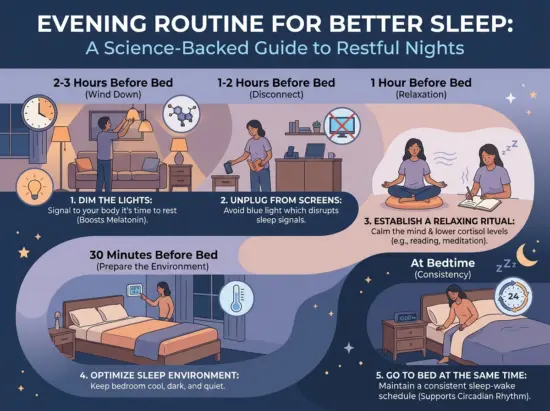
- Avoiding screens: Many high achievers are “militant” about not checking their phones first thing—they want to know what they think before the world tells them what to think
- Mindful moments: Taking quiet time for reflection, journaling, or meditation creates mental clarity
Conscious Breathing and Mindful Movement
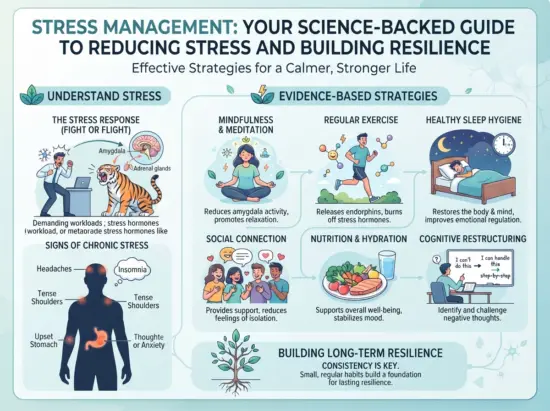
Intentional breathing is another powerful keystone habit. A few minutes of slow, controlled breathing with longer exhales activates your parasympathetic nervous system, helping your body de-escalate its stress response. Over time, daily practice improves emotional regulation, reduces muscle tension, and supports better rest and recovery .
Mindful movement—physical activity with the intention of enhancing body awareness—can decrease pain, improve posture, and make strength and mobility training feel easier. This can lead to more consistent exercise and better recovery .
Life-Changing Habits to Cultivate
1. Practice Daily Gratitude
Gratitude is not just an emotion—it’s a perspective. Writing down three things you’re grateful for each day shifts your focus from what you lack to what you have. Jon Gordon, author of The Power of Positive Habits, calls this the “thank you walk.” He shares that after 25 years of practicing gratitude on daily walks, he rewired his brain from negative to positive—proof that you can change your brain through habits .
Research suggests that actively absorbing and internalizing positive experiences can rewire the brain for greater resilience and optimism .
2. Read and Learn Continuously
Lifelong learning is a hallmark of people who achieve lasting success. Spending just 15 minutes learning something new—whether through a podcast, a book, or a course—can equip you with tools that transform your career and life .
3. Build Self-Trust Through Small Commitments
Self-trust is built through consistency—and it starts with keeping small promises to yourself. When you set goals but don’t follow through, it weakens your confidence in your ability to handle life. Conversely, when you keep even the smallest commitments to yourself, it builds inner trust and a strong foundation for bigger changes .
4. Give One Genuine Compliment Daily
Angela Hui, a writer for The Guardian, overcame shyness by challenging herself to give one genuine compliment to a stranger each day. By doing this, she discovered that expressing kindness helped her feel more present, confident, and connected. A small act, repeated, became a doorway to kindness and belonging .
5. Get Morning Sunlight
Getting outside in the morning and exposing your eyes to sunlight immediately increases cortisol production, which elevates alertness, boosts mood, and helps you sleep better at night—a powerful two-for-one habit .
How to Make These Habits Stick
The Power of Habit Stacking
Think of habit stacking as your personal hack for effortless change. Instead of reinventing your day, you attach a new habit to one you already do :
- After brushing your teeth → write in your gratitude journal
- After making coffee → stretch for five minutes
- After checking email → drink a glass of water
This works because your brain loves routines. By piggybacking on existing cues, you bypass the need for constant motivation and discipline .
Track Your Progress
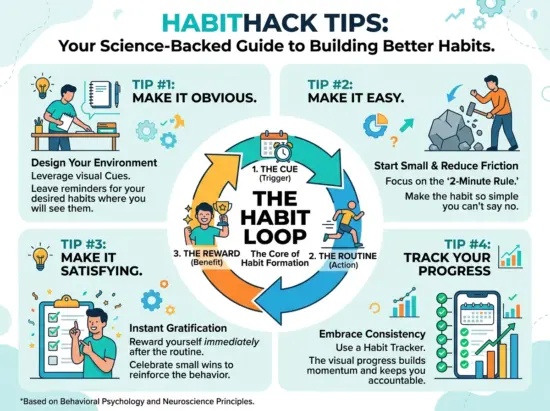
Tracking your habits is a game-changer. It turns the invisible into the visible and provides accountability. Every time you check that box, your brain releases a small amount of dopamine, making you want to keep going .
The “Never Miss Twice” Principle
Here’s the truth: you will miss days. You’ll skip workouts, forget to journal, or abandon your goals. The difference between people who thrive and those who quit is forgiveness. Psychologists emphasize that self-forgiveness reduces stress and helps you re-engage with goals. Instead of spiraling into guilt, treat slip-ups like learning experiences