Table of Contents
Welcome to HabitHack.fun, your ultimate resource for mastering the art and science of habit formation. The way you spend the first hour of your day can significantly influence the rest of it. By establishing a morning routine with healthy habits, you can transform your mindset, boost your energy, and set a powerful tone for success. This comprehensive guide explores a variety of morning habit ideas, from science-backed practices to the rituals of highly successful people.
The Science Behind a Good Morning
A well-structured morning routine is more than just a collection of tasks; it’s a strategic investment in your health and productivity. Research shows that morning routines can have profound benefits for your physical and mental state.
Benefits of a Morning Routine
Incorporating good morning habits consistently can lead to improved productivity, better time management, and enhanced mental and physical health . A structured routine can provide a sense of calm, reduce stress, increase motivation, and help you feel more in control of your day .
Key Benefits:
- Reduced Decision Fatigue: When you follow a routine, you minimize the number of trivial choices you need to make, saving your mental energy for more important decisions .
- Enhanced Productivity: A productive morning routine means you’ve already accomplished things before you even get out the door. It sets the stage for you to stay focused and productive throughout the day .
- Improved Mental Health: Activities like mindfulness and gratitude can foster a more positive mood and reduce anxiety .
Morning Habit Ideas to Kickstart Your Day
Here are some ideas to build a morning routine that works for you. Start small, choose a few habits, and gradually build on them.
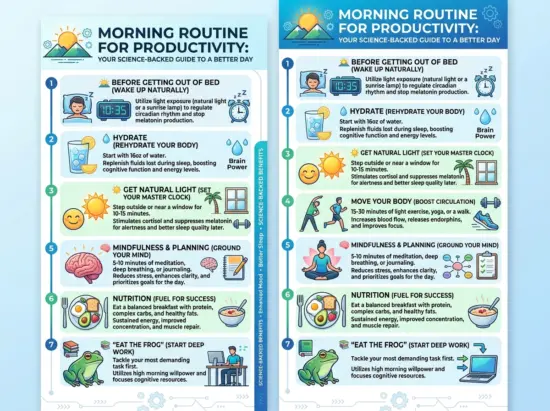
1. Wake Up at a Consistent Time
A consistent wake-up time is a powerful way to set yourself up for daily success . The human body thrives on routine, and waking up at the same time every morning helps regulate your circadian rhythm, your body’s internal clock . This regularity strengthens circadian entrainment and stabilizes sleep–wake cycles, which is linked to better mental and cardiometabolic health .
Pro Tip: Don’t feel pressured to join the “5 a.m. club.” Wake up at a time that aligns with your daily routine and ensures you get enough sleep. If you want to start waking up earlier, begin by waking up 15 minutes earlier and gradually work your way to your desired time .
2. Rehydrate with Water
After a night-long break, your body becomes dehydrated. Drinking water first thing in the morning can rehydrate your body and help your kidneys flush out toxins . Even mild dehydration has been associated with impairments in attention and working memory . A glass of water first thing can also boost your energy and improve your metabolism .
Pro Tip: Keep a water bottle beside your bed so you have it nearby after you wake up .
3. Get Some Sunlight
Getting natural sunlight within 30 to 60 minutes of waking is crucial for regulating your circadian rhythm and improving overall sleep quality . Morning light exposure influences the regulation of midpoint sleep (the central time between falling asleep and waking up) and leads to faster sleep onset and longer sleep duration . It suppresses melatonin (the “sleep hormone”) and increases serotonin, which is associated with mood and alertness .
Pro Tip: Try going for a morning walk, or even sit outside on your balcony or patio in the sun . Just 5 to 15 minutes every day may be enough .
4. Move Your Body
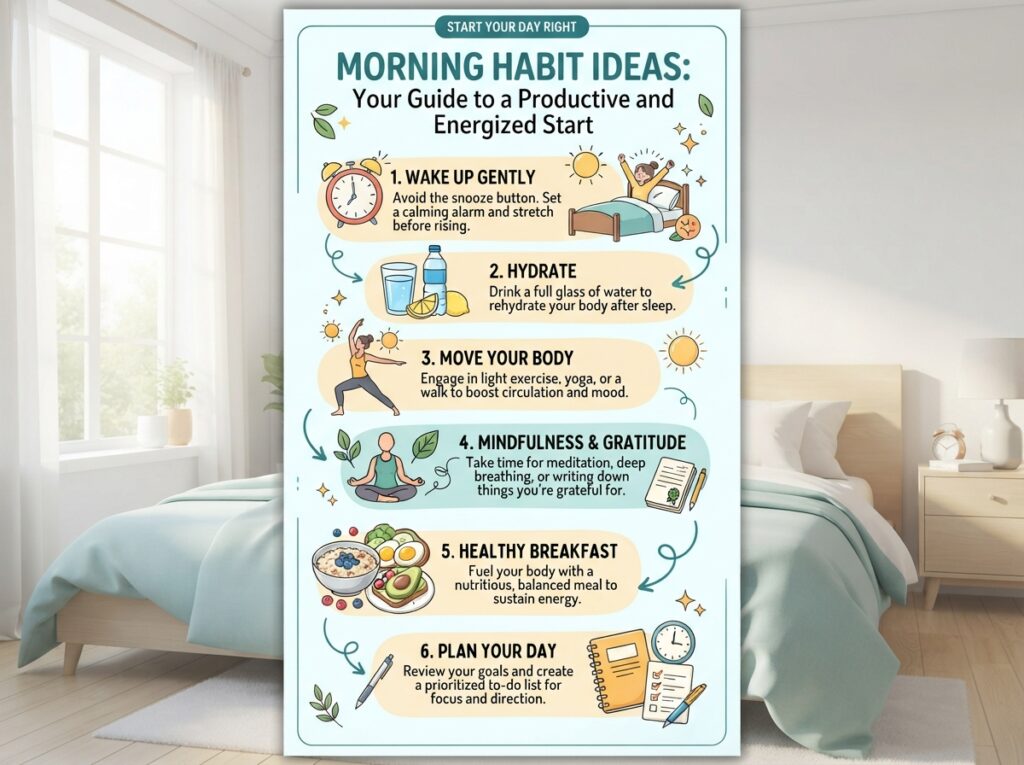
Physical activity in the morning is beneficial for both physical and mental health. Studies show that morning exercise can be more effective for improving attention, working memory, and processing speed . It can also stimulate circadian rhythms, improve mood, and set you up for a productive day .
Pro Tip: Don’t feel you have to do a high-intensity workout. A quick 15-minute exercise session can be enough. You can stretch, jog, run, cycle, or even briskly walk . The key is to find moderate-intensity physical activity that you enjoy .
5. Practice Mindfulness and Gratitude
Mindfulness is the practice of gently focusing your awareness on the present moment . Practicing mindfulness in the morning has been associated with increased positive affect, vitality, and mental health . Taking a few minutes to meditate, breathe deeply, or write down things you are grateful for can set a positive tone for the day and shift your focus to the good things .
Pro Tip: You don’t need to meditate for an hour. Start with just 2 to 5 minutes. Find a quiet place, sit in a comfortable position, and focus on your breath .
6. Eat a Healthy Breakfast
Eating a healthy breakfast is essential for providing the energy you need to start your day. A balanced breakfast should include a mix of carbohydrates, healthy fats, and protein . Studies show that regular breakfast consumption is associated with higher intake of essential vitamins and minerals , and it can help improve focus and concentration .
Pro Tip: If you are short on time, prepare breakfast the night before, such as overnight oats or hard-boiled eggs .
7. Set Daily Intentions and Plan Your Day
Successful people often start their day by reconnecting with their purpose and planning their tasks . Taking a few minutes to plan can help you prioritize your tasks. For example, write down the three most important things you want to do today . This simple ritual can help you put in the most effort on things that matter the most . Setting an intention is the first step toward acting on it and achieving your goals .
8. Create Before You Consume
Exceptional business owners produce before they consume. They avoid checking email, scrolling social media, or reading news until they’ve completed their most valuable creative work . By giving the first burst of your focus to your highest-value work, you set yourself up for success. The emails will wait; your creative energy might not .
9. Make Your Bed
A simple way to feel a little more organized is to make your bed soon after waking up . This small task can improve your mental health by giving you a sense of accomplishment and setting your intentions for the day . As Naval Admiral William McRaven said, “If you want to change the world, start off by making your bed.”
Morning Habits to Avoid
While you’re building your morning routine, try to avoid these common energy-draining habits:
- Hitting the “Snooze” Button: This action interrupts your sleep cycle and may prolong morning drowsiness and fatigue .
- Checking Your Phone First Thing: Checking messages right after waking up can distract you from your morning routine and put you in a reactive state . Try setting your phone to “Do Not Disturb” until after you’ve completed your morning routine .
- Having Caffeine on an Empty Stomach: A study found that having caffeine on an empty stomach can increase your blood glucose response when you do eat something, leading to a spike and a crash later .
The “Perfect” Morning Routine Is Personal
There is no one-size-fits-all morning routine. A routine that works for a CEO like Tim Cook, who wakes up at 3:45 a.m., might not be practical or healthy for you . Forcing yourself to get up earlier than your body wants to can produce a kind of social jet lag, which is associated with poor metabolic health .
The key is to be realistic and build a routine that aligns with your own goals, energy levels, and lifestyle . Start small and be consistent. It only takes about 10 weeks of doing something consistently before it becomes a habit . Forgive yourself if you miss a day, and intend to return to your morning routine tomorrow .
How to Get Started with Habit Stacking
A great way to build your morning routine is through habit stacking—pairing a new habit with an existing one . For example:
- “As soon as I get out of bed, I’ll drink a glass of water.”
- “After I brush my teeth, I’ll do a quick stretch.”
- “While I drink my coffee, I’ll write down three things I’m grateful for.”
By anchoring new habits to ones you already do, you are much more likely to stick with them.