Table of Contents
Welcome to HabitHack.fun, your ultimate resource for mastering the art and science of habit formation. While mornings often steal the spotlight, your evening routine is equally crucial—it’s the foundation upon which restorative sleep and productive days are built. This comprehensive guide explores the science behind effective evening habits, provides actionable steps to build your ideal routine, and explains how small nightly changes can transform your health and happiness.
Why Evening Habits Matter
An evening routine serves as a bridge between your active day and restful night. It sends a powerful signal to your body that the time for productivity and stimulation has ended, and the time for rest and recovery has begun. This predictable rhythm supports your circadian rhythm—your body’s internal clock that regulates sleep, digestion, mood, and hormone balance.
The Science Behind a Good Evening Routine
Research shows that consistent evening habits can improve sleep efficiency, enhance metabolic health, and reduce the risk of conditions like type 2 diabetes. Poor sleep quality and disrupted sleep patterns are linked to reduced insulin sensitivity, meaning your body struggles to regulate blood sugar effectively.
Evening routines also provide psychological benefits. They create closure for the day, allowing your mind to release mental tension and reduce rumination at bedtime. This predictability lowers mental clutter and supports emotional regulation.
Key Finding: A 2024 study published in BMJ Open Sport & Exercise Medicine found that participants who took short activity breaks (3 minutes every 30 minutes) in the evening slept for an average of 30 minutes longer than those who remained sedentary.
The Evening Routine “Pipeline”
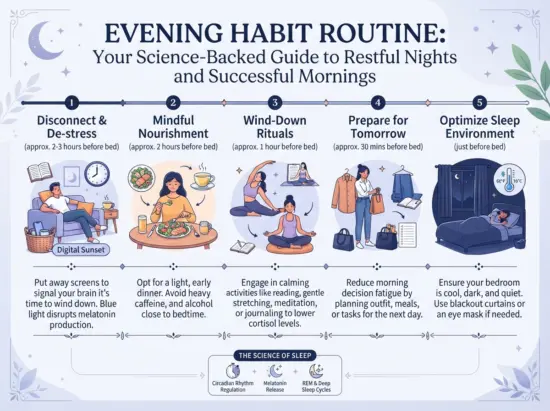
Creating an effective evening routine isn’t about a single activity—it’s about a series of intentional steps that begin well before you climb into bed. Consider the “5 PM to Bed Pipeline” approach: a sequence of small, consistent habits that set you up for deep, restorative sleep.
1. Dinner Timing and Nutrition
When you eat matters as much as what you eat for sleep quality. Research shows that eating dinner 2 to 4 hours before bedtime supports optimal melatonin release and improves sleep quality.
Key Research: A study of 845 adults found that participants who ate dinner close to bedtime had melatonin levels 3.5 times higher (interfering with insulin secretion) and experienced an 8.3% increase in glucose levels. Eating dinner 4 hours before bed was significantly better for metabolic health.
Practical Tips: Aim to finish your last meal at least 2-3 hours before bed. If you need a light snack closer to bedtime, choose sleep-supportive options like a banana, almonds, or chamomile tea. Avoid heavy, greasy meals, spicy dishes, and alcohol that can trigger acid reflux or disrupt sleep.
2. Gentle Evening Movement
Conventional wisdom once discouraged all evening exercise, but research is evolving. A Harvard Health review found that short bursts of light activity can improve sleep without the negative effects of high-intensity workouts.
What to Do: Simple resistance exercises like chair squats, calf raises, and standing knee raises—done in 3-minute breaks throughout the evening—can help you sleep longer and more deeply. A gentle post-dinner walk is also beneficial, particularly for lowering post-meal glucose spikes.
What to Avoid: High-intensity workouts too close to bedtime can spike heart rate and body temperature, making it harder to fall asleep. Keep evening exercise light and low-key.
3. Digital Detox and Light Management
Blue light from phones, computers, and televisions disrupts melatonin production, the hormone that prepares your brain for sleep.
Key Research: A large study of 122,058 adults found that daily screen use was associated with a later bedtime and nearly one hour of lost sleep each week. Even reading on a smartphone with a blue-light filter caused more disruption than reading printed material.
Practical Tips:
- Limit screen use at least 60 minutes before bed
- If you must use devices, activate blue-light filters (“Night Shift” or “Night Light”)
- Consider leaving your phone outside the bedroom entirely
- Dim indoor lights and switch to warm, low-watt bulbs or candles
4. Relaxation and Mental Wind-Down
Your brain needs time to transition from “doing mode” to “being mode.” Predictable evening cues help your nervous system recognize it’s safe to relax.
Effective Wind-Down Activities:
- Journaling: Write down tomorrow’s to-do list or practice gratitude. Writing down three positive events each evening has been shown to significantly reduce symptoms of depression
- Reading: Reading a physical book is ideal—it stimulates imagination while calming the mind. Auditory reading (listening to audiobooks) may improve sleep quality even more than reading a physical book
- Warm bath or shower: The natural cooling that follows a warm bath mirrors the body’s sleep preparation process
- Light stretching or yoga: Gentle movement releases muscle tension from the day
- Meditation or deep breathing: Even 5 minutes of conscious breathing activates the parasympathetic nervous system, responsible for calm and recovery
5. Prepare for Tomorrow
Spending 5 minutes preparing for the next day can make your morning feel less chaotic. Lay out clothes, set up coffee, or jot down a few priorities—but keep it brief and do it in the early evening rather than at bedtime, allowing your brain time to shift out of planning mode.
6. Create a Dark, Cool Sleep Environment
Your bedroom environment significantly impacts sleep quality. Aim for:
- Temperature: 65-68°F (16-18°C) for optimal sleep comfort
- Darkness: Even a dimly lit room can impact sleep and increase insulin resistance the following morning. Use blackout curtains and eliminate light sources
- Quiet: Consider white noise or nature sounds to mask disruptions
Sample Evening Routine
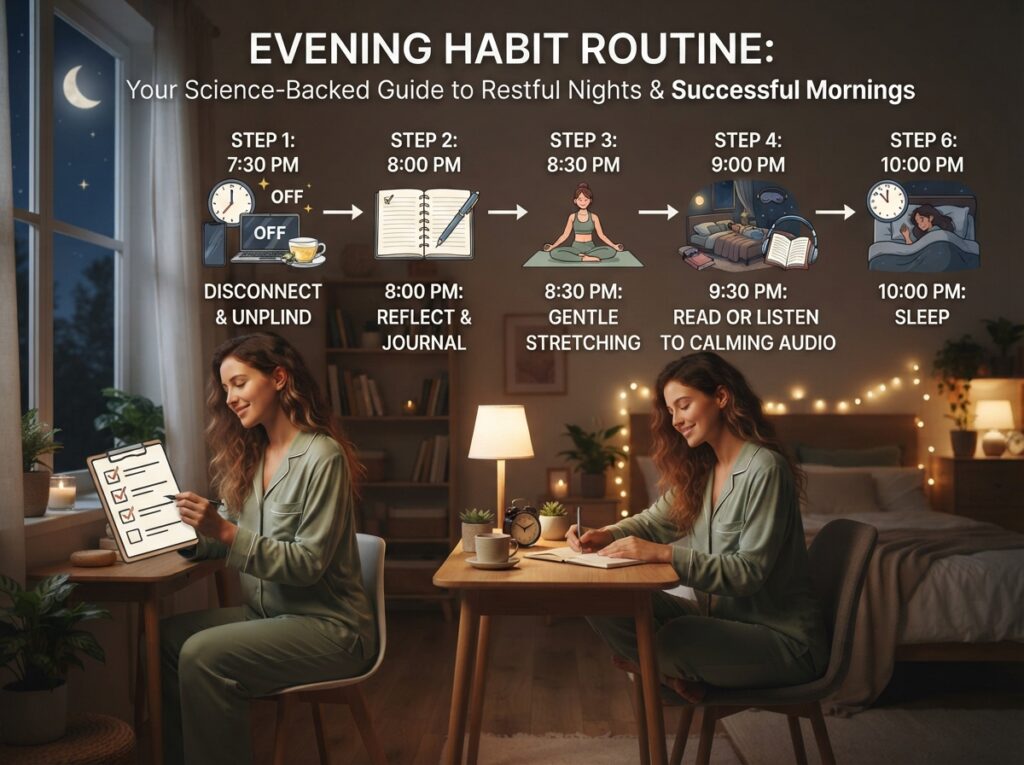
Here’s a practical evening routine combining the science-backed components above:
| Time | Activity |
|---|---|
| 6:00 PM | Dinner (light, balanced meal) |
| 6:30 PM | Gentle post-dinner walk (20-40 minutes) |
| 7:30 PM | Start wind-down – dim lights, put phone away |
| 8:00 PM | Relaxation activities (reading, journaling, stretching) |
| 9:00 PM | Prepare for tomorrow (lay out clothes, review schedule) |
| 9:30 PM | Warm shower or bath |
| 10:00 PM | Bedtime in dark, cool room |
Adapt the timing to your schedule—what matters most is consistency, not exact times.
Building Your Routine
Start small. Choose 1-2 habits from this guide and practice them consistently for a few weeks before adding more. If you skip a night, don’t worry—just pick it up again the next evening. Consistency, not perfection, is what builds lasting change.
At HabitHack.fun, we believe in your potential. A thoughtful evening routine is one of the most powerful investments you can make in your health and happiness. Start tonight, one small habit at a time, and watch how restful nights create more energized, successful days.