Table of Contents
Welcome to HabitHack.fun, your trusted resource for mastering the art of habit formation and personal growth. Success isn’t about luck or talent alone—it’s the result of consistent, intentional actions practiced daily. In fact, research shows that success is created through consistency turned into repetition . While one morning routine is just an act, it’s the linking of those acts together in succession that creates true success .
This comprehensive guide explores the best daily habits for success, backed by insights from peak performance experts, billionaires, and behavioral science research.
The Foundation: Why Daily Habits Create Success
A habit is a behavior you perform regularly, and approximately 40% of your daily actions are driven by habits rather than conscious decisions . This means if you can shape your daily habits, you can shape your life. As philosopher Will Durant famously wrote, “We are what we repeatedly do. Excellence, then, is not an act but a habit” .
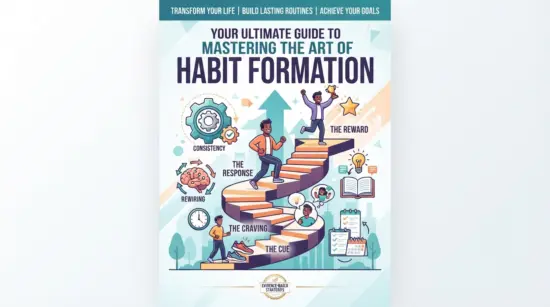
The habit formation process follows a three-step loop: Cue, Routine, Reward . When a cue triggers an action and the action delivers a rewarding outcome, your brain learns to repeat the behavior automatically. Understanding this loop is key to building success habits that stick.
Core Daily Habits for Success
1. Own Your Morning: Prime Your State for Peak Performance
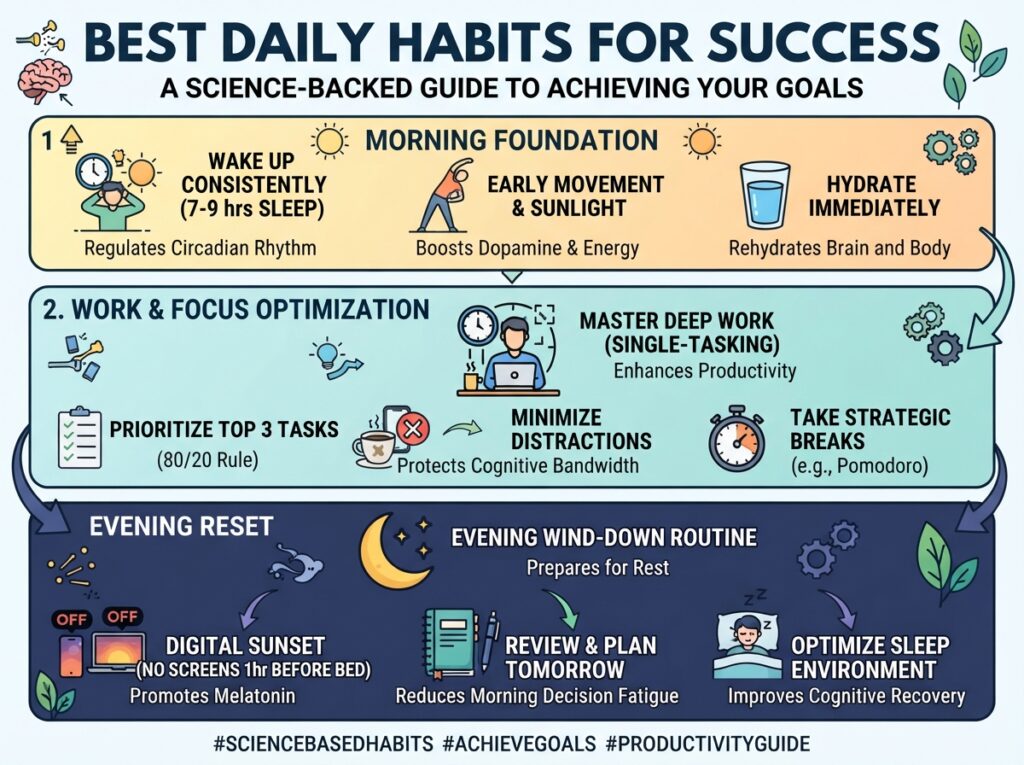
How you start your day sets the tone for everything that follows. High performers don’t live in reaction mode—they lead with intention .
Tony Robbins’ Priming Ritual: Tony Robbins uses a daily “priming” ritual to charge his nervous system for peak performance. This includes breathwork to repattern your energy, gratitude to shift from fear to abundance, visualization to mentally rehearse success, and verbal incantations to program your mind with power .
The 5 AM Rule: Leadership expert Robin Sharma recommends waking up at 5 AM to exercise. This spikes endorphins, sharpens focus, and creates unstoppable momentum. Early risers tend to have less cortisol and higher BDNF for brainpower . Even starting with 20 minutes of daily exercise in the morning can lead to noticeable improvements in energy, decision-making, and stress management within weeks .
The Morning Planning Habit: Instead of diving into your day blindly, start with a clear roadmap. Barbara Corcoran, the “Shark Tank” investor, credits her success to one simple habit: making a to-do list the night before and tackling the hardest tasks first . She ranks tasks, identifying “A-list” items—the essential tasks that push her business forward, even when they’re uncomfortable .
2. Feed Your Mind: Commit to Daily Learning
“You don’t need a new routine. You don’t need more hacks. You need better basics—done more often” . One of those basics is continuous learning.
Read for at Least an Hour Daily: Robin Sharma insists on reading for at least an hour daily to rewire thinking, spark creativity, and build vocabulary . Warren Buffett spends more than 80% of his day reading—five newspapers per day, each day . Bill Gates reads extensively and shares his recommendations publicly .
Learn During Your Commute: With audio books and podcasts, you can use drive time to educate yourself. Whatever knowledge has brought you to your current level, it will not be enough knowledge to keep you there .
Ditch Mindless Scrolling: Successful people use time spent on social media or TV for personal growth instead . The average person in the United States watches more than 33 hours of TV per week—imagine what you could accomplish with that time .
3. Move Your Body: Create Energy, Not Just Burn It
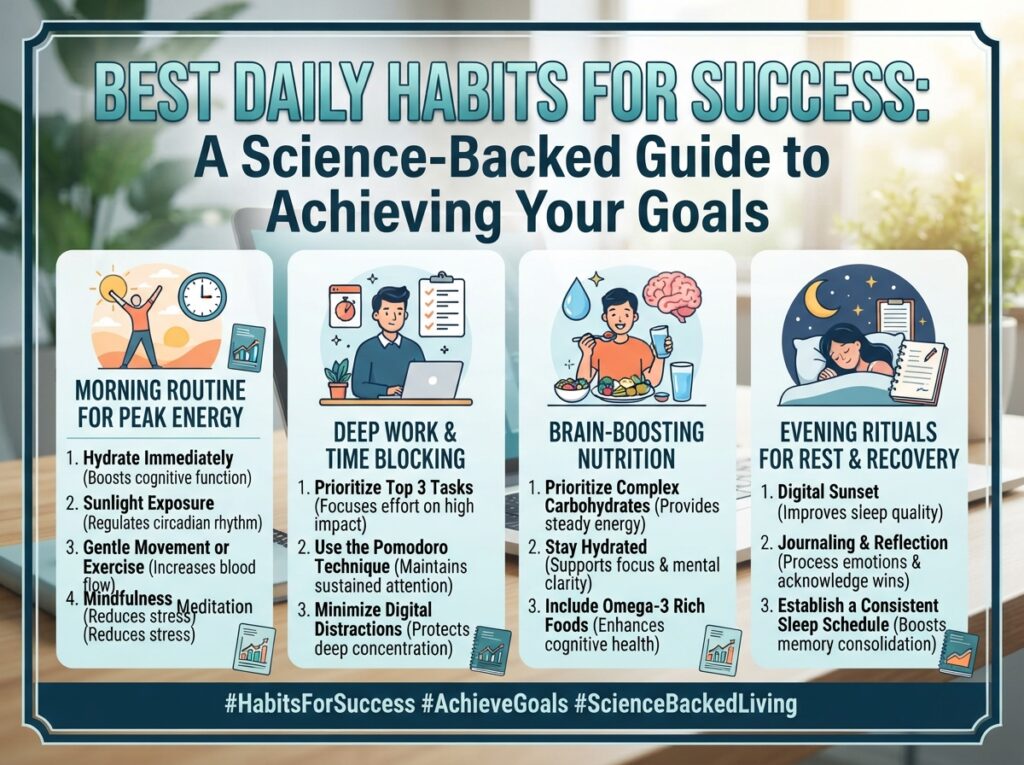
“Energy isn’t something you hope for. It’s something you generate” . There is a direct connection between physical health, mental health, and wealth .
Daily Movement: High performers move every day, even when they don’t feel like it . Steven Bartlett is vocal about training even when motivation is low, because discipline beats mood . It doesn’t have to be intense—a 10-minute walk, stretching, or 20 minutes of exercise all count .
Protect Your Energy: High performers don’t just manage their schedule—they protect what goes into it. They block time for training, recovery, thinking, and switching off . Jeff Bezos famously guards his mornings and avoids early meetings, saying he makes his best decisions before noon .
4. Network and Build Relationships Intentionally
Your success is influenced by the people around you. Build meaningful relationships with mentors, colleagues, and like-minded individuals who push you to do better .
Networking Is a Daily Practice: Successful professionals check in with mentors, colleagues, or peers regularly—not just when they need help . Daily networking can be as simple as sending a thoughtful message or offering help .
Be Kind: Kindness isn’t weakness—it’s a leadership skill. Even small acts of kindness, like holding the door for someone, listening deeply, or helping others, release oxytocin and make you feel happy . Make it a point to practice at least one small act of kindness every day .
5. Protect Your Time and Eliminate Distractions
Set Specific Times for Social Media: Don’t check social media every few minutes—schedule specific times to check your platforms. Turn off notifications that pop up on the screen or chime .
Stop Multitasking: The scientific evidence overwhelmingly suggests that multitasking is an extremely ineffective way to get things done . For projects that require your best effort, focus on one task at a time .
Take a Digital Detox Day: Robin Sharma recommends having at least one day each week without your phone. Constant digital connectivity and phone notifications silently steal your peace of mind; silence restores .
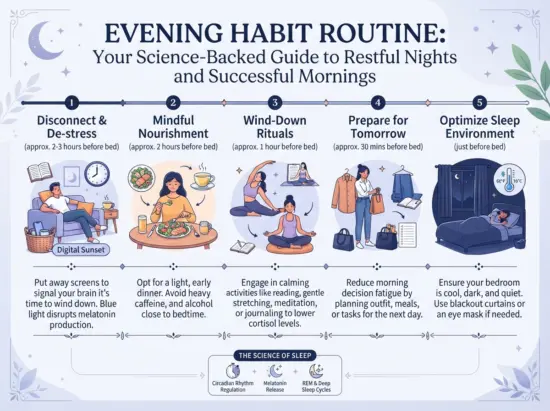
6. Prioritize Sleep Like It’s Part of the Job
“Sleep isn’t downtime. It’s where performance is built” . Arianna Huffington built an entire movement around this after collapsing from exhaustion, saying, “Sleep is a performance enhancer” .
Sleep is Non-Negotiable: Jeff Bezos sleeps for eight hours every night to improve his thoughts, energy, and mood . The body needs rest to activate autophagy—the natural recycling mechanism that breaks down old cells and refreshes them with new ones .
Quality Over Quantity: Make sleep a priority in your schedule. High achievers are frequently poor at rest, but your body and mind require downtime to operate well .
7. Reflect and Review Progress
Daily Reflection: Instead of rushing through tasks, top professionals pause to reflect. They review what worked, what didn’t, and where they can improve. This habit of daily reflection builds self-awareness and improves decision-making .
Evening Ritual: Tony Robbins teaches that reflection breeds growth. High performers often include a short review of wins and lessons, gratitude for progress, setting tomorrow’s top 1–2 outcomes, and mental release of stress or unfinished tasks .
How to Build These Habits That Stick
Start Small and Be Consistent
You don’t need to move a mountain in the first attempt—start moving pebbles first . Want to start running? Walk 100 steps today. Want to start meditating? Start with two minutes instead of 10. Make it so easy you can’t fail .
Use Habit Stacking
Habit stacking involves pairing a new habit with an existing one . Examples include: taking a short walk after dinner, listening to podcasts while preparing breakfast, or drinking a glass of water right after waking up .
Track Your Progress
Seeing your progress is a great way to stay motivated . You can use habit-tracking apps, mark your calendar, take photos to document progress, or journal .
Reward Yourself
Reward is a crucial step in the habit loop. Give yourself little treats when you maintain a new habit streak for a week, 15 days, or a month . These rewards reinforce your commitment and keep you going.
Embrace Failure
Building habits is not about maintaining a perfect streak. What truly matters is forgiving yourself and getting back on track as soon as possible . As James Clear writes, “You just need to be consistent, not perfect” .