Table of Contents
Welcome to HabitHack.fun, your trusted resource for mastering the art of personal growth and habit formation. Self-discipline is the ability to control your feelings, impulses, and behaviors to align with your long-term goals . It’s the bridge between intentions and accomplishments, the fuel that keeps you going when motivation fades . While motivation is fleeting—an emotion that comes and goes—self-discipline is a reliable, trainable skill that creates consistency and, ultimately, success . This comprehensive guide explores the science of self-discipline, proven techniques to build it, and strategies to overcome common challenges.
What Is Self-Discipline and Why Does It Matter?
Self-discipline is the ability to regulate your emotions, thoughts, and behavior in the face of temptations and impulses . It’s what enables you to choose the harder right over the easier wrong, to delay gratification, and to persist in the face of difficulty . It is the mechanism through which you turn your intentions into concrete actions .
Self-discipline helps you cultivate motivation, awareness, and drive to achieve your objectives, even in the face of obstacles . It has significant benefits for both your personal and professional life. It is one of the top indicators of success in both academic and career settings. It can help you have greater self-control, build better habits, avoid procrastination, and ultimately achieve more of the things that matter to you .
Willpower vs. Self-Discipline
It’s helpful to distinguish between willpower and self-discipline . Willpower is a finite mental resource that you can exhaust over the course of a day. It’s your ability to resist short-term temptations in the moment. Self-discipline, on the other hand, is about consistency and habit. It’s the ability to push yourself to take action, regardless of your emotional state, and it is built through practice. If willpower is a sprint, self-discipline is a marathon.
The Science Behind Self-Discipline

Understanding the science of self-discipline helps demystify it and reveals how to build it effectively.
Self-Control and Ego Depletion
The concept of ego depletion suggests that willpower is a finite resource that can be temporarily exhausted . When you exercise self-control, you use up some of this resource. This is why you might find it harder to resist a cookie in the evening after a day of making tough decisions. This doesn’t mean you’re weak; it simply means your “self-discipline muscle” is tired. You can strengthen it over time, just like any other muscle.
The Marshmallow Test and Delayed Gratification
The famous Stanford Marshmallow Experiment found that children who could delay gratification—resist eating a marshmallow for 15 minutes to get a second one—tended to have better life outcomes, including higher SAT scores, better health, and more successful careers . This highlights that the ability to delay gratification, a cornerstone of self-discipline, is a powerful predictor of success.
The Role of Dopamine
Dopamine, the brain’s “feel-good” neurotransmitter, plays a crucial role in habit formation and self-discipline. When you set a goal and visualize the reward, your brain releases a small amount of dopamine. However, the immediate gratification of a short-term temptation (like scrolling social media) provides a stronger, more instant dopamine hit than the promise of a long-term reward . Self-discipline is about learning to prioritize the delayed but more significant dopamine release that comes from achieving a long-term goal over the instant hit of a short-term distraction.
Core Self-Discipline Techniques

1. Understand Your Triggers
The first step to changing a behavior is understanding what drives it. If you struggle to be disciplined, ask yourself why . Are you avoiding a task because it’s boring? Are you procrastinating because you’re afraid of failing? Track your triggers. The answer is often a feeling you’re trying to avoid (like boredom, anxiety, or overwhelm). Once you pinpoint the trigger, you can create a strategy to address it head-on.
2. Break Large Goals Into Small Steps
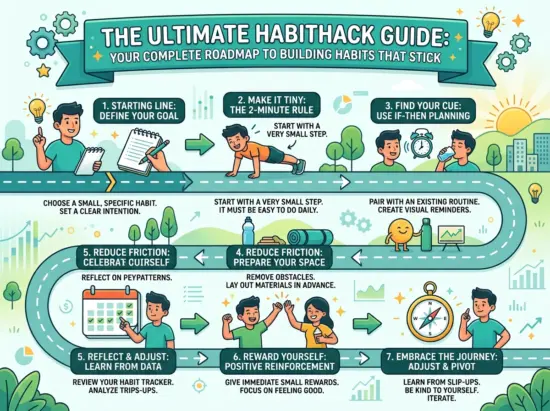
One of the biggest obstacles to self-discipline is feeling overwhelmed by a massive goal . Breaking a large goal into small, manageable steps prevents you from feeling paralyzed. Each time you complete a small step, you build momentum and confidence, making the next step easier. This is the principle behind the “Two-Minute Rule”: if a new habit takes less than two minutes to do, do it immediately. This makes starting easier and builds momentum.
3. Remove Temptations
Self-discipline is much easier when you don’t have to constantly fight temptation . Proactively remove distractions from your environment. If you want to eat healthier, don’t keep junk food in the house. If you want to focus on work, put your phone in another room. This is the idea behind the phrase: “out of sight, out of mind.” By engineering your environment, you make it easier to make the right choice.
4. Replace Bad Habits With Better Ones
You can’t just eliminate a bad habit; you have to replace it with a healthier alternative . For example, if you want to stop using your phone in bed, replace the habit by leaving your phone in another room and reading a book instead. This technique, known as habit substitution, is much more effective than simply trying to stop the behavior.
5. Practice Habit Stacking
Habit stacking is a powerful technique where you pair a new habit with an existing one . The formula is: After [CURRENT HABIT], I will [NEW HABIT] .
Examples include:
- “After I pour my morning coffee, I will write down my top three priorities for the day.”
- “After I brush my teeth, I will do 10 squats.”
This works because you’re piggybacking on an already established neural pathway, making the new habit much easier to adopt.
6. Find an Accountability Partner
Accountability partners provide external motivation and support . Tell a friend, family member, or mentor about your goal and ask them to check in on you. If you are thinking of skipping a workout, the thought of having to tell your partner you skipped might be enough to get you moving.
7. Forgive Yourself and Move On
Perfectionism is the enemy of progress. You will mess up. You will skip a workout or eat something you shouldn’t. The key is to forgive yourself and get right back on track . Beating yourself up only reinforces negative emotions and makes you more likely to give up. Studies have shown that students who forgave themselves for procrastinating on an exam were less likely to procrastinate on their next one . Self-compassion, not self-criticism, is the key to building lasting discipline.
8. Set Visible, Daily Reminders
The default is often to forget. To combat this, write down your goals and put them somewhere you’ll see them every day. This could be on your bathroom mirror, your computer desktop, or a note in your phone. Visible reminders reinforce your commitment and pull you back on track when your mind wanders.
9. Celebrate Small Wins
Acknowledging your progress, no matter how small, releases dopamine and reinforces the behavior. At the end of the day, write down one thing you did today that required discipline. This simple habit shifts your focus from what you didn’t do to what you did, building momentum and motivation.
10. Start Small and Build
Start with a small, easily achievable goal to build discipline. For example, make your bed every morning. This simple act of discipline at the start of the day sets the tone for the rest of it. Once you’ve mastered this, move on to the next small habit. This incremental approach is how you build a strong, resilient self-discipline “muscle.”
11. Use the 5-Second Rule
Mel Robbins’ 5-Second Rule is a simple but effective tool: when you feel an impulse to act on a goal, count down 5-4-3-2-1 and physically move. This interrupts your brain’s tendency to overthink and sends you into action before your mind can talk you out of it.
12. Keep Promises to Yourself
Self-trust is a core component of self-discipline. If you tell yourself you’re going to do something, do it. A small act of self-discipline is a promise you make to yourself. Keeping that promise builds your self-confidence, proving to yourself that you can be relied upon to follow through.
13. Take Time for Self-Care
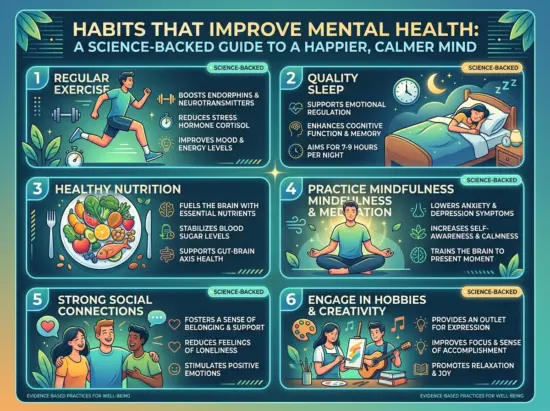
Self-discipline is not about pushing yourself to the point of exhaustion. Rest and recovery are just as important as action. Make sure you are getting enough sleep, eating healthy, and managing stress. A well-rested and healthy mind and body are far more capable of discipline.
14. Seek Out Inspirational People
The people you surround yourself with have a huge influence on your behavior. Find friends, mentors, or professional groups that embody the discipline you wish to cultivate. Their positive influence will help you stay on track.
15. Focus on the Process, Not Just the Outcome
When you focus too much on the final outcome (like “getting a promotion”), you can feel overwhelmed. Shift your focus to the daily process—”I will write for 30 minutes every day.” This breaks the goal down into manageable actions and helps build consistency.
Overcoming Common Challenges
Dealing With a Lack of Motivation
Motivation can be inconsistent, so self-discipline and systems must take over. Instead of waiting to “feel like” doing something, rely on your routine. Focusing on the 5% of tasks that yield 80% of your results (the Pareto Principle) can also help you prioritize and get started when motivation is low.
Overcoming Procrastination
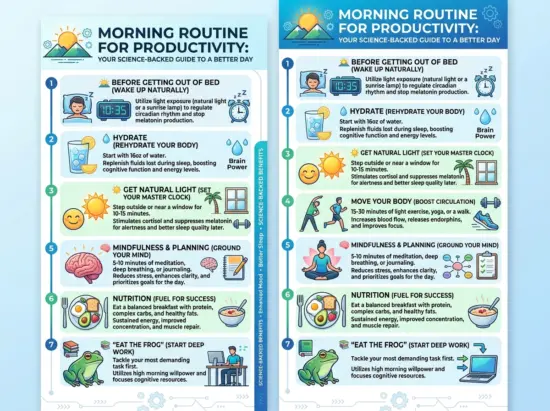
Procrastination is the enemy of discipline. Use the “Eat the Frog” technique: do your most challenging task first thing in the morning. This clears your mind and gives you momentum for the rest of the day. The Two-Minute Rule is also effective: if it takes less than two minutes, just do it.
Avoiding Burnout
Rest is not a sign of weakness; it is a requirement for sustainable discipline. Your brain needs time to recover and consolidate learning. Give yourself permission to take a break.