Table of Contents
Welcome to HabitHack.fun, your trusted resource for mastering the art of habit formation. A habit tracker is one of the most powerful tools for transforming intentions into lasting routines. It provides visual feedback, builds accountability, and taps into your brain’s reward system to keep you motivated. Let’s explore creative habit tracker ideas—from simple paper methods to innovative digital approaches—that can help you build better habits and achieve your goals.
Why Habit Tracking Works: The Science
Habit tracking is effective because it creates immediate feedback for behaviors that often have delayed rewards. When you run or meditate, the benefits aren’t visible right away, which can be discouraging. A habit tracker bridges that gap by showing daily progress, keeping you motivated .
Research suggests building a habit takes around 66 days on average, but tracking should continue beyond this milestone. It’s not just a tool for reaching a goal—it’s a means of fostering sustainable lifestyle changes . When you see your progress visually, it reinforces positive behavior and encourages persistence.
Key psychological benefits:
- Self-awareness: Tracking makes you more conscious of daily routines and patterns
- Accountability: Documenting habits creates a powerful motivator
- Progress monitoring: Observing progress provides insights into what works
- Celebrating achievements: Recognizing small wins reinforces positive behavior
Paper-Based Habit Tracker Ideas

Sometimes the simplest methods are the most effective. Paper trackers offer tactile satisfaction and keep you away from distracting phone screens.
The Simple Calendar Method
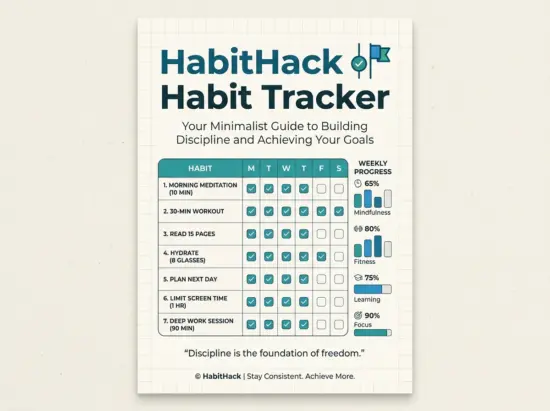
The classic approach: mark an “X” on a calendar for each day you complete your habit . The visual “chain” of X’s becomes your motivation—you won’t want to break the streak.
How to set it up: Place a calendar where you’ll see it daily. For each habit, mark the day with a checkmark, dot, or X when completed.
The Habit Journal
Use a dedicated journal with templates for each month. List your habits on one side and mark days as you complete them. This method combines tracking with space for reflection .
Pro tip: Choose different symbols—crosses, checkmarks, or dots—for visual variety. The tactile act of writing reinforces the habit.
Tiny Habits Approach
BJ Fogg’s “Tiny Habits” method suggests picking behaviors that feel small and “doable.” Break larger habits into smaller steps and track those instead .
Examples:
- Instead of “exercise,” track “do 5 minutes of stretching”
- Instead of “read more,” track “read one page”
- Instead of “drink more water,” track “fill my water bottle”
Digital Habit Tracker Ideas
Digital trackers offer advanced features like reminders, analytics, and syncing across devices.
Dedicated Habit Tracker Apps
Streaks (iOS): A popular, beautifully designed app that tracks up to 24 habits with visual ring progress .
Loop Habit Tracker (Android): A free, open-source app with a non-binary habit score algorithm and flexible scheduling .
Habitica: Gamifies habit tracking—complete habits to earn rewards and level up an avatar. Missing habits causes your character to take damage, adding playful accountability .
Productive: Focuses on motivation with a clear, user-friendly interface and customizable reminders .
Gamified Tracker Ideas
Achievement Badges: Some apps reward streaks with badges—1 day, 1 week, 1 month, 1 year milestones. This gamification adds excitement and a sense of achievement .
XP and Level Systems: Earn experience points for completing habits, unlocking new levels and rewards. This turns habit-building into an engaging game .
Streak Challenges: Apps like HabitQuest encourage users to maintain streaks, visualizing progress with heatmap calendars .
AI-Powered Trackers
Emerging apps use AI to provide context-aware nudges. They consider time windows, streak history, and even motion/sleep signals to suggest when you’re most likely to complete a habit .
Features include:
- Smart reminders based on your behavior patterns
- Low-friction one-tap logging
- Privacy-first design with local storage
Creative and Innovative Tracker Ideas
Tangible Habit Trackers
HabiTree: A physical artificial tree where LED-lit leaves illuminate as you complete habits. Touching capacitive “smart leaves” logs progress, turning tracking into a meaningful ritual .
Why it works: Tangible interfaces create stronger emotional connections than 2D screens. The act of “tending” to something physical reinforces the habit .
The “Don’t Break the Chain” Method
Jerry Seinfeld famously used this method: get a calendar and mark each day you write comedy. The goal is simply “don’t break the chain” .
Set it up: Hang a calendar on your wall. For each day you complete your habit, draw a big red X. The visual chain builds momentum—the longer the chain, the more you’ll want to protect it.
Habit Stacking Trackers
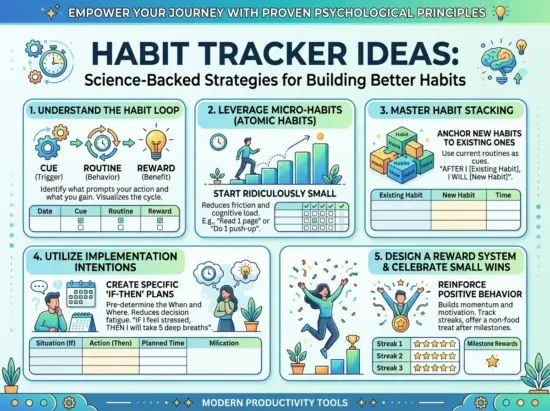
Combine habit tracking with habit stacking: “After I [existing habit], I will [new habit].” Then track whether you completed the stack each day .
Examples:
- “After I brush my teeth, I will do 5 pushups”
- “After I pour my morning coffee, I’ll write my top priority”
What to Track: Habit Tracker Ideas
Physical Health:
- Daily exercise (type and duration)
- Water intake (glasses or ounces)
- Sleep duration and quality
- Steps taken
Mental Wellness:
- Meditation minutes
- Gratitude journaling
- Screen time limits
- Reading minutes or pages
Productivity:
- Top priority completed
- Emails processed
- Deep work sessions
- Tasks completed
Relationships:
- Time with loved ones
- Calls or messages to friends
- Acts of kindness
Personal Growth:
- Daily learning (podcast, book, course)
- Skill practice minutes
- Journaling reflection
Remember: Focus on a few key habits rather than tracking everything. It’s tempting to track many habits, but starting small increases your chances of success .
How to Get Started
Step 1: Choose 1-2 Habits
Pick habits that are important and you might forget or neglect when life gets busy .
Step 2: Set Specific Goals
Define what success looks like. Instead of vague “exercise more,” set “exercise for 15 minutes, 3 times a week” .
Step 3: Choose Your Method
- Paper calendar: Simple, tactile, no notifications
- Dedicated app: Advanced features, reminders, analytics
- Gamified app: Fun, engaging, progress visualization
Step 4: Create Reminders
Use phone reminders or widget on your home screen as constant visual cues .
Step 5: Review Weekly
Schedule time to review progress. Ask yourself: “Is this behavior feeling easier? Am I noticing benefits? Is the cue working?”
Tips for Success
Start small: Don’t overwhelm yourself by trying to change too many habits at once. Focus on one or two initially .
Celebrate small wins: Acknowledge and celebrate your progress. Each step forward is a step toward building lasting habits .
Stay flexible: If you miss a day or two, don’t be too hard on yourself. Reassess and adjust as needed .
Be consistent: Establish a routine around your habit tracking. Consistency reinforces behavior .
Use the Two-Minute Rule: Break down habits into manageable tasks that take two minutes or less .