Table of Contents
Success rarely comes from one life-changing moment. Instead, it is built through hundreds of small decisions repeated every day. Whether your goal is improving your health, growing your career, learning new skills, or becoming more productive, your habits determine your future.
This is where HabitHack becomes incredibly valuable.
HabitHack is more than a productivity trend. It is a practical approach to creating positive routines, eliminating destructive behaviors, and making personal growth easier and more sustainable. Rather than depending on motivation alone, HabitHack teaches you how to design systems that make success almost automatic.
In this comprehensive 2026 guide, you’ll learn how habits work, why most people fail to maintain them, and how to create a personalized HabitHack system that lasts for years.
What Is HabitHack?
HabitHack is a modern habit-building strategy focused on simplifying behavior change using psychology, consistency, and environment design.
Instead of forcing yourself to work harder every day, HabitHack helps you work smarter by creating routines that naturally fit your lifestyle.
The main goal is simple:
- Build good habits effortlessly
- Break bad habits permanently
- Stay consistent without burnout
- Improve your life one small step at a time
Unlike traditional self-help advice that depends heavily on motivation, HabitHack relies on proven behavioral science.
Why Habits Matter More Than Motivation
Many people believe motivation creates success.
The truth is exactly the opposite.
Successful people often succeed because their daily habits require very little motivation.
Imagine brushing your teeth.
You don’t wake up every morning wondering whether you should brush your teeth. You simply do it because it has become automatic.
The same principle applies to:
- Exercising
- Reading
- Saving money
- Drinking water
- Learning skills
- Working consistently
Your goal should be making positive behaviors as automatic as brushing your teeth.
The Science Behind Habit Formation
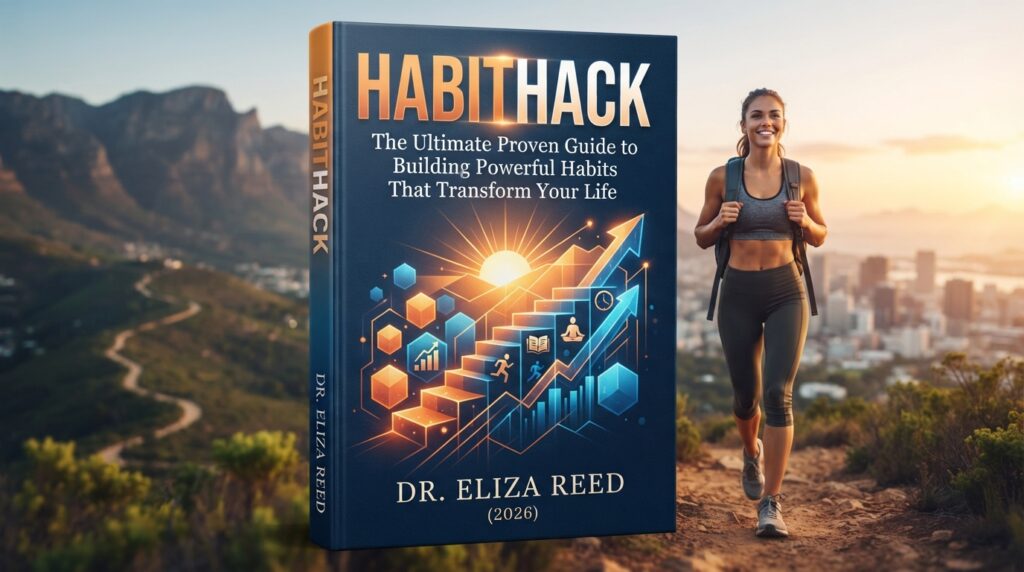
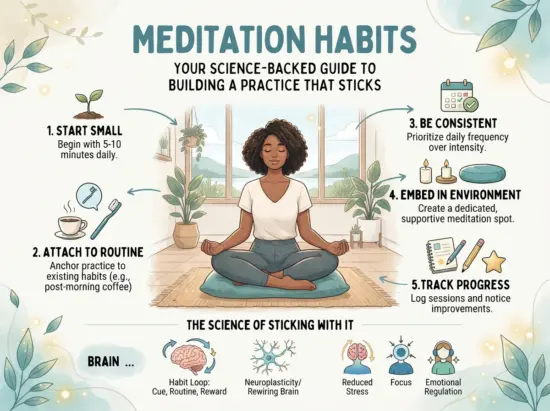
Researchers have discovered that habits follow a predictable cycle.
1. Cue
A trigger starts the habit.
Example:
- Alarm clock
- Coffee smell
- Phone notification
- Morning sunshine
2. Craving
Your brain expects a reward.
Example:
“I want coffee.”
“I want to check Instagram.”
“I want to relax.”
3. Response
You perform the behavior.
Examples include:
- Drinking coffee
- Going for a walk
- Opening social media
- Reading a book
4. Reward
Your brain receives satisfaction.
Rewards reinforce habits and make them easier to repeat.
This loop repeats every day until the behavior becomes automatic.
Understanding this loop is the first HabitHack.
Why Most Habits Fail
Many people start enthusiastically.
Then they quit after two weeks.
Why?
Because they make these common mistakes.
Setting Unrealistic Goals
Trying to exercise two hours every day rarely lasts.
Instead, begin with five minutes.
Consistency beats intensity.
Depending on Motivation
Motivation changes daily.
Systems stay consistent.
Trying Too Many Habits
Building ten habits at once overwhelms the brain.
Start with one.
Master it.
Then add another.
Ignoring the Environment
Your surroundings shape your behavior.
Healthy food visible?
You’ll eat healthier.
Phone beside your bed?
You’ll probably scroll before sleeping.
Environment matters.
The HabitHack Framework
Let’s build habits that actually last.
Step 1: Choose One Keystone Habit
Keystone habits improve multiple areas of life.
Examples include:
- Morning walk
- Reading 20 minutes
- Drinking two liters of water
- Meditation
- Daily planning
One small habit creates momentum.
Step 2: Make It Tiny
The smaller the habit, the easier it becomes.
Instead of:
“I’ll read 100 pages.”
Try:
“I’ll read one page.”
Instead of:
“I’ll run 10 km.”
Start with:
“I’ll wear my running shoes.”
Tiny actions eliminate resistance.
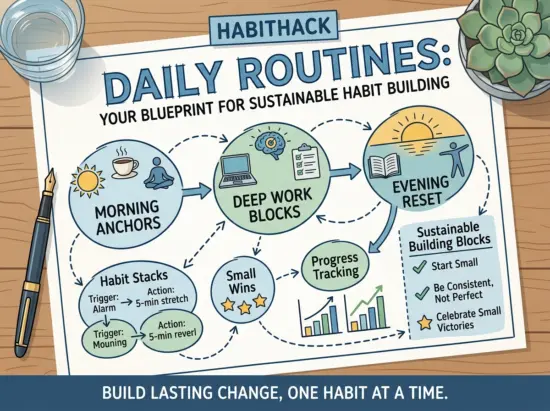
Step 3: Habit Stacking
Attach a new habit to an existing one.
Formula:
After I [Current Habit], I will [New Habit].
Examples:
After brushing my teeth:
- Stretch for two minutes
After making coffee:
- Read five pages
After lunch:
- Walk for ten minutes
Habit stacking dramatically increases success rates.
Step 4: Remove Friction
Good habits should be easy.
Bad habits should be difficult.
Examples:
Want to exercise?
Lay out your clothes before sleeping.
Want to read?
Keep books beside your bed.
Want less social media?
Delete distracting apps.
Small changes produce massive results.
Best HabitHack Ideas for Everyday Life
Morning Routine
- Wake up at the same time
- Drink water
- Avoid your phone
- Stretch
- Plan your day
- Read for ten minutes
A strong morning creates a productive day.
Work Productivity
Try these HabitHack strategies:
- Time blocking
- Deep work sessions
- Pomodoro technique
- Daily priorities
- Email scheduling
These reduce distractions while improving focus
Fitness Habits
Instead of chasing perfect workouts:
- Walk daily
- Stretch every morning
- Take stairs
- Increase water intake
- Sleep earlier
Simple habits outperform inconsistent intense routines
Financial Habits
Healthy finances come from healthy habits.
Examples:
- Save automatically
- Track expenses
- Avoid impulse purchases
- Budget weekly
- Review investments monthly
Mental Health Habits
Protect your mind with:
- Gratitude journaling
- Meditation
- Daily walks
- Reading
- Digital detox
- Quality sleep
Mental wellness affects every area of life.
Breaking Bad Habits Using HabitHack
Building habits is only half the journey.
Breaking harmful ones matters too.
Make Bad Habits Invisible
Remove temptation.
Example:
Hide junk food.
Turn off notifications.
Keep your phone away during work.
Increase Friction
If something becomes harder, you’ll do it less.
Examples:
- Log out of social media
- Remove gaming shortcuts
- Keep sweets out of the house
Replace Instead of Remove
Never leave empty space.
Replace:
Smoking → Chewing gum
Scrolling → Reading
Soda → Water
Gaming → Walking
Replacement habits last longer.
The 30-Day HabitHack Challenge
Week 1
Focus only on consistency.
Don’t worry about perfection.
Week 2
Increase duration slightly.
Five minutes become ten.
Week 3
Track progress.
Celebrate wins.
Learn from setbacks.
Week 4
Review everything.
Ask yourself:
- What’s working?
- What’s difficult?
- What can improve?
Then repeat.
Tools That Make HabitHack Easier
Useful habit trackers include:
- Google Calendar
- Notion
- Todoist
- TickTick
- Loop Habit Tracker
- Paper journal
Tracking creates accountability.
Common Habit Building Mistakes
Avoid these mistakes:
- Waiting for Monday
- Expecting perfection
- Comparing yourself to others
- Skipping sleep
- Ignoring progress
- Building too many habits
Remember:
Progress beats perfection.
Daily HabitHack Routine Example
| Time | Habit |
|---|---|
| 6:30 AM | Wake up |
| 6:35 AM | Drink water |
| 6:40 AM | Stretch |
| 7:00 AM | Exercise |
| 8:00 AM | Healthy breakfast |
| 9:00 AM | Deep work |
| 1:00 PM | Short walk |
| 6:00 PM | Reading |
| 9:30 PM | Journal |
| 10:00 PM | Sleep |
Benefits of Following HabitHack
People who consistently apply HabitHack often experience:
- Higher productivity
- Better physical health
- Stronger discipline
- Reduced stress
- Better sleep
- Improved focus
- Increased confidence
- Better financial habits
- Stronger relationships
- Greater happiness
Small daily improvements compound into extraordinary long-term results.
Advanced HabitHack Strategies
Once you’ve mastered the basics, try these advanced techniques.
Identity-Based Habits
Instead of saying:
“I want to run.”
Say:
“I am a runner.”
Instead of:
“I want to write.”
Say:
“I am a writer.”
When your habits align with your identity, they become easier to maintain.
Use Visual Cues
Keep reminders where you can see them.
For example:
- Place a water bottle on your desk.
- Keep your workout shoes near the door.
- Leave a book on your pillow.
Visual cues reduce the need to rely on memory or motivation.
Reward Yourself
Celebrate milestones without undermining your progress.
Healthy rewards include:
- Watching a favorite movie
- Taking a relaxing walk
- Buying a new book
- Enjoying time with friends
Rewards reinforce positive behavior.
HabitHack for Students
Students can use HabitHack to improve learning by:
- Studying at the same time every day
- Reviewing notes for 10 minutes after class
- Breaking assignments into smaller tasks
- Limiting phone use during study sessions
- Using spaced repetition for better memory
Consistent study habits outperform last-minute cramming.
HabitHack for Professionals
Professionals can increase productivity by:
- Planning the next day before leaving work
- Blocking time for focused tasks
- Checking email only at scheduled times
- Taking short movement breaks
- Ending the day with a quick review of accomplishments
These routines reduce stress and improve long-term performance.