Table of Contents
Welcome to HabitHack.fun, your ultimate destination for mastering the art and science of habit formation. Tracking your habits is one of the most powerful tools for behavior change. It transforms vague intentions into concrete actions, provides immediate feedback, and keeps you motivated over the long haul. This comprehensive guide explores the science behind habit tracking and provides a detailed overview of the most effective methods, from simple paper systems to cutting-edge digital apps.
Why Habit Tracking Works: The Science Behind It
Habit tracking turns abstract goals into concrete daily checkboxes . The psychology is straightforward: visible streaks create commitment, and the data helps you identify which habits stick and which ones fade away . When you track your habits, you become acutely aware of the habit loop—the cue, routine, and reward—which allows you to disrupt negative loops and reinforce positive ones .
Research shows that self-monitoring significantly increases motivation and accountability . When your progress is laid out before you—whether as a string of checkmarks on a calendar or a colorful graph on an app—it serves as a visual pat on the back, reminding you that you’re making progress . A study published in the American Journal of Preventive Medicine found that people who kept daily food records lost twice as much weight as those who didn’t, highlighting the power of tracking .
The Self-Awareness Factor
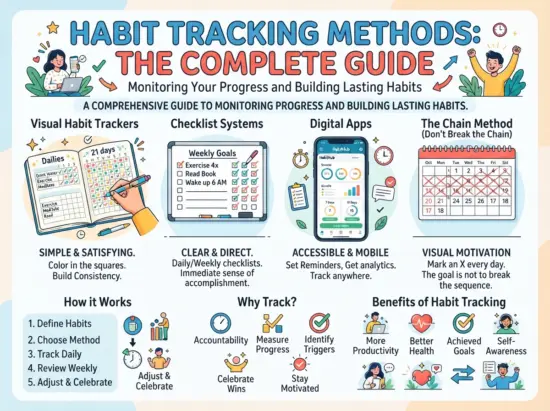
Tracking your habits promotes self-awareness—you become more conscious of your daily routines, behaviors, and patterns . This awareness is the first step toward making meaningful changes in your life . Additionally, documenting your habits holds you accountable, which can serve as a powerful motivator .
The Power of Small Wins
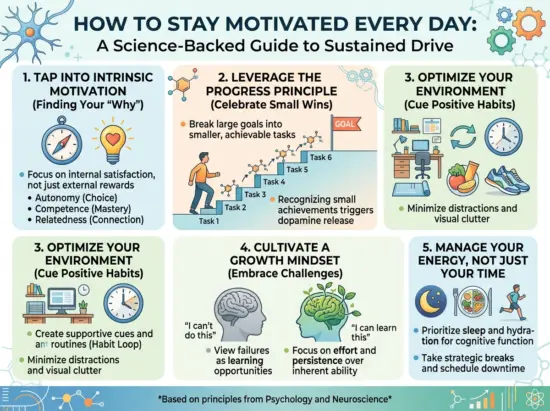
Observing your progress over time provides valuable insights . You can analyze what works, what doesn’t, and make informed adjustments to your strategy . Recognizing small victories can be incredibly motivating and helps reinforce positive behavior, encouraging you to stick with it . The act of marking a completed habit releases a small amount of dopamine, making you want to continue the streak .
How Long to Track?
Building a habit typically requires around 66 days, but tracking should continue beyond this period . A habit tracker is not just a tool for reaching a milestone but a means of fostering sustainable lifestyle changes . It helps you visualize your progress and encourages you to persist in your efforts .
Habit Tracking Methods: A Detailed Comparison
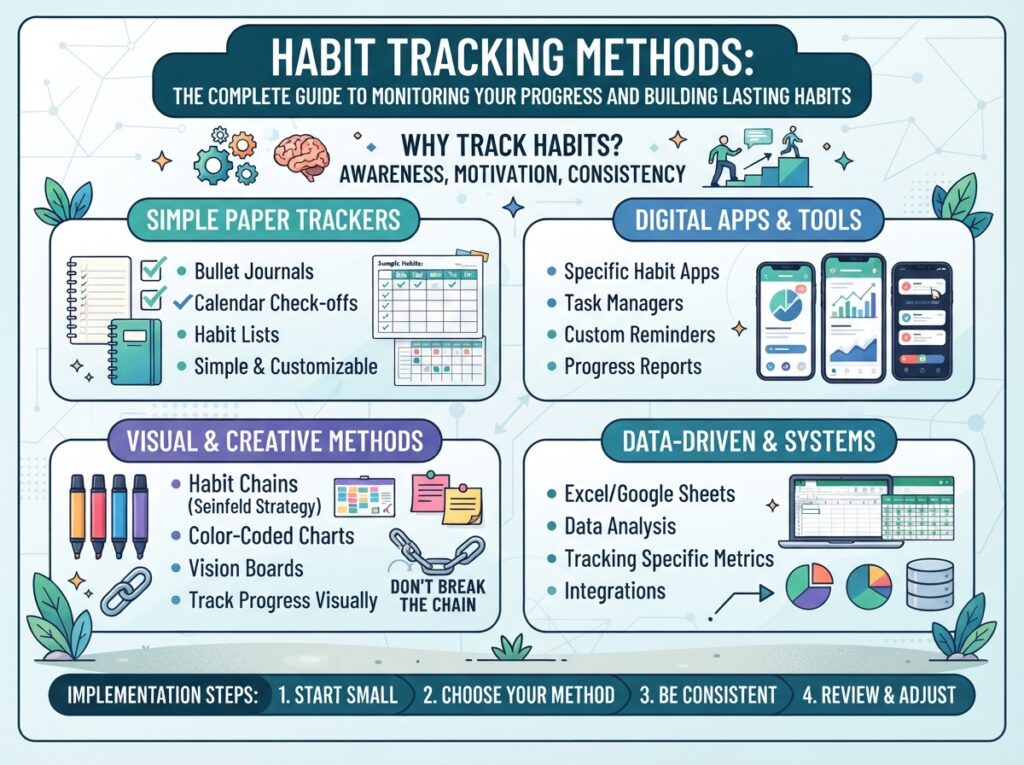
1. The Calendar Method (Paper-Based)
The most basic and accessible method is using a traditional calendar . After setting a goal for the frequency of a habit, you mark the days you plan to perform it and cross them off once completed .
Benefits:
- Simple and requires no technology
- Provides a powerful visual representation of your streak
- The physical act of marking a checkmark provides tactile satisfaction
- Highly visible—you can place it where you’ll see it daily
How to use it:
- Identify one behavior to change
- Make sure it is small and feels “doable” (a “tiny habit”)
- Make it specific and tie it in with an existing cue, like “After my first meal of the day, I’ll take a minute to stretch”
2. The Spreadsheet Method
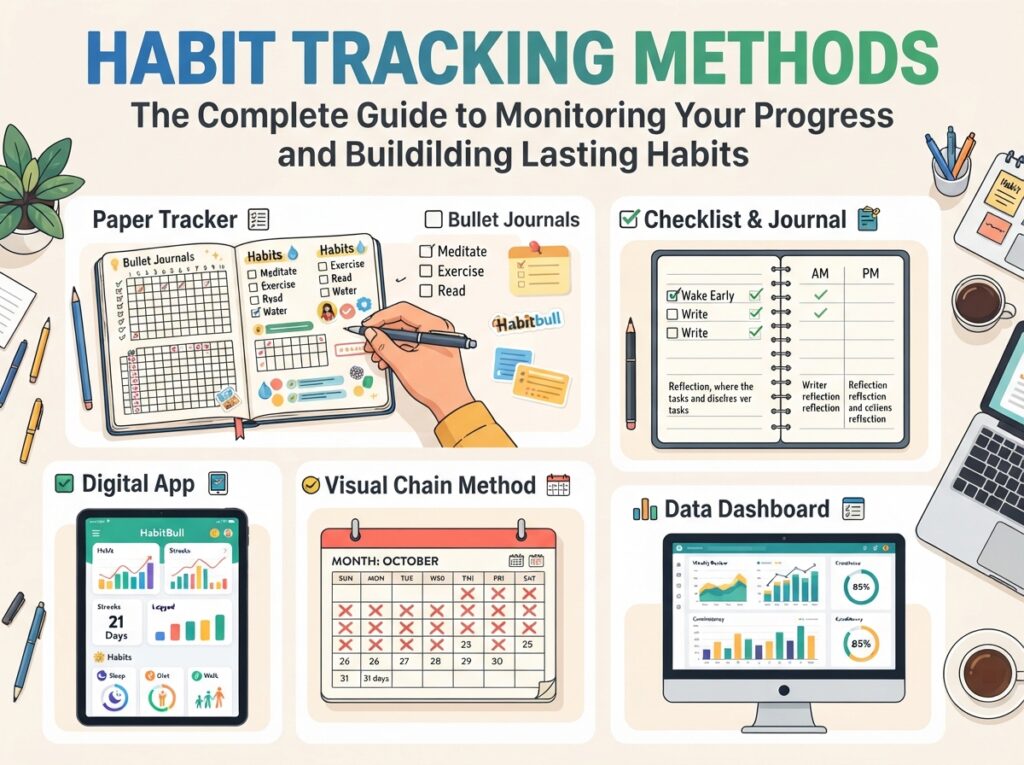
For those who want more customization and data analysis, spreadsheets like Google Sheets or Excel are excellent options . You can list multiple daily goals with corresponding days of the week and mark each day you meet the goal with an X or star .
Benefits:
- Complete customization—you can design it exactly how you want
- Can use conditional formatting to turn cells green when habits are completed
- Calculate completion percentages and longest streaks automatically
- Great for tracking multiple habits simultaneously
How to use it:
- Create columns for each day of the week
- List your habits in rows
- Use color coding to indicate days you completed your goals
3. The Journal Method
A journal can be particularly helpful for mindfulness, gratitude, and reflective goals . You can record 5-10 thoughts of gratitude, intentions for the day, or simply your goals .
Benefits:
- Provides space for reflection alongside habit tracking
- Helps with identifying triggers and understanding “why” behind behaviors
- Can be used as a morning routine to start the day with intention
- Allows you to process thoughts and feelings related to your habits
How to use it:
- Write down your intentions for the day each morning
- Reflect on your progress and challenges at night
- Note any cues or emotions that triggered certain behaviors
4. Dedicated Habit Tracking Apps
Smartphone apps offer the most comprehensive habit tracking experience. Here’s a detailed look at some of the top options:
Streaks (iOS, $5.99 one-time)
Streaks is a popular, beautifully designed app that tracks a wide range of habits and tasks—from practicing a foreign language to flossing . It can also help users cut back on unhealthy habits, like smoking . It syncs between devices and with the iOS Health App including your steps, blood pressure, and other metrics . You can set reminders for up to 24 tasks, with dashboards to help you see your progress .
Key features:
- Visual ring progress for each habit
- Calendar heatmap to view your history
- Push notifications to remind you to complete habits
- Apple Watch support with complications
Loop Habit Tracker (Android, Free)
Loop is the worldwide open source reference for habit tracking on Android . The app is completely free and functions without distracting ads . Users enjoy simple graphics and metrics that track habits and goals over time, with reminders as needed .
Key features:
- Non-binary habit score algorithm (exponential moving average)
- Flexible scheduling for daily, weekly, and monthly tracking
- Habit strength score
- CSV and SQLite export
- No habit limits
Fabulous (iOS and Android, Free with in-app purchases)
Created by the Duke University Center for Advanced Hindsight, Fabulous uses psychology and behavioral science to help you create habits that stick . It focuses on reducing distraction and procrastination .
Key features:
- Incorporates a coaching tone and uplifting messages
- Focuses on mindfulness and gratitude alongside productivity
- Gentle approach rather than simply requiring users to input data
TickTick (iOS and Android, Free up to 5 habits)
TickTick is the strongest option for users who want habit tracking integrated with their task manager . It supports any custom frequency and shows weekly and monthly charts .
Key features:
- Habits live alongside your regular to-do list
- Supports any custom schedule, including 3x per week or weekdays only
- Push and in-app reminders
- Weekly and monthly charts
Habitica (iOS and Android, Core features free)
Habitica gamifies habit tracking, allowing users to earn rewards for completing tasks and making the habit-forming journey a fun and engaging experience .
Key features:
- RPG-style gamification with avatar health and experience points
- Missing habits causes your avatar to take damage
- Party accountability—you can team up with friends
Structured (iOS and Android, Free/$19.99 per year)
Structured functions like a daily planner, helping to divide your day into visually appealing sections and tasks . It syncs to your computer, calendars, and smart watch .
Key features:
- Optional habit tracking enabled
- “One sec” screen time tracking feature encourages users to take a beat before opening social media apps
- Option to block apps until a task is completed
- Color-coded tasks and notifications
- Energy monitor to provide an overview of how much energy scheduled tasks require
Comparison Table :
| Tool | Streak Tracking | Custom Frequency | Statistics | Free Plan |
|---|---|---|---|---|
| TickTick | Yes, visual chain | Yes (any schedule) | Weekly/monthly charts | Yes (up to 5 habits) |
| Streaks | Yes, ring progress | Yes | Calendar heatmap | No ($4.99 one-time) |
| Habitica | Yes, gamified | Yes | Basic streaks/damage | Yes (core features) |
| Habitify | Yes, visual chain | Yes (flexible) | Detailed trends | Yes (3 habits free) |
| Loop | Yes, score-based | Yes | Habit strength score | Yes (unlimited) |
5. The “Stack & Cue” Method (A Simpler Alternative)
For those who find digital habit trackers overwhelming or burdensome, the “Stack & Cue” method offers a minimalist alternative . It focuses on micro-habits (under a minute) attached to solid anchors (existing habits) and gentle tech cues .
Benefits:
- Creates zero resistance—you don’t dread tracking
- Focuses on momentum and identity, not just numbers
- Reduces “streak anxiety” that can occur with other methods
- Feels natural and sustainable
How to set it up :
- Pick a rock-solid anchor: Choose something you never skip, like brushing your teeth or locking the front door .
- Attach a 30-second micro-habit: Shrink the new habit until skipping feels silly. For example, “write one sentence” instead of “journal for 20 minutes” .
- Add a one-tap tech cue: Use a widget, NFC tag, or smart-speaker routine to nudge you at the right moment, then disappear—no dashboards, no tracking .
Which Tracking Method Should You Choose?
The best method is the one you will actually use consistently. Here’s how to decide:
- If you want simplicity: Start with the calendar method
- If you want flexibility and customization: Use the spreadsheet method
- If you want reflection and mindfulness: Use the journal method
- If you want analytics and reminders: Use a habit tracking app
- If you find tracking burdensome: Try the “Stack & Cue” micro-habits approach
Best Practices for Effective Habit Tracking
Whether you use paper or digital tools, these principles will help you succeed:
1. Start Small: Don’t try to track too many habits at once . Focus on a few key habits and add more as you become comfortable .
2. Be Specific: Define what success looks like for each habit. Instead of vague goals like “exercise more,” set a specific goal such as “exercise for 15 minutes daily” .
3. Create Reminders: Utilize your phone’s reminders to ensure you don’t forget to practice your habits or track them .
4. Set a “Habit Intention”: Connect the habit to something meaningful—better energy, improved mood, or a stronger sense of accomplishment .
5. Review and Reflect: Schedule time weekly or monthly to review your habit tracking data . Reflect on your progress, identify patterns, and adjust your approach as needed .
6. Celebrate Wins: Acknowledge your progress, no matter how small. Each step forward is a step toward building lasting habits .
7. Be Flexible: Life can be unpredictable. If you miss a day or two, don’t be too hard on yourself . Reassess and adjust your tracking as needed